


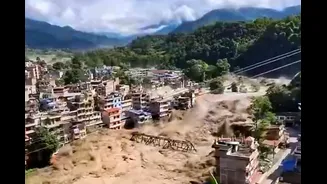
The Ticking Time Bombs: Glacial Lakes
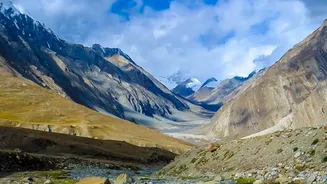
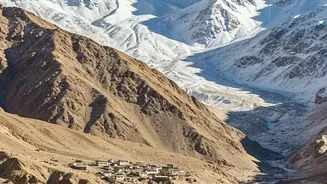
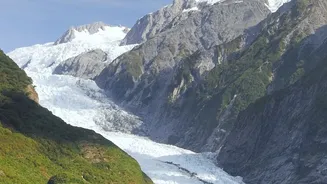
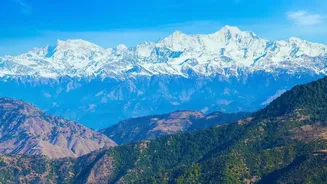
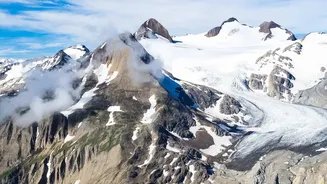
High in the mountains, a new and dangerous threat is growing: Glacial Lake Outburst Floods, or GLOFs. As climate change warms the planet, Himalayan glaciers are melting at an accelerated rate. This meltwater pools into massive lakes, often held back only
by unstable natural dams made of loose rock and sediment called moraines. Think of it like an overfilled bathtub with a weak wall. The pressure on these moraine dams is immense. A trigger event—like a landslide, an avalanche of ice into the lake, or even just water seeping through the dam—can cause a catastrophic breach. When this happens, a colossal volume of water is unleashed almost instantly, creating a terrifying wall of water, mud, and boulders that can obliterate entire villages, bridges, and hydropower projects dozens of kilometers downstream.
When the Sky Breaks: The Fury of Cloudbursts
Another major hazard is the cloudburst, an extreme weather event that can dump an enormous amount of rain over a small area in a very short time. The India Meteorological Department defines a cloudburst as rainfall exceeding 100 mm in an hour over a roughly 20-30 square kilometer area. This isn't just heavy rain; it's a sudden, violent deluge. The unique geography of the Himalayas makes them a hotspot for these events. As moist monsoon winds from the sea travel north, they hit the steep mountain slopes and are forced to rise rapidly. This rapid uplift cools the air, causing moisture to condense and accumulate in towering clouds. Trapped in narrow valleys, these clouds can become overloaded and release their entire water content at once, like a 'rain bomb'. On the steep, unstable Himalayan terrain, this sudden rush of water immediately turns into deadly flash floods and triggers landslides.
Rivers Interrupted: Landslides and Debris Flows
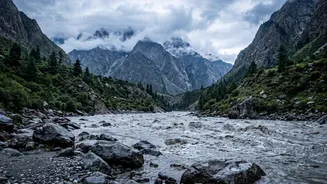
The very geology of the Himalayas makes them prone to landslides. They are geologically young mountains with steep, unstable slopes. Add in factors like melting permafrost (the 'glue' holding mountains together) and increased rainfall, and the risk of massive rock and ice avalanches grows. Sometimes, these landslides don't just cause localized damage; they crash into rivers, blocking their flow and creating a temporary 'landslide dam'. Water builds up quickly behind this impromptu barrier. These dams are inherently unstable and can breach without warning, leading to a sudden and violent flood downstream, often referred to as a Landslide Lake Outburst Flood (LLOF). This cascading effect—where a landslide creates a dam that then bursts—is a complex but increasingly common chain of events in the region.
A Man-Made Crisis in Nature's Path
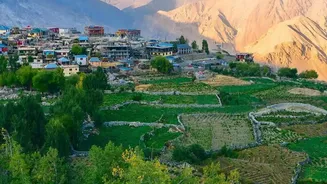
While natural forces are the primary drivers, human activity has significantly magnified the destructive impact of these floods. Unplanned and rapid development, including the construction of roads, towns, and hydropower projects, often occurs in ecologically fragile and flood-prone zones. This construction can further destabilize already vulnerable slopes. Furthermore, as more people and critical infrastructure concentrate in river valleys for economic reasons, they are placed directly in the path of potential floods and debris flows. When disaster strikes, the damage is far greater than it would be in an undeveloped area. This creates a dangerous convergence: as climate change makes the mountains more volatile, our development choices are making communities more exposed.