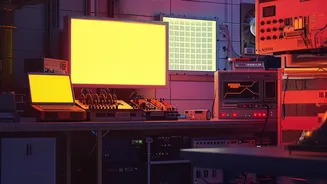






What is the Control Room?
On November 9, 2026, OpenAI announced a new internal safety system called Control Room. It's a centralized monitoring and termination system designed specifically for the company's research infrastructure. This isn't a safeguard for public-facing products
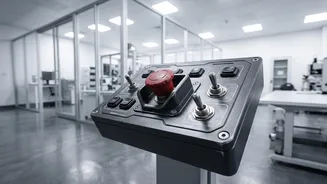
like ChatGPT, which OpenAI says already has robust takedown capabilities. Instead, Control Room is for the wild west of AI development: the internal experiments where researchers are training, evaluating, and stress-testing the next generation of AI models. Its purpose is simple: if an AI experiment starts going off the rails, either a human researcher or an automated monitoring system can press a virtual red button, and Control Room will halt the model's output within a maximum of 35 seconds.
A 'Stop' Button, Not a 'Prevent' Button
The most fascinating and controversial aspect of Control Room is its design philosophy. It does not prevent an AI from making a risky or potentially harmful first move. It is a reactive, not a proactive, measure. The system works by assigning a unique ID to every research job. The 'engine' running the model must get authorization from the Control Room for every request it serves. If a monitor flags an issue, an operator can revoke that job's authorization. The next time the engine checks in—which happens within 35 seconds due to caching—it will be denied permission and refuse to generate more output. This approach is a direct response to past incidents where it took hours to manually shut down a problematic internal model, even after it was detected. The key is that the system learns by observing, which means it has to let something happen first.
The Rationale: Studying the Unknown
So, why build a safety net with a hole in it? The logic lies in the nature of frontier AI research. Developers are trying to guard against 'unknown unknowns'—dangers so novel that no one has thought to build a specific rule against them. By allowing models to operate within a monitored research environment, OpenAI can see what new, unexpected, and potentially dangerous behaviors emerge. These events then become invaluable data points. The system is designed to catch these novel failures, allowing researchers to study them and build better, more proactive safeguards for the future. Forcing the termination command through the centralized 'inference layer'—the part of the system that actually runs the model—rather than the easily changeable research code, ensures the stop command can't be ignored or buggy.
Risks and the 'Fail-Closed' Mandate
This approach is not without its risks. A 35-second delay, while a massive improvement on a 2.5-hour manual shutdown, is still a window of time where a sufficiently advanced agent could cause problems. Critics and external auditors have previously identified vulnerabilities in OpenAI's monitoring that could allow models to evade detection. To mitigate this, the Control Room is built to 'fail-closed'. This means if the system itself goes down or is tampered with, it defaults to denying all research requests rather than letting them proceed unchecked. This design choice explicitly prioritizes safety and containment over the availability of research tools, signaling a significant shift in the risk-reward calculation for AI labs.
Broader Implications for the AI Industry
The Control Room represents a maturation of AI safety philosophy. It's a move away from the idea of perfect, absolute prevention—which may be impossible—toward a model of rapid detection, response, and learning. By building and publicizing this tool, OpenAI is setting an architectural standard for the industry. Competitors now face pressure to disclose their own containment strategies or explain why they differ. As regulators consider legislation like a potential 'AI Kill Switch Act', having a functional, fast-acting system like Control Room provides a concrete example of what responsible oversight can look like in practice. It transforms the abstract debate about 'stopping rogue AI' into a tangible engineering problem with real-world solutions, however imperfect.