



A New View of the Ringed Planet
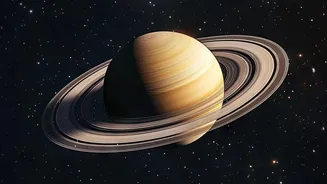
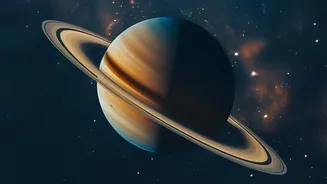
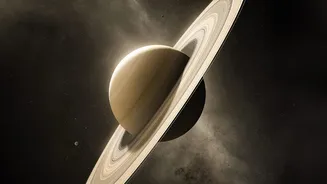
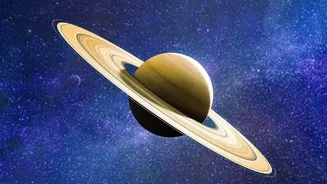
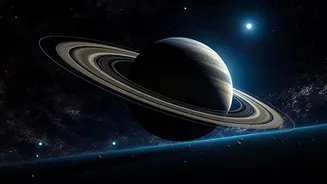
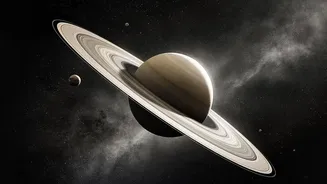
The iconic rings of Saturn, a breathtaking spectacle even through a small telescope, have long been a subject of fascination. Composed mostly of ice particles ranging from dust-sized grains to mountain-sized chunks, they were thought to be relatively
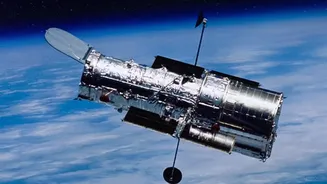
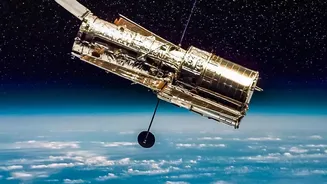
static. However, a groundbreaking analysis of archival data, primarily from the Hubble Space Telescope, has revealed a startling phenomenon: the rings are actively heating Saturn's upper atmosphere. This process appears to be linked to the planet's seasons, a discovery that is changing how we understand the relationship between the gas giant and its most famous feature. The evidence comes from an excess of ultraviolet radiation, seen as a spectral line of hot hydrogen, which indicates something external is warming the planet's atmosphere.
Understanding Saturn's Long Seasons
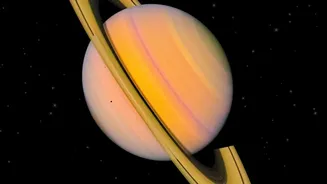
Like Earth, Saturn has seasons because its axis is tilted—27 degrees compared to Earth’s 23.5 degrees. But that's where the similarities end. Saturn takes a leisurely 29.5 Earth years to complete one orbit around the Sun, meaning each of its four seasons lasts for more than seven years. This long, slow cycle results in extreme seasonal variations. As Saturn moves in its orbit, the angle of its rings relative to the Sun changes dramatically. During the solstices, one hemisphere is tilted fully toward the Sun, bathing it in continuous light while the other faces a long, dark winter. During the equinoxes, which occur roughly every 15 years, the Sun strikes the rings edge-on. It's around these equinox periods that the most dynamic effects are observed.
The Science of a Planetary Interaction
The new findings suggest that a constant 'rain' of icy particles is falling from the innermost rings into Saturn's atmosphere. This cascade of material is believed to be the cause of the atmospheric heating. Several forces could be driving this phenomenon, including micrometeorite impacts on the rings, bombardment by the solar wind, and electromagnetic forces that charge and pull the dust particles inward. By combining decades of ultraviolet observations from four separate space missions—including Voyager 1 and 2, the Cassini probe, and the International Ultraviolet Explorer—and calibrating them with high-precision data from Hubble, scientists confirmed the heating effect is a persistent feature, not a fluke. This consistent heating points to the rings themselves as the source of the energy.
Spokes in the Wheels
Another fascinating seasonal effect observed by Hubble is the appearance of 'spokes' on the rings. These are mysterious, transient features that can appear dark or light and rotate along with the rings. First spotted by the Voyager mission in the early 1980s, these spokes tend to appear and become more prominent in the years leading up to and following Saturn's equinox. As the planet approaches its next northern autumnal equinox on May 6, 2025, scientists are witnessing the start of a new 'spoke season'. The leading theory is that these spokes are caused by the interaction between Saturn's magnetic field and the solar wind, which electrostatically levitates fine dust particles above the main ring plane. They are a visual marker of the planet's changing seasons.
Why This Discovery Matters
This research does more than just solve a local mystery; it provides a new way to understand planetary systems far beyond our own. The unexpected interaction between Saturn and its rings could offer a template for identifying ring systems on exoplanets—planets orbiting other stars. If a distant gas giant shows similar atmospheric heating in its equatorial regions, it could be a telltale sign of a massive ring system that is otherwise too far away to see directly. The long-term monitoring by Hubble, as part of its Outer Planet Atmospheres Legacy (OPAL) program, is crucial. It builds an invaluable archive of data that tracks how these giant planets and their environments evolve over time.