
The Official Definition (Or Lack Thereof)
First, let's tackle the big question. Officially, the International Astronomical Union (IAU) defines a moon, or natural satellite, as a celestial body that orbits a planet, dwarf planet, or even a smaller object like an asteroid. Unlike the strict three-part
rule for what makes a planet, the definition for a moon is much simpler. If it's a natural object and it's not orbiting the Sun directly but is instead captured by a planet's gravity, it's generally considered a moon. However, this simple definition leaves a lot of gray area. There is no official minimum size. This ambiguity is a key reason why the number of known moons, especially around gas giants like Saturn, keeps changing. Are tiny, kilometer-wide chunks of rock truly "moons" in the same way our own Moon is? For now, astronomers say yes.
Saturn, The Reigning Moon King
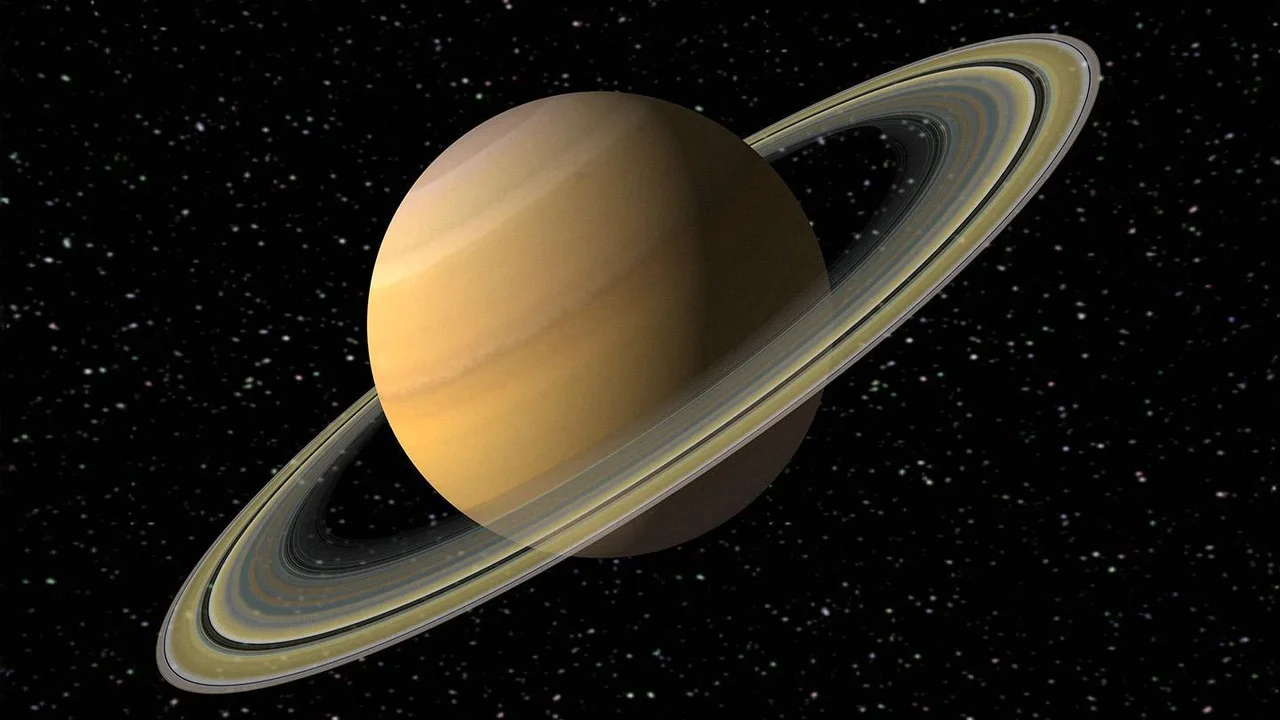
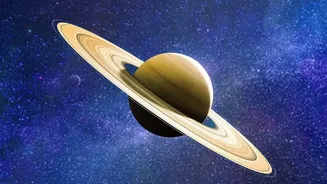
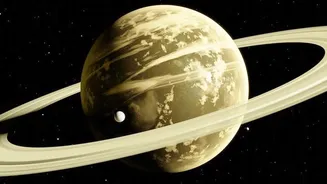
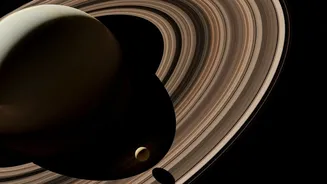
For years, Jupiter held the title for the most known moons in the solar system. But thanks to a flurry of recent discoveries, Saturn has decisively taken the crown. As of mid-2026, Saturn has 293 confirmed moons with known orbits, far surpassing Jupiter. This number has grown dramatically in a short period. For instance, in May 2023, 62 new moons were announced, bringing the total to 145. By March 2025, a staggering 128 more were added. And in 2026 alone, several more small moons were confirmed in multiple announcements. This has cemented Saturn's status as the most moon-rich planet we know of, holding more moons than all other planets combined.
Finding Needles in a Cosmic Haystack
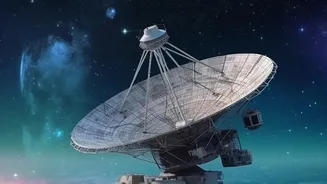
This explosion in moon discoveries isn't because new objects are forming. Instead, it's a testament to incredible advancements in technology and methodology. Astronomers are using powerful ground-based telescopes, like the Canada-France-Hawaii Telescope and the Subaru Telescope in Hawaii, to peer deeper into the space around Saturn than ever before. A key technique is called "shift and stack." Scientists take a series of images over several hours and digitally shift them to follow the predicted path of a faint, moving object. By stacking these shifted images, the faint light of a tiny moon is amplified, allowing it to be seen against the background of distant stars. This process confirms the object is orbiting Saturn and allows its path to be calculated, turning a faint hint into a confirmed discovery.
The Irregular Newcomers
Most of these newly found moons are not like the large, spherical moons we're familiar with. They are classified as "irregular" moons. Regular moons tend to have fairly circular orbits close to their planet's equator and are believed to have formed from the same disk of gas and dust as the planet itself. In contrast, irregular moons have large, eccentric, and tilted orbits far from their planet. They often orbit in a "retrograde" direction, meaning they travel opposite to the planet's rotation. These characteristics strongly suggest that irregular moons are not native to Saturn. Instead, they are likely former asteroids or comets that wandered too close to the gas giant billions of years ago and were captured by its immense gravity. Most are just a few kilometers in diameter—small, dark, and potato-shaped remnants of the early solar system.