


The Sun's Restless Cycle
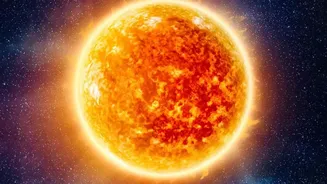
Our Sun isn't a constant, unchanging ball of fire. It goes through a regular period of activity called the solar cycle, which lasts about 11 years. This cycle swings between two extremes: solar minimum, a quiet phase with few sunspots, and solar maximum,
a peak period of intense activity. We are currently in Solar Cycle 25, which began in December 2019 and is expected to reach its peak of activity, or solar maximum, around 2025. During this time, the Sun's magnetic field becomes tangled and chaotic, leading to more frequent and powerful solar events.
What Are Sunspots?
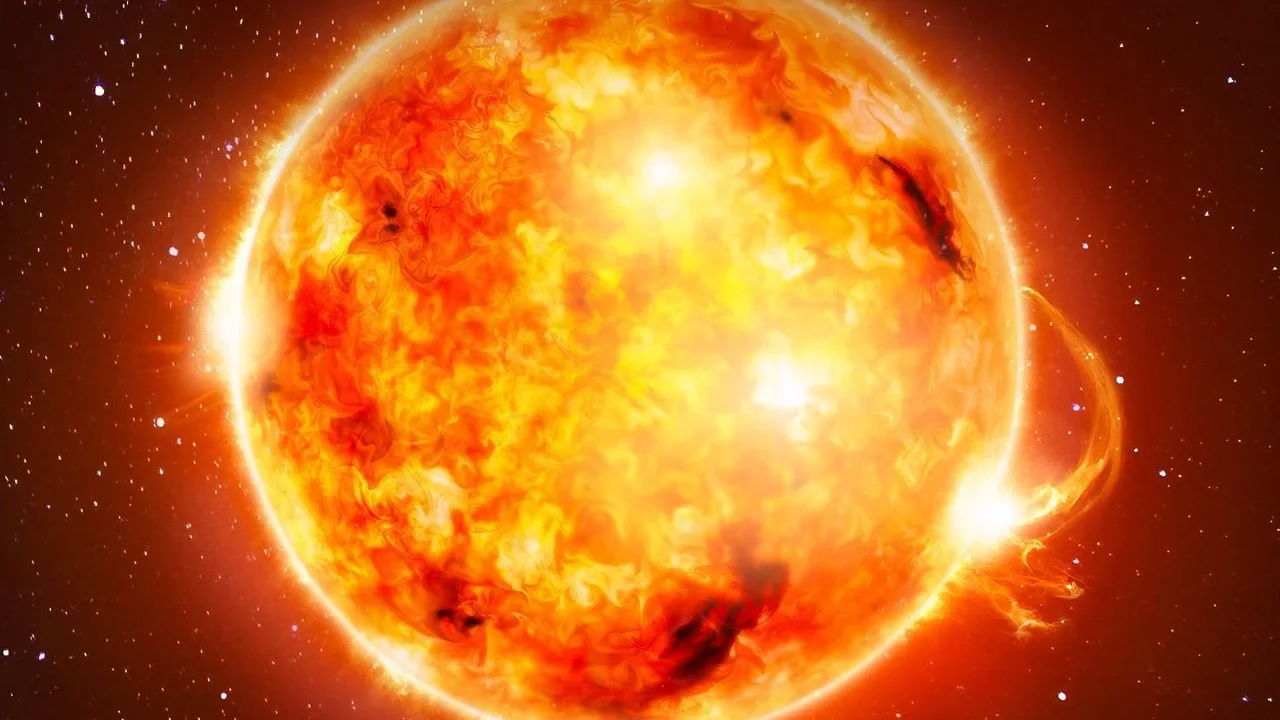
The most visible sign of the solar maximum is an increase in sunspots. These dark patches on the Sun's surface are not actually black but are cooler, magnetically complex areas compared to their surroundings. Think of them not as imperfections, but as the source regions for the Sun's most dramatic outbursts. The magnetic fields in these sunspot regions are incredibly intense and twisted. It's this magnetic complexity that sets the stage for enormous releases of energy.
From Sunspot to Solar Flare
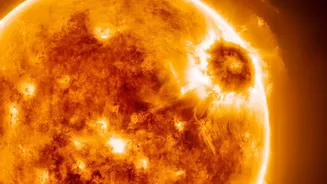
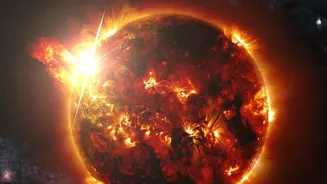
When the tangled magnetic field lines around a sunspot region suddenly snap and realign, they release a tremendous burst of energy. This is a solar flare. These events are giant explosions on the Sun, sending radiation hurtling out into space. Often accompanying these flares are even larger events called Coronal Mass Ejections, or CMEs. A CME is a massive bubble of plasma and magnetic field that gets launched from the Sun's corona (its outer atmosphere) into space, sometimes traveling at millions of kilometres per hour.
The Journey Through Deep Space
This is where the "deep space" part of the headline comes into play. The particles from a solar flare or CME travel across the vast emptiness of space in a stream called the solar wind. While the solar wind is always flowing, a CME is like a massive, fast-moving wave within it. If Earth happens to be in the path of this wave of charged particles, the material ejected from the Sun will make the long journey and eventually collide with our planet's own magnetic field.
Earth's Magnetic Shield
Fortunately, Earth has a built-in defense system: the magnetosphere. This is an invisible magnetic field surrounding our planet that deflects most of the solar wind. However, a powerful CME can compress and rattle this shield, causing a geomagnetic storm. During such a storm, some of the energetic particles from the Sun are not deflected but are instead captured and funnelled down the magnetic field lines towards the North and South Poles.
Creating a Celestial Light Show
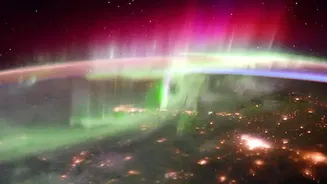
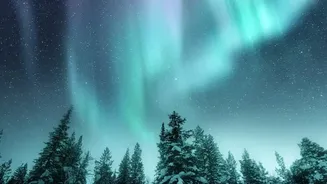
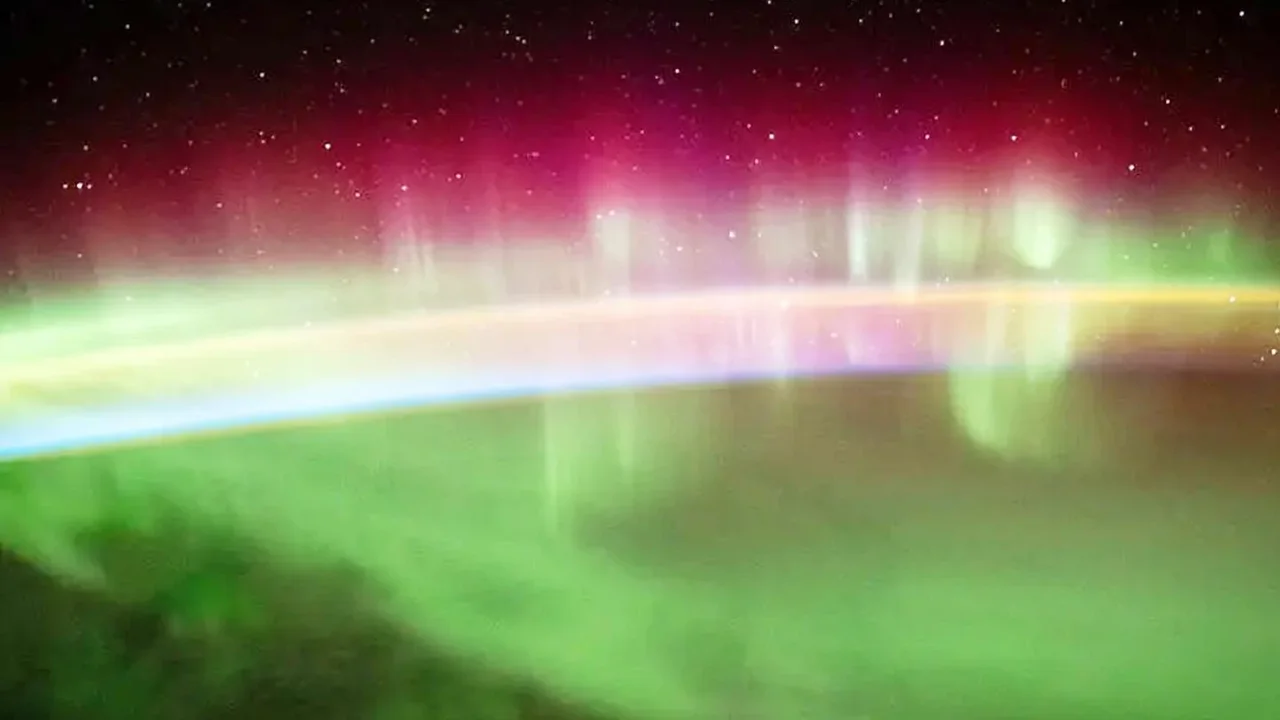
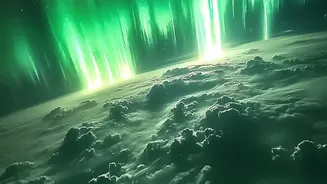
The grand finale of this cosmic journey is the aurora. As the high-energy particles from the Sun stream down into Earth's upper atmosphere near the poles, they collide with atoms of oxygen and nitrogen. These collisions excite the atmospheric gases, causing them to glow, much like how electricity makes the gas in a neon sign light up. The different colours are produced by different gases at different altitudes; oxygen typically glows green and red, while nitrogen can produce blue and purple hues. The result is the breathtaking, dancing light show known as the Aurora Borealis (Northern Lights) and Aurora Australis (Southern Lights).