


The Moon's Harsh Welcome Mat
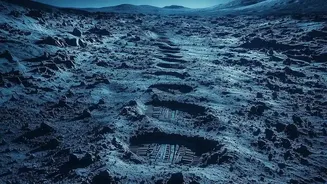
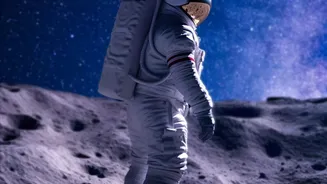
The lunar surface is one of the most hostile environments imaginable for human life. With virtually no atmosphere to act as a shield, the Moon is constantly bombarded by dangerous elements. Astronauts and their habitats would face a continuous barrage
of galactic cosmic rays and intense bursts of solar radiation, both of which can cause serious health problems, including cancer and damage to the central nervous system. The lack of an atmosphere also means there is nothing to burn up incoming micrometeoroids, which strike the surface like tiny bullets, posing a constant threat to any structure. Furthermore, surface temperatures swing wildly from a scorching 127°C in the sun to a frigid -173°C in the dark. Building a surface base capable of withstanding all this would require incredibly thick, heavy, and expensive shielding.
Nature's Underground Shelters
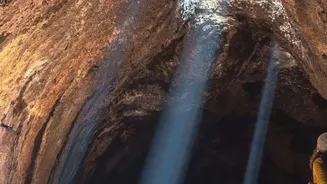
Beneath this dangerous surface lies a potential solution that is billions of years old: lava tubes. These are massive tunnels left behind by ancient volcanic activity. When rivers of molten rock flowed across the Moon, the top layer cooled and solidified, while the lava underneath continued to move. Once these fiery rivers drained away, they left behind vast, hollow channels. Observations suggest these lunar tunnels could be enormous, some potentially wide enough to fit entire cities inside. The thick ceiling of solid basalt rock provides a natural, ready-made shield, offering robust protection from radiation, micrometeorite impacts, and the extreme temperature fluctuations of the surface. Inside a lava tube, the temperature might remain at a relatively stable and manageable level, possibly around -25°C, which is far easier to handle than the violent swings outside.
Spotting the Entrances from Orbit
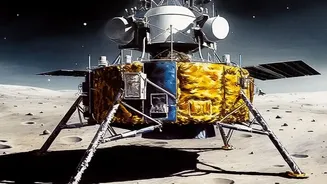
Scientists have known about the potential for lunar lava tubes for years, but finding them has been a challenge. The key breakthrough came with the discovery of 'skylights' — deep pits on the lunar surface believed to be collapsed sections of lava tube roofs. Orbiters like Japan's Kaguya spacecraft and NASA’s Lunar Reconnaissance Orbiter (LRO) have photographed these features, providing tantalizing glimpses into the caverns below. Recent analysis of LRO's radar data has provided direct evidence that at least one of these pits, in the Mare Tranquillitatis region, connects to a larger underground cave. These skylights are now considered prime targets, serving as potential gateways for the first robotic explorers to enter the lunar underworld.
The Robotic Scouts on the Drawing Board
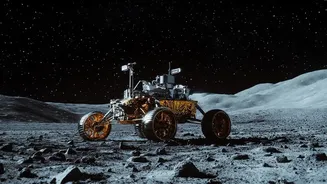
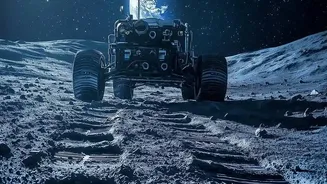
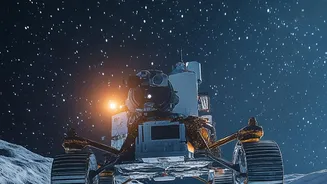
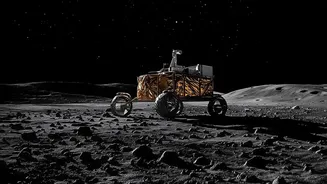
Exploring these dark, unknown caves is the critical next step, and several innovative missions are being developed to do just that. The European Space Agency (ESA) has been studying concepts like DAEDALUS (Descent And Exploration in Deep Autonomy of Lava Underground Structures), a spherical robot designed to be lowered into a skylight. This device would use LiDAR to create 3D maps of the cave interior, autonomously navigating the treacherous environment. NASA has also funded concepts through its Innovative Advanced Concepts (NIAC) program. One such idea from Stone Aerospace, called the Lunar Underground eXplorer (LUX), involves a drone powered by a laser through a fiber-optic tether connected to a surface rover. This would allow it to explore without a heavy battery and send back high-speed data. These missions are designed to be robotic precursors, mapping the terrain and assessing the safety of these tubes before humans ever set foot inside.
The Challenge of Cosmic Caving
Sending a robot into a lunar cave is fraught with technical hurdles. The robot must be able to descend safely, potentially down a sheer vertical drop, into an environment of total darkness. With no GPS, it needs to navigate autonomously, avoiding sharp rocks and potentially deep layers of fine, abrasive lunar dust. Communication is another major issue; radio signals can't pass through thick rock, so tethered systems or a network of relay drones might be necessary to get data back to the surface. Some proposals envision swarms of smaller, collaborating robots, while others focus on rugged, tethered rovers. Overcoming these challenges is essential, as the data these robotic spelunkers gather will determine whether lava tubes are a viable solution for future lunar habitats.