




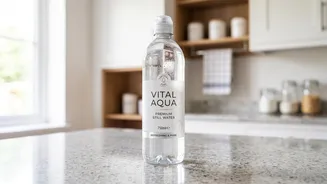
Packaged drinking water is a daily reality across India, but how can you be sure the water you are buying is safe? Understanding the standards set by the Food Safety and Standards Authority of India (FSSAI) is your best defence.
Why Regulation Matters for Your Water
The Food Safety and Standards
Authority of India (FSSAI) is the country's primary regulatory body for ensuring the safety of all food products, and that includes the water you buy in a bottle or jar. Given the widespread reliance on packaged water due to concerns over municipal supplies, FSSAI's role is critical. In late 2024, FSSAI classified packaged water as a 'high-risk' food category, which means manufacturers are subject to stricter inspections and regular testing. This framework is designed to protect consumers from waterborne diseases and contamination from unsafe sources or unhygienic bottling practices. When you see an FSSAI license on a bottle, it confirms the manufacturer is registered and accountable to national safety standards.
Packaged Water vs. Mineral Water
Consumers often use the terms 'packaged water' and 'mineral water' interchangeably, but legally, they are two different products with distinct standards. 'Packaged Drinking Water' can come from various sources, including municipal supplies, borewells, or surface water. It undergoes extensive treatment like reverse osmosis (RO), filtration, and disinfection to make it safe for consumption. The relevant Bureau of Indian Standards (BIS) code for this is IS 14543. In contrast, 'Natural Mineral Water' must be sourced from a specific, protected underground spring. It is valued for its natural mineral content and undergoes minimal processing to preserve its original composition. Its corresponding BIS code is IS 13428. While both are safe if they meet standards, their source and treatment methods are fundamentally different.
Your Five-Point Checklist Before You Buy
Before you purchase any packaged water, a quick check of the label can tell you a lot about its legitimacy. First, look for the 14-digit FSSAI license number and logo. Second, check for the manufacturer’s name and full address. Third, ensure the packaging date and 'best before' date are clearly printed and have not expired. Fourth, look for a batch or lot number, which is crucial for traceability in case of a recall. Finally, inspect the bottle's seal; the tamper-proof ring on the cap must be intact. A broken seal, loose cap, or damaged bottle could be a sign of tampering or refilling. If any of these details are missing, smudged, or seem suspicious, it's best to choose another bottle.
The FSSAI License Number Is Now Key
For years, the BIS ISI mark was the most recognized sign of certified water. However, a major regulatory shift occurred in October 2024, when FSSAI removed the mandatory requirement for BIS certification on packaged water. While many brands still voluntarily use the ISI mark for credibility, its absence is no longer an immediate red flag. The most important identifier for consumers to check now is the 14-digit FSSAI license number. This number confirms the producer is registered with the food safety authority. You can verify any FSSAI license instantly using the 'FoSCoS' web portal or even FSSAI's official WhatsApp chatbot, which confirms the manufacturer's name, address, and license validity.
The Hidden Dangers of Uncertified Water
Choosing uncertified or illicitly bottled water carries significant health risks. Such products often come from unverified sources and may not undergo proper disinfection or testing, potentially containing harmful bacteria, viruses, or chemical contaminants. Consumption of such water can lead to a host of waterborne diseases, including cholera and typhoid, as well as other issues like kidney problems. Furthermore, unbranded sellers may improperly clean and reuse large water jars, increasing the risk of contamination. The water might also be stored incorrectly, such as in direct sunlight, which can cause chemicals to leach from the plastic into the water. By insisting on properly certified and labelled products, you are not just buying water; you are ensuring it has been processed and bottled under regulated, hygienic conditions.