







What Exactly Is a Semicryogenic Engine?
In simple terms, a rocket engine needs two things to work: fuel to burn and an oxidizer to burn it. Fully cryogenic engines, which ISRO has mastered, use super-chilled liquid hydrogen and liquid oxygen. They are powerful but complex and costly because
both components must be kept at incredibly low temperatures. A semicryogenic engine is a clever, more efficient alternative. It uses the same liquid oxygen but pairs it with refined kerosene—similar to jet fuel—as its fuel. Since kerosene can be stored at a normal temperature, the engine is only 'semi' cryogenic. This simple switch makes the engine easier to handle, cheaper to operate, and allows for a more powerful and compact design.
So Why Is This a Game-Changer for India?
This new engine, called the SE-2000, is all about muscle. It's designed to replace the current core stage of India's most powerful rocket, the LVM3 (the same one that launched Chandrayaan-3). By switching to this more powerful engine, the LVM3 will be able to carry much heavier payloads. Its capacity to lift satellites into Geostationary Transfer Orbit (the highway for large communication satellites) will increase from four tonnes to five tonnes. This means India can launch bigger, more complex satellites for itself and for other countries. This strengthens India's position in the global satellite launch market, a multi-billion dollar industry where India currently holds a small share but aims to grow significantly.
What Happened in the Latest Test?
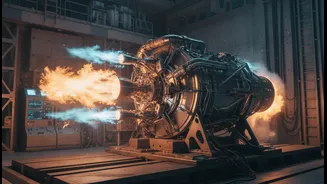
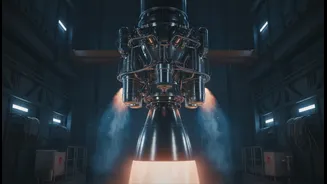
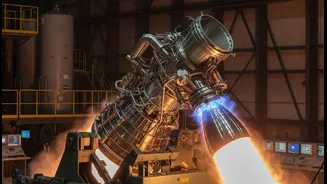
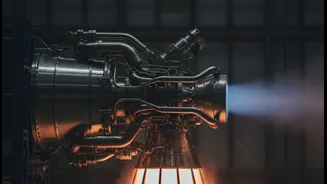
In late June 2026, ISRO scientists conducted a crucial hot test at their facility in Mahendragiri, Tamil Nadu. They didn't fire the whole engine, but a critical component called the Power Head Test Article (PHTA). Think of the power head as the heart of the engine; it contains the powerful turbopumps that force fuel and oxidizer into the combustion chamber. In the test, engineers pushed the PHTA to a thrust level of 175 tonnes, which is about 88% of the engine's total planned power. This was the most powerful test to date and it was a complete success, giving ISRO the confidence to move forward with testing the fully integrated engine at its full 200-tonne thrust.
What Does This Mean for Future Space Missions?
This engine is the foundation for India's biggest space ambitions. A more powerful LVM3 rocket is essential for assembling the 'Bharatiya Antariksh Station'—India's own space station planned for 2035. It's also a key enabler for future deep-space missions to the Moon and Mars, which require lifting heavier spacecraft out of Earth's gravity. While this specific engine won't be used on the very first Gaganyaan human spaceflight mission, its development is crucial for the future of India's human spaceflight program, enabling more complex missions and habitats in orbit. It also paves the way for developing reusable launch vehicles, which would drastically reduce the cost of accessing space.
Why Should This Matter to You?
This isn't just about rockets; it's about what they represent. The successful development of such a complex, high-performance engine is a massive statement of India's technological prowess. This is a technology that only a handful of nations have mastered. For young Indians, this achievement is a source of national pride and a powerful inspiration. It showcases the incredible opportunities opening up in science, technology, engineering, and mathematics (STEM) right here in India. Every successful test is a step towards a future where India is not just a participant but a leader in space exploration. It's a sign that the ambitions of a generation—to reach for the stars, to build new technologies, and to make a mark on the world—are being powered by the ingenuity and hard work happening at ISRO today.