



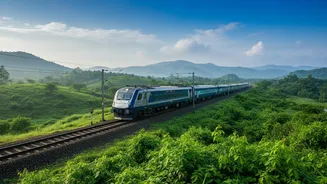

A Welcome But Crowded Addition
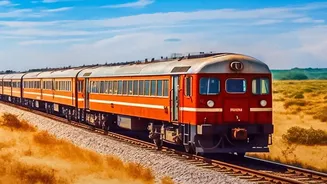
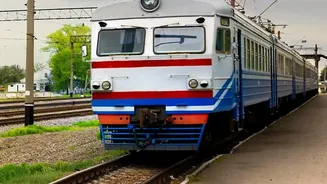
Indian Railways recently approved a new daily express train between Mumbai's Chhatrapati Shivaji Maharaj Terminus (CSMT) and Sawantwadi Road. This service, with 22 stops over its 510-km route, aims to enhance connectivity for passengers traveling for tourism,
work, and education. For the millions who rely on trains in this region, any new service is a victory. It promises to support regional economic activity and ease the perennial passenger rush on the busy Mumbai-Konkan corridor. However, this latest addition also shines a harsh spotlight on the fundamental constraints of the very network it aims to serve.
The Single-Line Squeeze
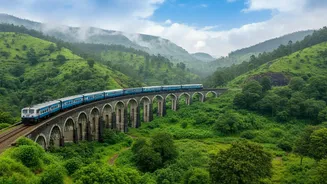
The Konkan Railway, an engineering marvel stretching 740 km from Maharashtra to Karnataka, has a critical vulnerability: for most of its length, it remains a single-line track. This means trains traveling in opposite directions cannot pass each other except at designated crossing stations. Adding even one new daily service creates a complex domino effect, forcing other trains to halt and wait, leading to cascading delays. Recent data has already shown trains on the Konkan route running late by five to eight hours, a problem that intensifies with each new train added to the schedule without addressing the core capacity issue. While a small section of about 55 km has been doubled, the vast majority of the route is still battling infrastructure limitations that date back to its inception.
Piecemeal Solutions vs. Strategic Vision
The introduction of new trains is often a response to immense public and political pressure. The demand for more services on the Konkan route is undeniable, especially during festive seasons. However, these piecemeal additions are like adding more cars to an already gridlocked one-lane road. It provides a temporary fix for a few, but worsens the overall traffic flow for everyone. Some passenger groups have even argued that a more immediate, low-cost solution would be to augment existing trains with their maximum permitted number of coaches, which could add thousands of seats daily without adding new trains. This highlights a pattern of seeking short-term wins over making the difficult, expensive, but necessary long-term investment.
The Real Answer: Doubling The Tracks
The only sustainable solution to meet the ever-growing demand is to double the Konkan Railway line. For years, this project has been discussed, with plans slowly moving forward. Recent reports indicate that a Detailed Project Report (DPR) is underway for doubling about 263 km of track, part of a larger, ambitious five-year, Rs 4,704 crore expansion plan. This proposed upgrade is expected to significantly address capacity constraints, improve train speeds, and allow for the smoother movement of both passenger and freight traffic. However, progress has been slow, tangled in the complexities of financing, as the Konkan Railway Corporation is a shared entity between the central government and the states of Maharashtra, Karnataka, Goa, and Kerala.
An Engine For Regional Growth
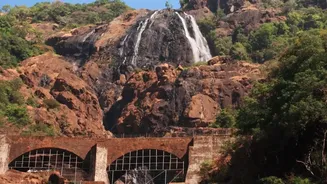
This isn't just about faster trains; it's about unlocking the Konkan region's full economic potential. The railway is a lifeline, connecting coastal towns and facilitating tourism, trade, and daily commutes. An overburdened and inefficient rail network acts as a brake on development. Upgrading the infrastructure would not only improve passenger experience but also boost freight traffic, which has been historically lower than projected. A doubled, more efficient line would create a virtuous cycle of growth, making the region more accessible for tourists, businesses, and its own residents. The engineering challenge is significant, with costs in hilly terrains estimated to be far higher than on flat stretches, but the long-term benefits are inarguable.