



The Limits of Traditional Solar
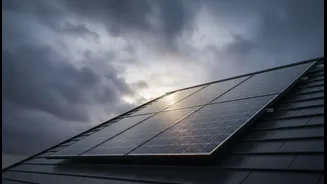
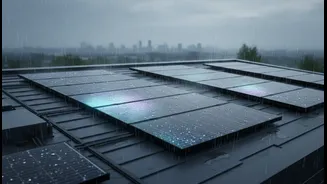
Conventional solar panels, typically made from rigid crystalline silicon, are at their best under direct, bright sunlight. While they still produce power on overcast days, their output can drop significantly, sometimes to just 10-25% of their rated capacity.
This happens because clouds scatter sunlight, creating what is known as diffuse light. Traditional photovoltaic (PV) cells are simply not optimised to capture this kind of scattered energy efficiently, creating an energy gap in climates known for grey skies.
Enter the Next Generation: Solar Sheets
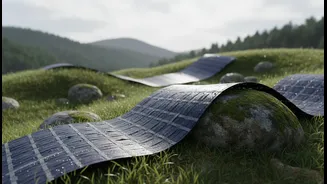
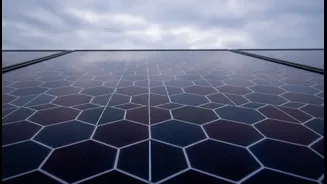
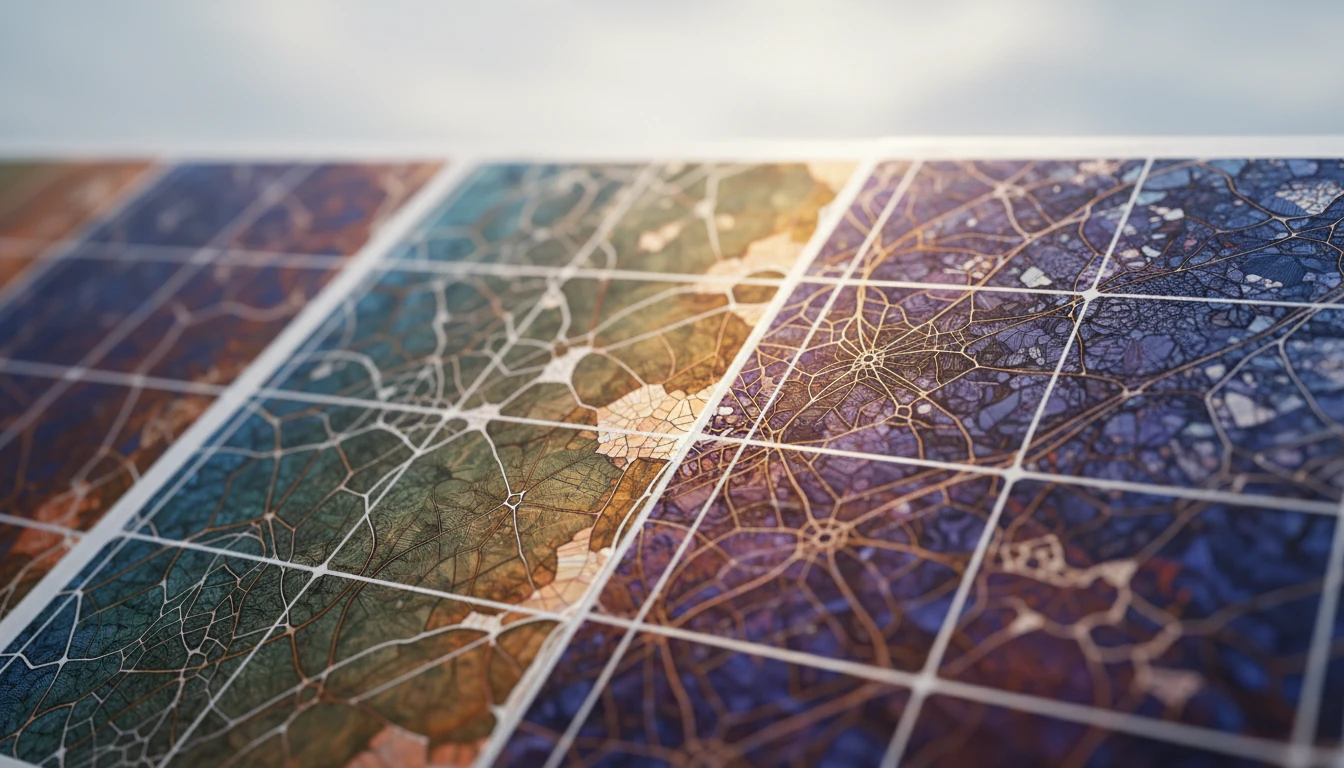
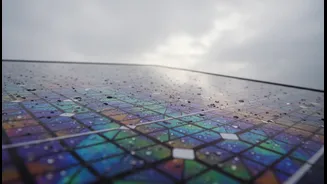
The “cloud-optimised solar sheets” mentioned in the headline refer to a new class of emerging photovoltaic technologies. These are not your typical bulky panels. Instead, they are often thin, flexible, and lightweight films. This category includes technologies like organic photovoltaics (OPV) and perovskite solar cells. The key innovation lies in the materials used. Unlike rigid silicon, these new materials are designed to be highly sensitive to a broader spectrum of light, including the diffuse and low-intensity light that dominates on cloudy days.
How They Conquer the Clouds
The secret to their enhanced low-light performance is their ability to absorb different wavelengths of light. Sunlight is a spectrum, and on an overcast day, the proportion of indirect blue and ultraviolet light is higher. Materials like perovskites and certain organic polymers are exceptionally good at converting this part of the spectrum into electricity. Some perovskite cells have demonstrated remarkable efficiency under indoor lighting, which mimics low-light conditions, far outperforming traditional silicon. This means they can continue generating a more substantial amount of power when the sky is grey, making solar energy a more reliable and consistent option year-round.
Flexible Form, Revolutionary Functions
Because these new solar cells can be produced as thin, flexible sheets or even 'coatings', their applications go far beyond the rooftop. Imagine solar-powered windows that generate electricity while remaining transparent, or tents and backpacks with integrated solar films. Researchers have already developed ultra-thin, wearable solar vests that can power small devices. Their lightweight and adaptable nature means they can be integrated into building facades, vehicles, and consumer electronics, turning almost any surface into a power generator without the structural constraints of heavy, rigid panels.
Challenges on the Horizon
Despite the immense promise, this technology is still on the path to widespread commercialisation. Two of the biggest hurdles are durability and lifespan. Early versions of perovskite cells, for example, have shown vulnerability to moisture, heat, and UV exposure, degrading much faster than their silicon counterparts. Researchers are actively working on protective layers and more stable chemical compositions to make these cells tough enough for decades of outdoor use. Scaling up manufacturing to bring down costs while maintaining high efficiency is the final piece of the puzzle that companies and labs are racing to solve.