


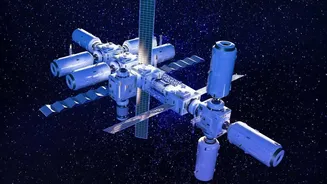
The Scientific Anchor Tenant
The primary business case for these new orbital platforms is not tourism, but science. Microgravity, the near-weightless environment of orbit, offers a unique laboratory that is impossible to replicate on Earth. It removes forces like convection and sedimentation,
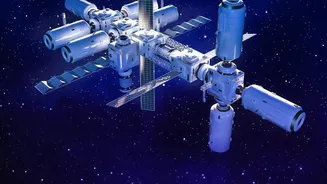
allowing for breakthroughs in multiple fields. Pharmaceutical companies can grow more perfect protein crystals, leading to new drug discoveries for diseases like cancer. Materials scientists can create flawless semiconductor crystals and unique metal alloys for next-generation electronics. NASA and other space agencies plan to become anchor tenants, renting lab space on these private stations to continue the critical research performed on the ISS for decades. For companies like Starlab, a joint venture between Voyager Space and Airbus, the goal is to create a full-fledged 'science park in space' to serve this demand.
Tourism as a Financial Booster Rocket
Building and operating a space station is astronomically expensive. While government and corporate research contracts provide a steady, foundational revenue stream, it may not be enough to cover the massive capital costs alone. This is where commercial tourism enters the picture. The market for space tourism is projected to grow exponentially, from just over a billion dollars in 2025 to potentially more than $3 billion by 2030. By selling a small number of seats to high-net-worth individuals, private station operators can inject significant, high-margin revenue into their business models. Companies like Axiom Space are already flying private astronaut missions to the ISS for reported prices around $55 million per seat, proving the demand exists. This income helps offset development costs and makes the station more financially viable, which in turn lowers the price for the primary scientific users.
A Symbiotic Orbit
Far from being in conflict, the two missions of research and tourism are mutually beneficial. The presence of cutting-edge, meaningful science gives the tourist experience a sense of purpose and prestige beyond a simple joyride. It transforms a trip into a mission. Conversely, the revenue from tourists acts as a subsidy, effectively lowering the cost of access for researchers from universities and startups who might otherwise be priced out. This dual-customer model creates a more robust and diversified business. Blue Origin and Sierra Space's Orbital Reef concept is explicitly designed as a 'mixed-use business park' in space, aiming to create an ecosystem for commerce, research, and tourism to coexist and support each other. This model is seen as essential for creating a self-sustaining economy in low-Earth orbit (LEO) without total reliance on government funding.
The Companies Building the Future
Several key players are leading the charge to create these orbital outposts. Axiom Space is taking a unique approach by first attaching its modules to the ISS, with plans to detach and become a free-flying station later this decade. Vast, another contender, aims to launch its Haven-1 station as early as 2027, potentially becoming the first standalone commercial station in orbit. Starlab, from Voyager Space and Airbus, plans to launch a single, large module dedicated to research, while the ambitious Orbital Reef project from Blue Origin and Sierra Space envisions a larger, more modular habitat for ten people. Each of these companies, backed by a mix of private investment and NASA funding through the Commercial LEO Destinations (CLD) program, is betting that this hybrid business model holds the key to humanity’s permanent future in space.