





The Moon’s Hidden Sanctuaries
Before astronauts can live on the Moon, they need a safe place to call home. The lunar surface is a brutal environment, battered by intense radiation, micrometeoroids, and wild temperature swings from a scorching 127°C during the day to a frigid -173°C
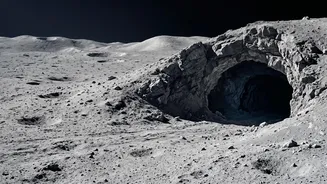
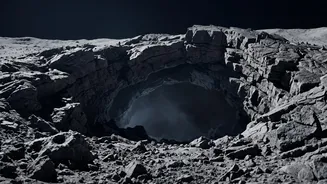
at night. For decades, scientists have theorized that the perfect real estate might lie underground in vast, hollow tunnels known as lava tubes. These are natural caverns formed when the outer surface of a lava flow hardens, while molten rock continues to flow and eventually drains away, leaving a cave behind. Inside these geological shelters, temperatures are believed to be far more stable, potentially hovering around a comfortable 17°C in some areas. More importantly, the thick ceiling of rock would provide natural and effective shielding from the constant threats of radiation and meteorite impacts, something any surface habitat would have to artificially replicate at great expense and difficulty.
From Theory to Funded Research
The idea of using lunar caves is not new, but moving from a sci-fi concept to an engineering blueprint requires data. Recognizing this, NASA has recently selected a new mission proposal designed to peer beneath the lunar surface and confirm if these protective caves truly exist. Through its Payloads and Research Investigations on the Surface of the Moon (PRISM) program, NASA is funding the Geophysical Instruments for Marius Lunar pit Investigation, or GIMLI. This mission is not about building a base just yet; it is a crucial reconnaissance step to determine if one of the Moon's most promising 'skylights'—a deep pit that may be a collapsed section of a lava tube—is actually an entryway to a larger underground network.
Meet GIMLI: The Cave Hunter
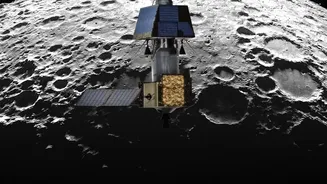
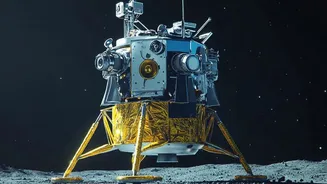
The GIMLI mission, led by the Planetary Science Institute, will focus on a feature known as the Marius Hills Pit, a hole in the lunar surface roughly 90 meters across that was first identified by Japan's Kaguya orbiter. To investigate it without having to descend inside, a commercially provided rover will be equipped with a sophisticated suite of tools. Ground-penetrating radar will scan for the tell-tale void of a tunnel, a gravimeter will measure subtle changes in gravity that could indicate a massive empty space below, and seismic sensors will listen to how sound waves travel through the ground. These instruments, primarily built by Honeybee Robotics, will work in concert to create the first on-the-ground 3D map of the subsurface, turning orbital speculation into hard data.
Robots First, Humans Later
Even before GIMLI, NASA's Innovative Advanced Concepts (NIAC) program—the agency's hub for high-risk, high-reward ideas—has funded projects to tackle the next step: robotic exploration inside the caves. One concept, the Lunar Underground eXplorer (LUX), envisions a hovering robot that could descend into a pit while tethered by a fiber-optic cable, allowing it to explore and map tunnels deep underground. Another NIAC-funded project from Carnegie Mellon University proposed a team of small, autonomous micro-rovers that could explore the rim of a pit, identify safe rappel routes, and create a high-resolution 3D model of the interior before any larger, more complex mission is attempted. These robotic pathfinders are essential to ensuring the safety and feasibility of sending human explorers into these unknown environments.
The 'If Confirmed' Reality Check
For all the excitement, the headline's crucial caveat is 'if confirmed'. While orbital data strongly suggests the existence of lava tubes, no mission has yet proven it on the ground. GIMLI’s primary job is to provide that confirmation. Scientists are hopeful, but they don't know for sure if the Marius Hills Pit connects to a stable, accessible cave system or if it is simply a deep hole. The structural integrity, floor navigability, and exact dimensions of these potential shelters are all critical questions that remain unanswered. The success of missions like GIMLI will determine whether the dream of a naturally protected lunar base can become a key part of NASA's long-term Artemis program goals for sustained presence on the Moon.