



Understanding Low-Impact Fitness
A low-impact workout is any form of exercise that minimizes stress and jarring forces on your joints. The golden rule is that you typically keep one foot on the ground at all times. This makes it a fantastic starting point if you're new to exercise, returning
from a break, or managing joint pain. But don't mistake 'low-impact' for 'low-intensity' or 'ineffective'. Activities like brisk walking, swimming, cycling, and rowing can significantly elevate your heart rate and burn calories, offering powerful cardiovascular benefits. These exercises improve heart health, strengthen muscles that support your joints, enhance flexibility, and reduce the risk of injury often associated with high-impact movements like running and jumping.
The Core Principles of Modification
The key to a sustainable fitness routine is listening to your body, and modification is your best tool for doing just that. It isn't cheating; it's training smarter to build strength safely. Before jumping into specific exercises, understand the basic ways you can adjust any movement for comfort: Reduce your range of motion (e.g., not squatting as deeply), slow down the movement to focus on form, use a stable surface like a wall or chair for support, and lessen the resistance by using lighter weights or just your body weight. The goal is to find a level of challenge that feels productive, not painful. If you feel a sharp pain, stop immediately.
Modifying Common Bodyweight Exercises
Many standard workouts can be easily adapted. Instead of giving up on a movement that feels too difficult, try a modification to build strength gradually. For Push-Ups, if a floor push-up is too challenging, start with wall push-ups. Stand a few feet from a wall and press against it. As you get stronger, you can move to incline push-ups on a sturdy bench or table, and eventually to push-ups on your knees. For Squats, if deep squats cause knee discomfort, use a chair for support. Practice squatting by lowering yourself until you lightly tap the chair before standing back up. This helps you perfect the form while building leg and glute strength. For Cardio, swap high-impact jumping jacks for step-jacks, where you step one foot out to the side at a time instead of jumping. And instead of running in place, try marching with high knees to keep your heart rate up without the impact.
Great Low-Impact Activities to Explore
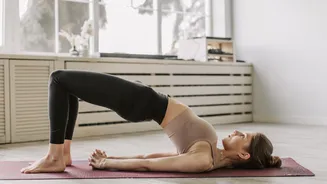
Beyond individual movements, entire activities are built around low-impact principles, making them ideal for beginners. Walking is one of the most accessible and effective low-impact exercises available. You can easily adjust the intensity by walking faster or finding gentle hills. Swimming and water aerobics are other excellent choices, as the water supports your body weight, removing almost all stress from your joints while providing full-body resistance. Cycling, whether on a stationary bike or outdoors, is another great cardio option that is gentle on the knees. Finally, practices like Yoga and Pilates are wonderful for building strength, balance, and flexibility through controlled, low-impact movements.