
A Solar Threat to Modern Life
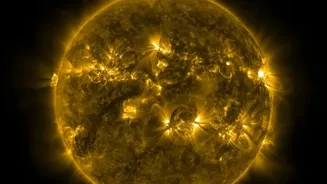
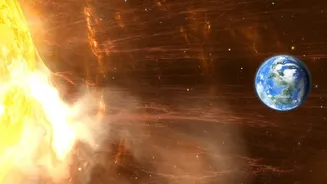
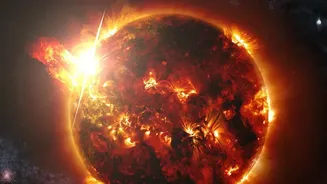
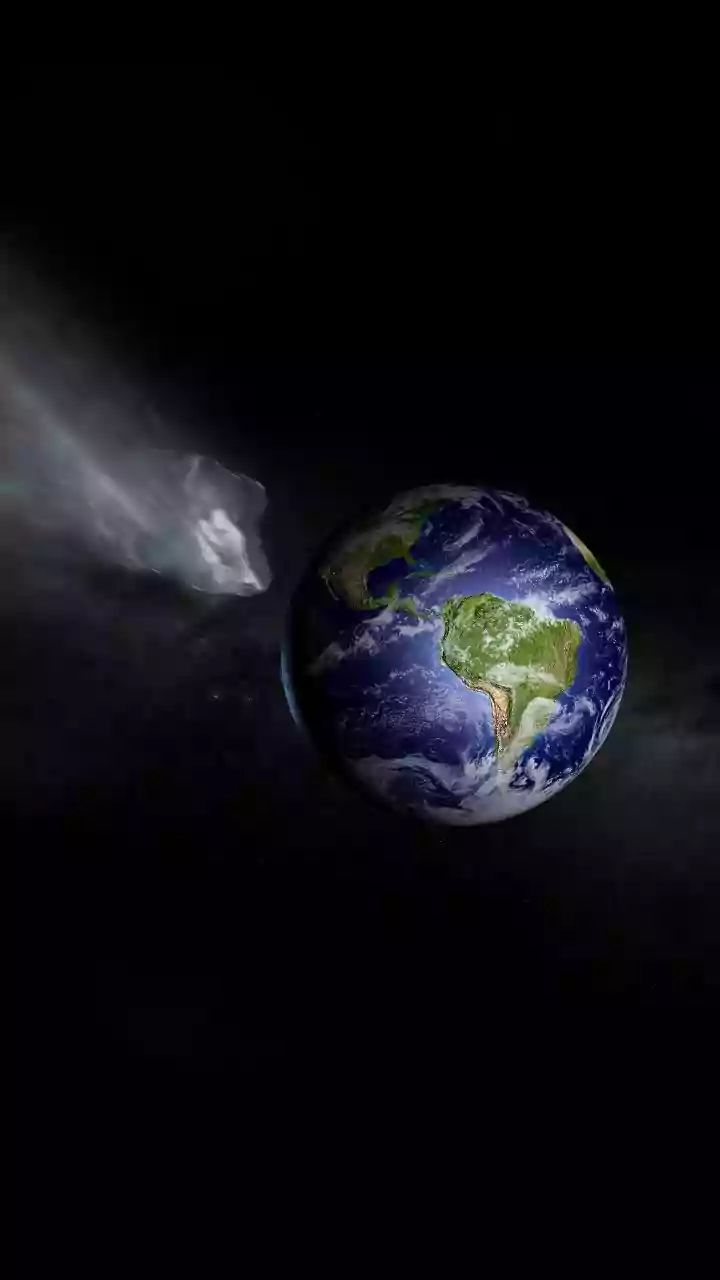
The sun, our life-giving star, occasionally unleashes colossal clouds of plasma and magnetic fields known as Coronal Mass Ejections (CMEs). While many miss our planet, a CME that scores a direct hit can be devastating. When one of these solar storms slams
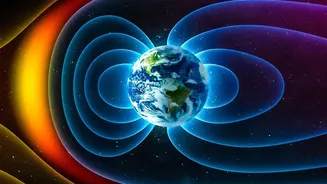
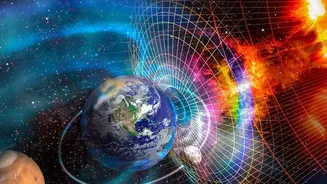
into Earth's protective magnetic shield, it triggers a geomagnetic storm. These events are the source of the beautiful auroras, but they also pose a significant risk to our technology-dependent society. The most famous modern example occurred in March 1989, when a CME-induced storm collapsed the entire Hydro-Québec power grid, plunging six million people into darkness for nine hours and causing damage to transformers as far away as New Jersey.
The Grid's Kryptonite: Geomagnetically Induced Currents
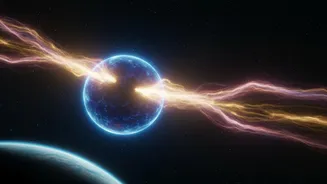
The direct danger to power grids is not the CME itself, but a secondary effect called Geomagnetically Induced Currents (GICs). The process begins when a geomagnetic storm causes rapid fluctuations in Earth's magnetic field. These fluctuations, in turn, create a powerful electric field on the planet's surface. Long, conductive networks like high-voltage transmission lines act like massive antennas, picking up this energy. This drives GICs—slow-moving, DC-like currents—into a grid designed for high-voltage AC power. This 'bad electricity' causes high-voltage transformers, the backbone of the grid, to saturate, overheat, and vibrate, which can lead to misoperation, permanent damage, and widespread blackouts that could last for weeks or even months.
The Challenge of Prediction
For decades, protecting the grid has been a reactive game. Power operators need timely and specific warnings to take protective measures, such as reducing the load on vulnerable parts of the system or temporarily taking certain assets offline. Historically, forecasting models focused on predicting changes to Earth's magnetic field, a method that provided a lead time of only about 10 minutes—hardly enough time to implement meaningful safeguards. Furthermore, early models struggled to account for two critical variables: the specific internal magnetic orientation of an incoming CME, which determines its severity, and the complex geology of the ground beneath the grid, which dictates the strength of the induced electric field.
The Physics and AI Breakthrough
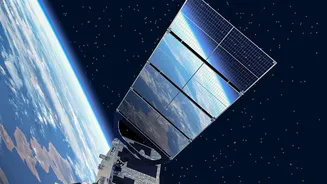
This is where space physics research is changing the paradigm. Scientists are moving beyond just observing a CME and now developing sophisticated models that fuse multiple data streams for a more complete picture. The most significant leap forward involves the application of artificial intelligence and machine learning. Researchers at institutions like the Cooperative Institute for Research in Environmental Sciences (CIRES) have developed new AI-driven methods that bypass the old forecasting steps. By combining real-time solar wind data from satellites, models of Earth's surface conductivity, and information about the grid's topology, these new systems can predict the formation of GICs directly, extending the warning time from minutes to a full hour or more.
Smarter Models for a Safer Grid
These next-generation impact models are not just faster; they are also more precise. Organizations like NASA's Heliophysics Science Division provide the foundational research that powers these advancements. Physics-based numerical models, such as Icarus, can now simulate the evolution of a CME's internal magnetic structure as it travels through space, offering a better assessment of its potential geo-effectiveness upon arrival. By integrating this with highly detailed maps of the Earth's subsurface electrical conductivity, forecasters can create localized threat assessments. This allows projects like NASA's experimental "Solar Shield" to move toward a future where they can pinpoint the specific transformers and substations most at risk, enabling grid operators to take targeted, effective action.