






An Unexpected Trajectory
On August 20, 2026, the Indian government appointed S. Somanath as a part-time, non-official director on the Central Board of the Reserve Bank of India for a four-year term. This move places one of India's most celebrated scientists on the apex decision-making
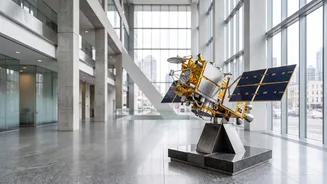
body of its central bank. Somanath, an aerospace engineer, is widely lauded for his tenure as the chairman of the Indian Space Research Organisation (ISRO) from January 2022 to January 2025. His leadership was instrumental in the historic success of the Chandrayaan-3 mission, which made India the first nation to achieve a soft landing near the lunar south pole. After a distinguished career in space technology, his shift to a high-level role at the RBI seems, at first glance, like a journey into a different universe. However, this appointment is less about monetary policy and more about a strategic infusion of technological prowess into India's financial core.
Not a Banker, But a Strategist
It is crucial to understand that Somanath is not joining the RBI in an executive capacity to set interest rates. His role is that of a part-time, non-official director on the Central Board. This board is responsible for the general superintendence and direction of the RBI's affairs, functioning as an oversight body rather than managing day-to-day operations. The board is deliberately composed of individuals from diverse fields to provide a wide spectrum of perspectives. Alongside the RBI Governor and Deputy Governors, it includes industrialists, academics, and government officials. Somanath’s appointment, therefore, is not about turning a scientist into a financier, but about bringing his unique expertise in managing complex, large-scale, mission-critical technology projects to the table. His experience at ISRO involved navigating immense technological challenges where failure was not an option, a mindset increasingly relevant to the financial sector.
The Real Mission: Fortifying India's Digital Economy
The appointment is a clear signal of the RBI's focus on technology as a cornerstone of the modern financial system. India's economy is increasingly built on digital rails, from the Unified Payments Interface (UPI) that processes billions of transactions to the rapid digitisation of banking services. This digital dependency, while a driver of growth and inclusion, also introduces significant risks. The need for resilient financial infrastructure, robust cybersecurity protocols, and a forward-looking approach to emerging technologies like artificial intelligence and blockchain is paramount. Somanath's expertise is seen as vital in guiding the RBI's strategy in these areas. His appointment provides the board with an expert who can rigorously assess the technological architecture underpinning India’s financial stability, ensuring it is both innovative and secure against ever-evolving threats. He brings a perspective forged in an environment where systems must be flawless, a valuable asset for the guardian of the country's financial system.
A Board Built for a Complex Future
Somanath’s induction is part of a broader trend of diversifying the expertise on the RBI's board. He joins alongside the reappointment of industrialist Anand Mahindra, Chairman of the Mahindra Group, ensuring a strong voice from the corporate world remains. The current board also includes experts from economics, audit services, and public policy, reflecting a deliberate strategy to equip the central bank with a multi-disciplinary brain trust. This move coincides with a recent restructuring of the board, which saw its total strength reduced from 15 to 11 members, potentially aiming for a more focused and agile governance structure. By bringing in a top technologist, the government is acknowledging that the future of central banking is no longer just about economics; it is also about technology, security, and systems engineering. This strategic appointment ensures that as India’s economy becomes more complex and digitally integrated, its central bank has the leadership to navigate the challenges ahead.