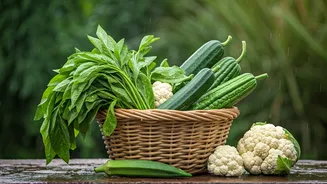









Bitter Gourd (Karela)
Many of us may have childhood memories of trying to avoid this famously bitter vegetable, but it’s time to make peace. Bitter gourd is a nutritional powerhouse, especially during the monsoon. It is packed with powerful antioxidants and antiviral properties
that are essential for fending off infections that are common during this season. Its active compounds help in boosting the body's resistance against illnesses. Furthermore, karela is excellent for managing blood sugar levels, making it a valuable addition for those with diabetes. Its bitter nature also stimulates the liver and aids in detoxification, helping to cleanse your system. A simple stir-fry with onions and spices or adding it to a dal can help balance its bitter taste while delivering its many benefits.
Bottle Gourd (Lauki)
Known for its cooling properties and high water content (about 92%), bottle gourd is one of the most easily digestible vegetables, making it perfect for the rainy season when our digestive system can be a bit sluggish. It’s incredibly light on the stomach and helps prevent feelings of heaviness or indigestion. Rich in both soluble and insoluble fibre, lauki promotes a healthy digestive tract, eases constipation, and helps maintain gut health, which is crucial for overall immunity. It is also low in calories and fat, making it an excellent choice for weight management. Whether you enjoy it as a simple sabzi, in a soup, or as a refreshing juice, lauki is a versatile and essential monsoon vegetable.
Pointed Gourd (Parwal)
Pointed gourd, or parwal, is a humble vegetable that often doesn't get the credit it deserves. During the monsoon, it’s particularly beneficial for keeping seasonal ailments at bay. It is loaded with Vitamin C, a crucial nutrient for a strong immune system, and Vitamin A, which is essential for healthy vision and skin. Parwal also has blood-purifying properties, helping to cleanse the body from within. According to Ayurvedic principles, it helps balance the 'kapha' dosha, which can be aggravated during the damp, cold monsoon weather, leading to coughs and colds. Its rich fibre content also aids digestion. Try it in a stuffed preparation or a simple, flavourful curry to enjoy its health-boosting qualities.
Indian Squash (Tinda)
Also known as round gourd, tinda is another monsoon favourite that is gentle on the stomach. Like bottle gourd, it has a high water content that keeps you hydrated and aids in digestion. What makes tinda stand out are its anti-inflammatory properties, which can help soothe the digestive tract and prevent gastric issues. It’s a good source of antioxidants that fight off free radicals and reduce oxidative stress in the body, strengthening your defences against illness. Being low in calories, it's a great addition to any meal without adding to the waistline. Tinda can be cooked in various ways, but a light, tomato-based curry is a delicious and healthy way to incorporate it into your diet.
Snake Gourd (Chichinda)
Snake gourd is a long, slender vegetable that offers a host of benefits perfect for the rainy season. It is particularly effective for respiratory health. It acts as an expectorant, helping to loosen phlegm and clear congestion from the respiratory tract, providing relief from the coughs and colds that are so frequent during this time. Its high fibre content promotes regular bowel movements and prevents constipation. Moreover, snake gourd is hydrating and low in calories, supporting both digestive health and weight management goals. Its subtle flavour makes it a great addition to dals, curries, and stir-fries, where it can absorb the spices and aromas of the dish beautifully.