






When the days get shorter and colder, finding the motivation for fitness can be tough. The step-up is a simple, powerful exercise that requires minimal space and equipment, making it a perfect addition to your indoor winter workout routine.
Your Low-Impact Winter Workout Ally
The beauty
of the step-up lies in its simplicity and effectiveness. It's a low-impact exercise, which means it's gentler on your joints than running or jumping, but it still delivers a fantastic cardiovascular workout. Step-ups primarily target the major muscles in your lower body, including the glutes, quadriceps, and hamstrings. By working one leg at a time, a practice known as unilateral training, you also improve your balance, stability, and core strength as your body works to stay steady. This helps correct muscle imbalances between your legs, leading to more even and functional strength that you use in everyday activities like climbing stairs or carrying groceries.
Finding Your Perfect Step Height
The most critical part of a safe and effective step-up is choosing the right height for your platform. A common mistake beginners make is choosing a step that is too high, which can put unnecessary stress on the knees and lower back. The general rule is to select a height where your knee forms a 90-degree angle or slightly greater when your foot is placed flat on the surface. If the angle is much smaller than 90 degrees, the step is too high for your current mobility and strength level. For beginners, a low step of about four to eight inches is a great starting point. You can use the bottom step of a staircase, a sturdy stool, or an aerobic step. The key is stability; ensure whatever you use will not move or tip over.
Mastering the Move: A Step-By-Step Guide
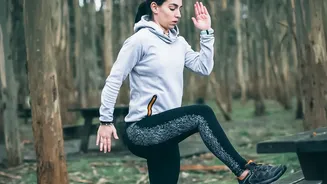
Proper form is crucial to maximize benefits and prevent injury. Stand facing your step with your feet hip-width apart. Engage your core to keep your back straight and your chest up. 1. Place your entire right foot firmly onto the step. Make sure your whole foot, especially the heel, is on the platform, not just your toes. 2. Press through your right heel to lift your body up, placing your left foot on the step to meet the right. The power should come from your front leg, not from pushing off with your back leg. 3. Stand up tall on the step, making sure your hips are fully extended. 4. Slowly and with control, lower your left foot back to the floor, followed by your right foot. Controlling the descent is just as important as the upward movement. 5. Repeat the movement, this time leading with your left foot. Continue to alternate for your desired number of repetitions.
Common Mistakes and How to Avoid Them
To get the most out of your workout, watch out for these common errors. First, avoid using momentum by pushing off from your back foot. To prevent this, try lifting the heel of your back foot before you step up, putting all the focus on the front leg. Second, keep your torso upright and avoid leaning too far forward, which shifts the work from your legs to your lower back. Third, pay attention to your knee alignment. As you step up, your knee should track over your foot and not cave inward. If you find your form breaking down—whether your knee is buckling or you're using momentum—it's a sign that your step is too high or your muscles are fatigued. It's always better to use a lower step with perfect form than a higher one with poor technique.
Making It a Habit
To incorporate stepups into your winter fitness plan, start with a manageable goal. Try performing three sets of 10 to 12 repetitions per leg, two to three times a week. You can do this as a standalone exercise or as part of a larger circuit. As you get stronger, you can progress the exercise in a few ways. You can increase the height of your step (while maintaining that 90ndegree knee angle), increase your repetitions, or add weight by holding dumbbells. Listening to your body is key; progress at a pace that feels challenging but safe.