

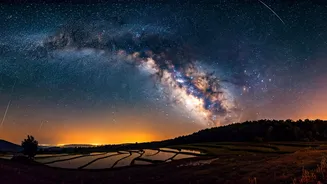


Your Personal Guide to the Galaxy
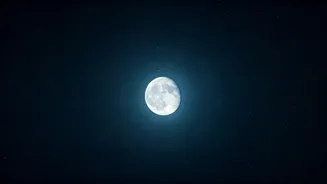
The secret to making astronomy feel simple is to start with what you already know: the Moon. As it travels across the sky each month, the Moon often appears to pass close to bright planets and stars. These celestial meet-ups are called conjunctions or,
more simply, 'moon pairings.' They create beautiful sights and act as giant, unmissable signposts in the sky. If you can find the Moon, these pairings can point you directly to planets like Saturn or Mars, which might otherwise be tricky to distinguish from the thousands of stars. Think of the Moon as a friendly tour guide for the solar system, making it easy to put a name to the lights you see in the sky.
What to Look for in July 2026
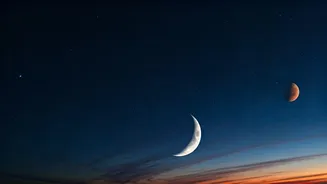
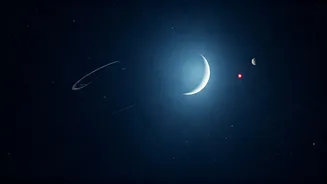
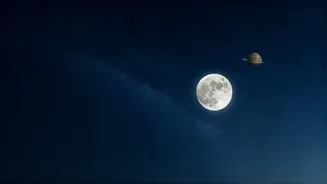
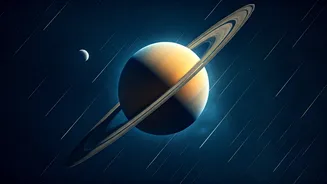
July is a fantastic month for beginners. The warm nights make stargazing comfortable, and there are several eye-catching Moon pairings on the calendar. On the night and early morning of July 7, the third-quarter Moon will be close to Saturn. Look towards the eastern sky after midnight to see the pair rise and travel together until dawn. Saturn will look like a steady, golden star that doesn't twinkle. A few mornings later, on July 11 and 12, a slim crescent Moon will form an attractive trio with reddish Mars and the beautiful Pleiades star cluster, also known as the Seven Sisters. This will be a stunning sight in the pre-dawn eastern sky. Then, on July 17, look west shortly after sunset for a truly beautiful pairing: a thin crescent Moon hanging near the brilliant planet Venus. Venus is unmistakably bright, making this one of the easiest and most rewarding events to spot, even from the city.
Tips for Your First Stargazing Session
You don’t need expensive equipment to enjoy these celestial shows. Most of July's Moon pairings are visible to the naked eye. The most important thing is to find a spot with a clear view of the sky, away from the direct glare of streetlights. Give your eyes at least 15 minutes to adjust to the darkness; you'll be amazed at how many more stars become visible. While a telescope is not necessary, a simple pair of binoculars can dramatically enhance your view, revealing the bluish tint of the Pleiades or even the larger moons of Jupiter on a different night. Don't worry about knowing everything at once. The goal is simply to go out, look up, and enjoy the cosmic perspective.
Using an App to Enhance Your View
If you want a little more guidance, your smartphone can be an incredibly powerful tool. Free stargazing apps like Stellarium Mobile, Sky Map, or Star Walk 2 can help you identify exactly what you're looking at. You simply point your phone at the sky, and the app uses your location to show a real-time map of the stars, planets, and constellations. They can help you confirm that the bright object near the Moon really is Saturn and can even show you the outlines of constellations. Many have a 'red light' mode, which helps preserve your night vision while you're observing.
Beyond the Planets
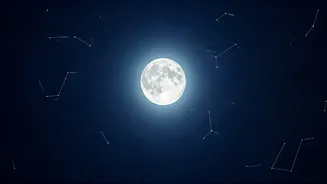
The Moon's journey doesn't just bring it close to planets. It can also guide you to bright stars and constellations. As the Moon moves through the zodiac, it passes landmarks all over the sky. For instance, on July 11, its proximity to Mars will also place it near the constellation Taurus the Bull. On July 24, the Moon will pass extremely close to the bright, red star Antares, the 'heart' of the Scorpius constellation. By paying attention to what's near the Moon on any given night, you’ll start to recognize these stellar patterns, turning a sky full of random dots into a familiar, friendly map.