

What IRCTC's Tour Includes
The IRCTC 'Japan Ex Delhi' package is a 10-day, 9-night escorted tour priced at ₹3,45,999 per person on a triple-sharing basis (rising to ₹3,49,999 for twin-sharing). The all-inclusive offer is built on convenience. It covers return economy flights from
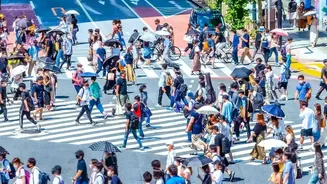
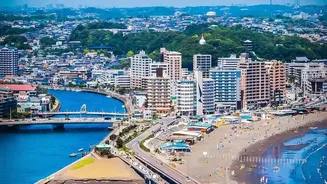
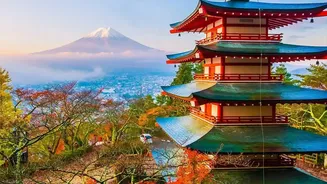
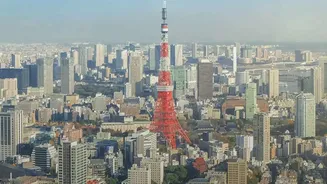
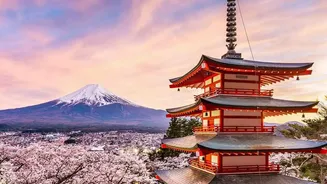
Delhi, four-star hotel accommodation, all daily meals (breakfast, lunch, and dinner), and Japan tourist visa charges. The itinerary is extensive, covering Tokyo, Hakone, Kyoto, Osaka, Nara, and Hiroshima. It also includes major experiences like a visit to Mount Fuji's 5th Station, a cruise on Lake Ashi, entry to digital art museums like TeamLab Planets, and a ride on the famous Shinkansen bullet train. Essentially, from the moment you leave Delhi until you return, everything from airport transfers to sightseeing in an air-conditioned coach with an English-speaking guide is handled for you.
The DIY Cost: Flights and Visa
The single biggest expense for a trip to Japan is typically airfare. A round-trip economy flight from a major Indian city like Delhi or Mumbai to Tokyo generally costs between ₹45,000 and ₹75,000, depending on the airline and how far in advance you book. Let’s take a mid-range estimate of ₹60,000 per person. For the visa, Japan has kept the fee for Indian citizens exceptionally low. The official embassy fee remains just ₹500, although you might pay a bit more for service charges through an agency. This is a significant saving compared to the fees for many other nationalities. This brings our initial independent cost to around ₹60,500.
The DIY Cost: Accommodation and Transport
The IRCTC package promises four-star hotels. A mid-range hotel in cities like Tokyo or Kyoto can cost anywhere from ¥13,000 to ¥25,000 (roughly ₹8,000 to ₹15,000) per night. For nine nights, a conservative average of ₹10,000 per night amounts to ₹90,000. For transport, the IRCTC itinerary includes two Shinkansen journeys. A 7-day Japan Rail (JR) Pass, which offers extensive travel on JR lines, costs ¥50,000 (about ₹27,500). While this pass may not be cost-effective for every itinerary, the route covered by the tour (Tokyo-Kyoto-Hiroshima) makes it a borderline value proposition. Adding another ₹10,000 for local transport like subways in cities (not covered by the JR Pass) brings the total for accommodation and transport to approximately ₹1,27,500.
The DIY Cost: Food and Sightseeing
Food in Japan can be both a delight and a variable expense. While the IRCTC package includes all meals, a DIY traveler has more flexibility. One can eat well on a mid-range budget of about ₹4,000 per day, mixing affordable convenience store meals with sit-down restaurant experiences. Over 10 days, this amounts to ₹40,000. For sightseeing, entry fees for temples and museums are often modest, ranging from ₹300 to ₹1,500 per attraction. However, marquee experiences like TeamLab Planets or the Tokyo Skytree can cost more. A reasonable budget for all the attractions mentioned in the IRCTC itinerary would be around ₹20,000. This puts the food and fun total at approximately ₹60,000.
The Verdict: Convenience vs. Cost
Adding up the DIY estimates gives us a rough total of ₹2,48,000 per person (₹60,500 for flights/visa + ₹1,27,500 for stay/transport + ₹60,000 for food/sights). This is nearly ₹1 lakh less than the IRCTC package's twin-sharing price of ₹3,49,999. So, what does that extra lakh buy you? The answer is absolute convenience. The IRCTC tour eliminates the hassle of visa applications, booking multiple hotels, navigating train systems in a foreign language, and finding places to eat three times a day. It offers the security of a group and a guide, which can be invaluable for first-time visitors, families, or older travelers. The DIY route, on the other hand, offers flexibility. You can choose your own pace, stay in unique neighbourhoods, and dive deep into your specific interests, whether that's food, anime, or art. It requires more research and a willingness to be independent, but the financial savings are substantial.