








Your Body's Clock Runs on Light
Deep inside your brain is a master clock known as the circadian rhythm. This 24-hour cycle governs everything from your sleep-wake patterns to hormone release and metabolism. Its most powerful environmental cue is light. For millennia, the rising and setting
of the sun kept our internal clocks perfectly synchronised. Bright, natural daylight signals to the body that it's time to be awake and alert, while the darkness of night triggers the production of melatonin, the hormone that makes you feel sleepy. In the modern world, artificial lighting has thrown this delicate system out of balance, contributing to sleep issues and mood disruptions. This is especially true in small apartments where one room often serves multiple purposes and natural light can be scarce.
Not All Light Is Created Equal
The key to reclaiming your natural rhythm lies in understanding that different types of light send different signals. Artificial light is measured in Kelvin (K), which describes its color temperature. Cool, blue-toned light (around 4500K to 6500K) mimics the bright light of midday. It boosts alertness and suppresses melatonin production, making it great for daytime focus but detrimental in the evening. Conversely, warm, amber-toned light (between 2000K and 3000K) resembles the glow of a sunset or candlelight. This type of light has a minimal effect on melatonin, promoting relaxation and signaling to your brain that it's time to wind down. By strategically using these different 'colors' of light, you can essentially program your environment to support your body's natural cycle.
A Lighting Strategy for Morning
To start your day feeling energised, your goal is to simulate a bright morning. This helps to halt melatonin production and reset your internal clock for wakefulness. If you have windows, open curtains immediately upon waking. Even on cloudy days, natural light is incredibly effective. For apartments with limited natural light, consider a 'wake-up light' alarm clock, which gradually brightens to mimic a sunrise. You can also switch to full-spectrum or cool-toned bulbs (5000K or higher) in areas where you spend your morning, like the kitchen or bathroom. Getting a dose of bright light signals to your brain that the day has officially begun, which can improve alertness and even advance your sleep schedule, making it easier to fall asleep later.
The Evening Wind-Down Routine
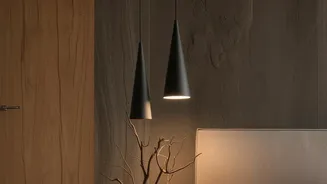
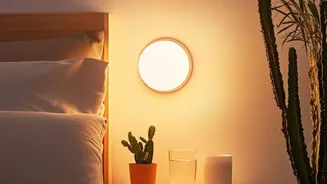
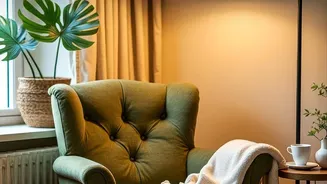
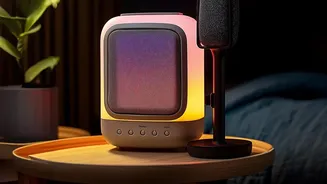
The most critical adjustment for better sleep and relaxation is managing your light exposure in the two to three hours before bed. This is the time to eliminate exposure to bright, blue light. Avoid using overhead lights on full blast. Instead, switch to a 'layered lighting' approach using multiple, softer sources. Use table lamps, floor lamps, or wall sconces fitted with warm-toned bulbs, ideally 2700K or lower. Using dimmers is a game-changer, allowing you to lower the intensity of light as the evening progresses, which encourages a sense of calm and intimacy. This transition from bright, overhead light to lower, warmer pools of light is a powerful cue for your body to begin producing melatonin and prepare for restorative sleep.
Smart Solutions for Small Spaces
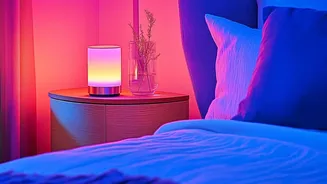
Small apartments require creative solutions. Since one area might be your office by day and your living room by night, adaptable lighting is essential. Smart bulbs are an excellent investment, allowing you to change both the brightness and color temperature from an app on your phone. You can program them to emit cool, energising light during work hours and automatically shift to a warm, dim glow in the evening. To make a small, dark room feel bigger and brighter, use mirrors. Placing a large mirror opposite a window or a lamp can double its impact by bouncing light around the room. Also, opt for light-coloured walls and decor, which reflect light rather than absorbing it. For rooms with no windows at all, combining layered artificial lighting with reflective surfaces can create a surprisingly open and inviting atmosphere.