






The Vande Bharat Journey to Srinagar
Thanks to the completion of the Udhampur-Srinagar-Baramulla Rail Link (USBRL) project, direct train travel to Srinagar is now operational. Indian Railways runs multiple Vande Bharat Express services between Jammu Tawi and Srinagar. These services were
initially launched between Katra and Srinagar in June 2025 and were extended to Jammu Tawi from April 30, 2026. The journey covers approximately 269-270 kilometres in about four hours and 45 minutes to six hours, a significant reduction from the 8-12 hours required by road. The route is an engineering marvel, featuring the world's highest railway bridge over the Chenab River and the nation's first cable-stayed rail bridge, offering breathtaking views. Due to high demand, a third Vande Bharat service has recently been approved for the route.
How to Book Your Tickets
Booking your journey is straightforward. Tickets for the Jammu Tawi-Srinagar Vande Bharat can be booked through the official IRCTC website or the IRCTC Rail Connect app. The train numbers for the existing services include 26401/26402 and 26403/26404. Fares for an AC Chair Car are approximately ₹715, while the Executive Chair Car costs around ₹1,320, though these prices are subject to change. It is highly advisable to book your tickets well in advance, as reservations open 60 days prior and seats on this popular route fill up very quickly, especially during peak tourist seasons.
Best Time to Visit Srinagar
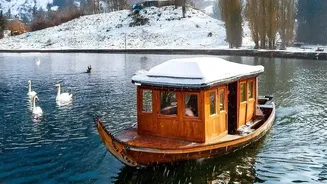
Srinagar’s beauty changes with the seasons, each offering a unique experience. The most popular time to visit is from March to August, covering both spring and summer. In spring (March-May), the valley is in full bloom, highlighted by the spectacular Tulip Festival in April. Summer (June-August) offers pleasant weather with temperatures between 14°C and 30°C, perfect for sightseeing and outdoor activities like Shikara rides on Dal Lake. Autumn (September-October) paints the valley in hues of gold and red as the Chinar leaves turn, creating a stunning landscape. For those who love snow, winter (November-February) transforms Srinagar into a wonderland, with temperatures dropping to freezing and opportunities for skiing in nearby Gulmarg.
Where to Stay: Hotels and Houseboats
Srinagar offers a wide array of accommodation choices. For a truly iconic Kashmiri experience, consider staying in a houseboat on Dal Lake or the quieter Nigeen Lake. These range from budget-friendly options to luxurious, intricately carved floating palaces. Prices for houseboats can vary widely, from around ₹2,000 to over ₹10,000 per night. The city also has numerous hotels catering to all budgets. You can find budget guesthouses starting from as low as ₹800-₹1,200 per night, while mid-range hotels cost between ₹3,000 and ₹7,000. Luxury hotels like The Lalit and Taj offer premium stays with prices upwards of ₹20,000 per night. Booking in advance, particularly during peak season, is recommended to secure the best prices and options.
Must-Do Activities for First-Timers
No trip to Srinagar is complete without a Shikara ride on Dal Lake, especially at sunrise or sunset. Exploring the city's famous Mughal Gardens—Shalimar Bagh, Nishat Bagh, and Chashma Shahi—is another essential experience. For a panoramic view of the city and the lake, make your way up to the Shankaracharya Temple. A visit to the Hazratbal Shrine, a revered Muslim shrine on the banks of the Dal, offers a peaceful and spiritual experience. Don't miss a walk through the old city to explore the markets around the Jama Masjid and experience the local culture.
A Taste of Kashmir: What to Eat
Kashmiri cuisine, or Wazwan, is a meat-lover's paradise. For an authentic experience, try a Wazwan platter, which includes dishes like Rogan Josh (aromatic lamb curry), Rista (meatballs in a fiery red gravy), and Gushtaba (minced mutton balls in a yoghurt gravy). For vegetarians, there are delicious options like Dum Aloo, Lyodur Tschaman (paneer in a turmeric-based gravy), and Nadru Yakhni (lotus stem in a yoghurt curry). Start your day like a local with a visit to a traditional bakery for fresh bread like Girda or Lavasa, paired with a cup of Kahwa—a fragrant green tea infused with saffron, cardamom, and almonds.