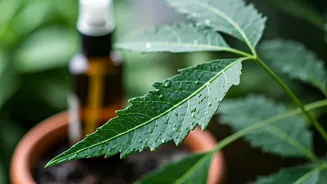









Why Humidity is a Garden's Frenemy
High humidity, especially during the Indian monsoon, creates the perfect breeding ground for a host of problems in your carefully tended balcony garden. The damp, still air clings to leaves, preventing them from drying properly. This environment is an open
invitation for fungal diseases like powdery mildew, black spot, and rust. These issues manifest as unsightly white or dark patches on leaves, weakening the plant and hindering photosynthesis. At the same time, the humid conditions encourage a population boom among common garden pests like aphids, mealybugs, spider mites, and whiteflies. They suck the sap from your plants, causing leaves to yellow, curl, and eventually drop. For the urban gardener with limited space, an infestation can quickly overwhelm an entire collection.
Nature's Protector: Understanding Neem Oil
Enter neem oil, a traditional and powerful organic solution. Extracted from the seeds of the neem tree (Azadirachta indica), a tree revered in India for centuries, this oil is a gardener's best friend. Its power lies in a compound called azadirachtin, which acts as a multifaceted protector for your plants. It's not a harsh chemical that kills on contact. Instead, it works in more subtle, effective ways. As an antifeedant, it makes leaves unpalatable to chewing and sucking insects. As a hormone disruptor, it interferes with the pests' life cycle, preventing them from moulting and reproducing. And importantly for humid weather, it has fungicidal properties that can prevent the germination of fungal spores, stopping diseases like powdery mildew before they take hold. It's a holistic, biodegradable, and non-toxic solution for pets and humans when used correctly.
The Perfect Neem Oil Solution: A Simple Recipe
Mixing your own neem oil spray is incredibly simple and cost-effective. You cannot just mix the oil with water, as they will separate. You need an emulsifier—a gentle liquid soap—to help them combine. Here is the standard, trusted recipe:
1. **Start with one litre of warm water.** Warm water helps the oil and soap mix more easily.
2. **Add 1 teaspoon (5ml) of cold-pressed neem oil.** Quality matters, so look for 100% pure, cold-pressed oil for maximum effectiveness.
3. **Add ½ teaspoon (2-3ml) of a mild liquid soap.** You can use a simple dish soap or a specific horticultural soap. Avoid soaps with degreasers or bleach.
Combine these in a spray bottle and shake vigorously. The mixture should look milky and uniform. It's important to make a fresh batch each time you spray, as the compounds in neem oil begin to break down once mixed with water.
Application is Everything: How and When to Spray
How you apply the spray is just as important as the mixture itself. To get the best results and keep your plants safe, follow these steps. First, always spray in the early morning or, even better, in the late evening. Applying neem oil in direct, hot sunlight can cause the leaves to burn. Second, be thorough. Pests and fungal spores love to hide on the undersides of leaves and in the crevices where leaves join the stem. Ensure you coat all surfaces of the plant—tops and bottoms of leaves, stems, and the surrounding soil surface. For active pest or fungal problems, apply the spray every 7 days until the issue is resolved. As a preventative measure during peak humidity, a light spray every 14 days is sufficient to keep most problems at bay.
Common Mistakes to Avoid
While neem oil is a wonderfully forgiving tool, a few common mistakes can reduce its effectiveness or even harm your plants. The most frequent error is spraying during the heat of the day, which leads to leaf scorch. Another is forgetting the soap; without an emulsifier, you're just spraying beads of oil and water that won't coat the leaves properly. Using too much neem oil is also a problem—more is not better. A stronger concentration can clog the stomata (the plant's breathing pores) and damage foliage. Stick to the recommended 5ml per litre ratio. Finally, don't just spray the visible problem. Always treat the entire plant, as pests and spores are often present long before you can see them. Before spraying a whole plant, it's always wise to do a 'patch test' on a single leaf and wait 24 hours to ensure there's no adverse reaction.