




The Symphony of Rain and Rice
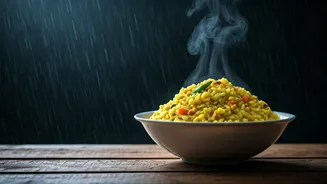
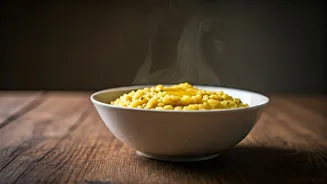
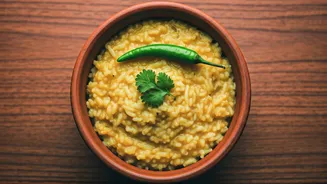
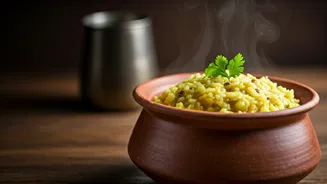
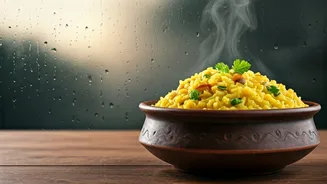
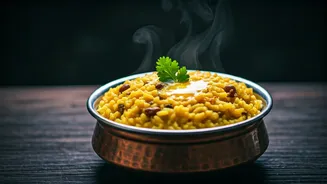
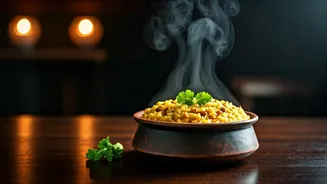
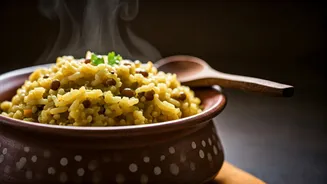
There are few things as quintessentially Indian as the monsoon. It’s a season of relief, renewal, and reflection. And for millions, its soundtrack of pouring rain is inextricably linked to the gentle bubbling of a pot on the stove. Inside that pot is Khichdi,
a deceptively simple concoction of rice and lentils that transforms into something far greater than the sum of its parts. It’s not a dish of grand occasions or elaborate festivities. Instead, its magic lies in its profound simplicity and its ability to offer uncomplicated comfort when the world outside feels chaotic. When the roads are flooded and plans are cancelled, Khichdi emerges as the hero of the day—a warm, nourishing hug in a bowl that signals it’s time to slow down, stay in, and be together.
More Than Just a Meal
To call Khichdi just 'food' is to miss the point entirely. It is a cultural touchstone. It's often the first solid food a baby eats and the prescribed meal for someone recovering from an illness. Its easy digestibility and nourishing properties have earned it a reputation as a restorative dish, trusted by generations of mothers and grandmothers. But its identity isn’t confined to the sickroom. In Gujarat, it’s a staple weeknight dinner served with kadhi. In Bengal, the more elaborate Bhog’er Khichuri is an essential offering during Durga Puja, rich with vegetables and aromatic spices. In Uttar Pradesh and Bihar, it is the celebratory dish for Makar Sankranti. This versatility is key to its unifying power. It exists in countless variations across every region, adapted to local tastes and traditions, yet it remains universally recognizable as a source of comfort.
The Great Leveller
In a country of immense diversity and complex social structures, Khichdi is a great leveller. It’s eaten by the rich and the poor, in bustling cities and remote villages. It requires minimal ingredients and effort, making it accessible to everyone. The base of rice and dal is a blank canvas. Some might add a medley of vegetables and a dollop of pure ghee, while others might have it plain with a spoonful of pickle and a crisp papad. The accompaniments change, but the core dish remains a symbol of humble satisfaction. This shared experience creates an unspoken bond. During a downpour, knowing that countless other families are also gathered around a table sharing this same meal fosters a subtle but powerful sense of national unity.
A Ritual of Togetherness
Perhaps the most significant reason Khichdi brings people together is the ritual surrounding it. As a one-pot meal, it’s inherently communal. It doesn’t demand the complicated choreography of a multi-course dinner. Instead, the steaming pot is often placed directly on the dining table, inviting everyone to serve themselves. The act of passing around the ghee, the yoghurt, the chutney, and the fried potatoes becomes a small, intimate dance of sharing. It’s a meal that encourages conversation, not silent, formal dining. It’s the food of lazy, rain-soaked afternoons, of stories being exchanged while thunder rumbles in the distance. It’s a dish that doesn’t compete for attention but rather provides a warm, comforting backdrop for connection.