



A Fragile, Frozen Archive
Deep within craters at the Moon’s poles are areas that haven't seen sunlight for billions of years. These permanently shadowed regions (PSRs) are some of the coldest places in our solar system, with temperatures low enough to preserve water ice over geological
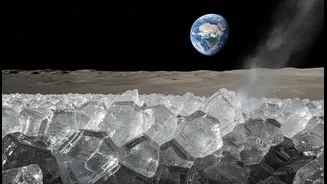
timescales. This isn't just any ice; scientists believe it's a priceless archive. Trapped within it could be materials from ancient comets and asteroids that slammed into the Moon, potentially holding clues to the origin of water in the inner solar system and even the building blocks of life on Earth. Reading this record requires measuring the ice's composition with incredible precision. For scientists, these frozen deposits are like a time capsule, offering a direct look into the solar system's distant past.
The Problem with Progress
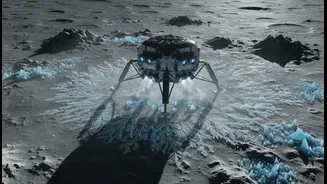
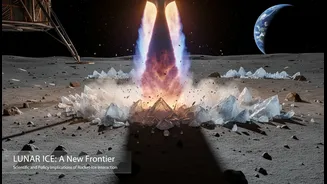
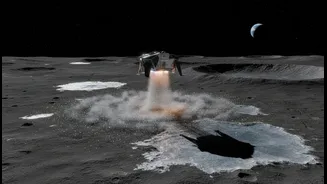
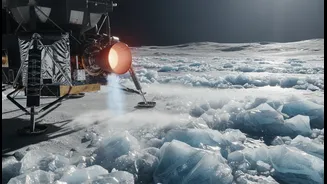
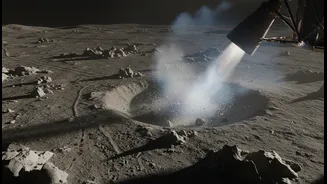
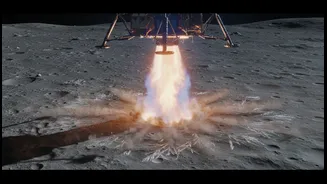
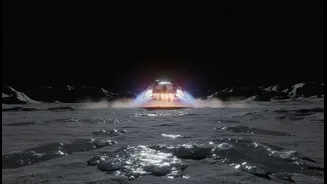
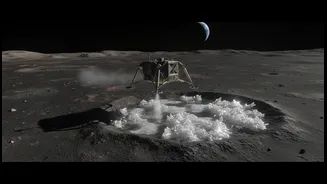
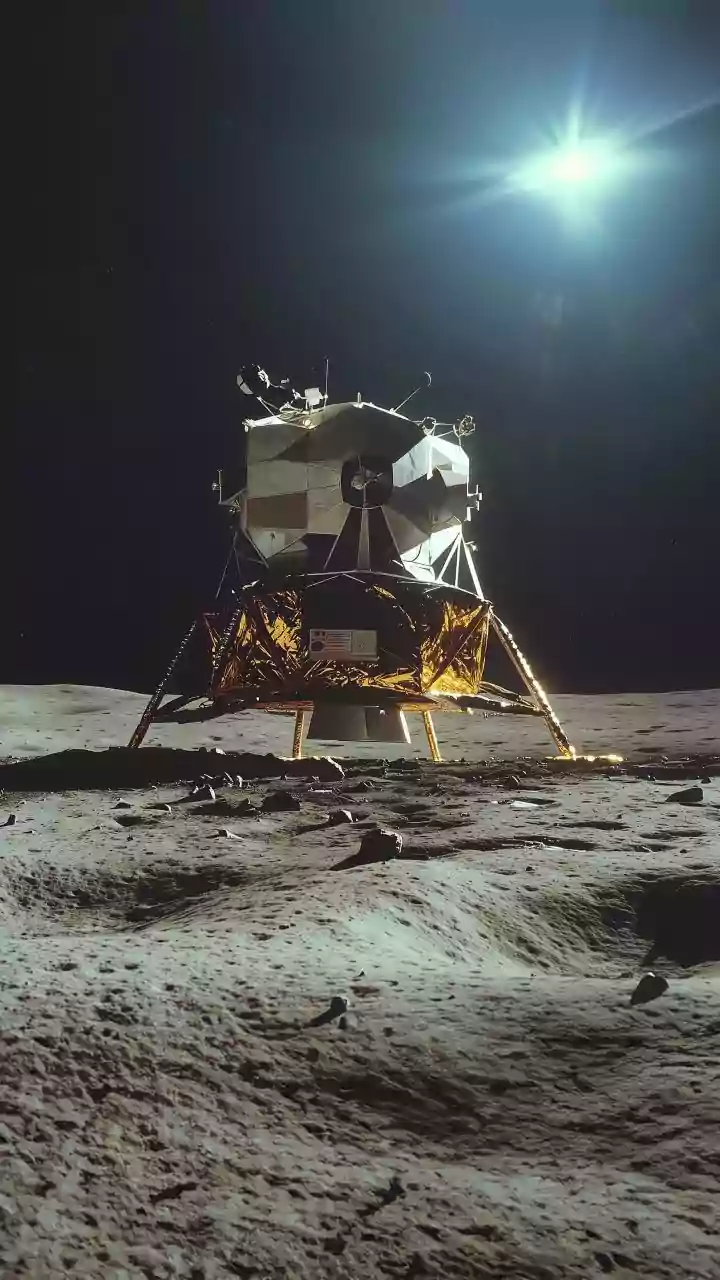
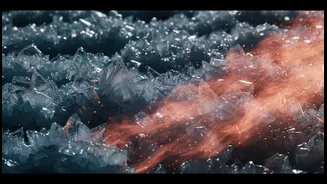
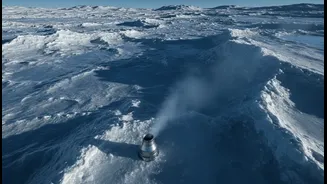
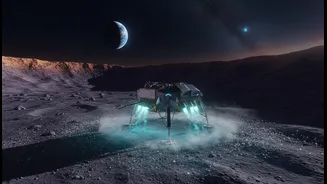
Every spacecraft that lands on the Moon uses rocket engines to slow its descent. The exhaust from these engines isn't clean; it contains significant amounts of water vapor and, depending on the fuel, other chemicals like methane. In the Moon's near-vacuum, this exhaust cloud expands rapidly. Recent computer simulations have shown that exhaust from a single, medium-sized lander can spread across the entire lunar surface in a matter of hours. Within months, a substantial percentage of this exhaust—up to 40% in some models—can settle and freeze onto the surface, particularly in the ultra-cold PSRs. This creates a serious problem: the exhaust contaminates the very ice scientists want to study, making it difficult or impossible to distinguish between the Moon's native, ancient water and water brought from Earth by a rocket.
A Global, Persistent Threat
The contamination isn't a localized issue. Studies show that exhaust molecules don't just settle near the landing site. Instead, they can essentially "hop" across the lunar surface in ballistic trajectories, eventually reaching the opposite pole. One recent study found that over half the methane exhaust from a south pole landing could become trapped in PSRs across the entire Moon. This means there may be no truly safe place to land a spacecraft without risking the integrity of these scientifically vital areas. The concern is that as missions under programs like NASA's Artemis increase, and with plans for larger landers and permanent bases, the cumulative effect of this contamination could permanently alter the lunar environment and erase billions of years of history before we've had a chance to read it. As one scientist noted, our own activities could hinder the very exploration we set out to achieve.
The Search for Responsible Solutions
The scientific community is urging that monitoring and modeling rocket exhaust become a routine part of planning all future lunar missions. This isn't about stopping exploration, but about proceeding with caution. Some suggestions include carefully selecting landing sites, perhaps in colder areas where exhaust molecules might not travel as far, or establishing internationally recognized scientific preserves. This connects to a broader conversation about protecting lunar heritage. The Artemis Accords, a set of principles for space cooperation signed by dozens of countries, include a commitment to preserve outer space heritage. While initially focused on historical sites like the Apollo landing zones, the principle could be extended to protect areas of unique scientific value. Ultimately, the challenge is to balance the drive for discovery and resource utilization with the responsibility to protect this irreplaceable celestial record for future generations.