





How Your Phone Became a Makeup Mirror
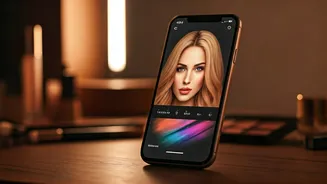
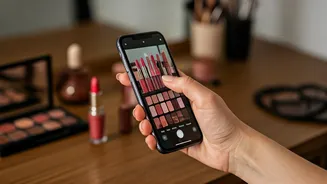
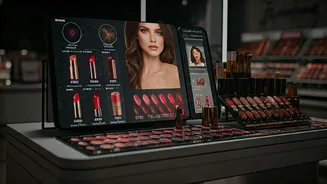
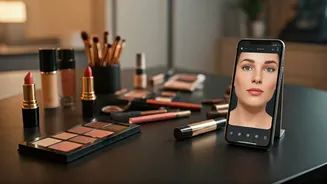
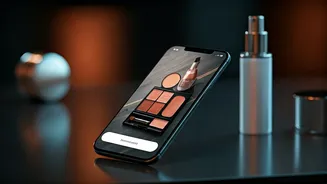
At its core, virtual try-on (VTO) technology uses a powerful combination of artificial intelligence (AI) and augmented reality (AR). When you open a VTO feature on a website or app, your device's camera captures your face. An advanced AI algorithm then
maps your key facial features—like your lips, eyes, and cheeks—with incredible precision. The AR component overlays digital products, like a specific lipstick shade or eyeshadow, onto your real-time video feed. The result is a photo-realistic simulation that shows you how a product would look, moving as you move and adapting to your expressions. This technology, pioneered by companies like L'Oréal's ModiFace and Perfect Corp, has become sophisticated enough to account for texture, finish, and lighting to give a true-to-life preview.
From Pandemic Novelty to Business Imperative
While VTO tech existed before 2020, the global pandemic acted as a massive catalyst. With physical testers suddenly becoming unhygienic and in-store shopping restricted, brands needed a new way for customers to experience products. What started as a 'nice-to-have' feature quickly became a 'must-have' tool for survival and growth in a touchless economy. Beauty giants like L'Oréal, which acquired ModiFace in 2018, were perfectly positioned to scale this technology. L'Oréal reported a 150% increase in virtual try-on sessions from 2022 to 2023, showing that the tech has become a firm part of the consumer's shopping habits, well beyond the pandemic.
The Undeniable Impact on Sales
The “reshaping” of retail isn't just about a cool feature; it's about tangible business results. Data shows that integrating VTO technology has a dramatic effect on key metrics. Some brands have seen conversion rates—the percentage of shoppers who make a purchase—increase by as much as 90%. Avon, for example, saw a 320% boost in conversions after implementing the technology. It's not just about getting the sale; it's about making a better sale. Shoppers who use VTO are more confident in their choices, which leads to higher average order values and, crucially, a significant reduction in product returns. Perfect Corp. reports that its brand partners often see an 8x decrease in returns, tackling one of the biggest pain points in e-commerce.
A Game-Changer for Indian Consumers
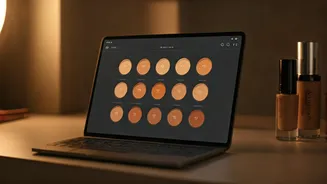
In a market as diverse as India, finding the right shade of foundation or concealer online has always been a significant challenge. VTO technology is proving to be a powerful solution. Major Indian e-commerce players like Nykaa have partnered with L'Oréal to integrate ModiFace, allowing customers to virtually try on products from a wide range of brands. This is particularly vital in India, where skin tones vary immensely across regions. The ability to accurately test a product virtually removes a huge barrier to online purchasing. With the Indian virtual try-on market forecast to grow at the fastest rate globally through 2035, this technology is set to become a standard expectation for Indian shoppers.
Beyond Makeup: The Future is Full-Look Personalisation
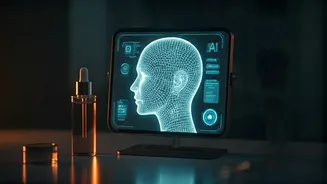
The technology isn't stopping at lipstick. AI and AR are now being used for virtual hair colour try-ons, eyewear, and even jewellery. The next frontier is AI-powered skincare diagnostics. Using just a selfie, AI can analyze skin concerns like wrinkles, acne, dark spots, and moisture levels to provide a personalized skincare routine. Companies are training these AI models on tens of thousands of medical-grade images to ensure accuracy. Looking ahead, the vision is a hyper-personalized shopping experience where AI acts as a personal beauty advisor, recommending products not just based on your features, but also on your past purchases, viewed styles, and even the colours in your outfit.