






The Dawn of a New Space Race
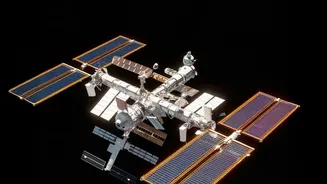
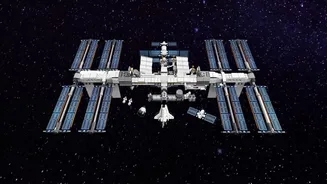
With the ISS set for a controlled reentry into the Pacific Ocean, NASA is turning to the private sector to ensure an uninterrupted human presence in low-Earth orbit. Instead of owning and operating the next generation of orbital platforms, the agency
will be a customer, buying services and research time from commercially owned and operated stations. This has ignited a new space race, not between nations, but between ambitious aerospace companies, each vying to build the habitats that will define the future of science, manufacturing, and even tourism beyond Earth.
Axiom Space: Building on an ISS Legacy
Axiom Space has a unique strategy: build a bridge, not a leap. The company, which has already flown multiple private astronaut missions to the ISS, plans to attach its first commercial modules directly to the existing station starting around 2027. These modules will be tested and utilized while attached to the ISS. Then, before the station is retired, they will detach and become the free-flying, independent Axiom Station. This incremental approach provides valuable operational experience and a steady revenue stream. The first module's primary structure is already in production, marking a tangible step toward the world's first commercial space station.
Orbital Reef: A Business Park in the Stars
Led by Blue Origin and Sierra Space, the Orbital Reef concept is envisioned as a versatile "mixed-use business park" in orbit. Designed to support about 10 people, its modular design is intended to cater to a wide range of clients, from national space agencies conducting research to companies exploring in-space manufacturing and even space tourists. A key component is Sierra Space's Dream Chaser, a spaceplane that will provide crew and cargo transport. The project boasts a broad coalition of partners, including Boeing and Redwire Space, aiming to create a vibrant and diverse orbital economy.
Starlab: A Dedicated Science Hub
While other projects embrace a mix of uses, Starlab—a joint venture between Voyager Space and Airbus—is positioning itself as a premier destination for science and research. The design features a single, large inflatable module that would launch fully assembled on a super heavy-lift rocket. This science-first focus is intended to provide a seamless transition for researchers who currently depend on the ISS. The transatlantic partnership also has strong interest from the European Space Agency (ESA), highlighting the continued importance of international collaboration in orbit.
Designing for Discovery and Commerce
These next-generation habitats are more than just laboratories; they are sophisticated environments designed for long-duration stays and complex work. Drawing on decades of lessons from Skylab, Mir, and the ISS, architects are creating interiors with distinct private quarters and communal areas to support the psychological well-being of the crew. The scientific potential is immense. Microgravity allows for groundbreaking experiments in materials science, biology, and physics that are impossible on Earth. Furthermore, these stations will serve as crucial testbeds for technologies needed for future missions to the Moon and Mars, including advanced life support systems and radiation shielding.