







Tai Chi: The Art of Rooting
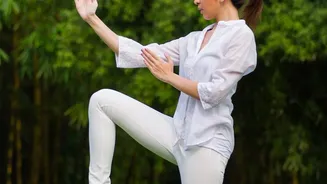
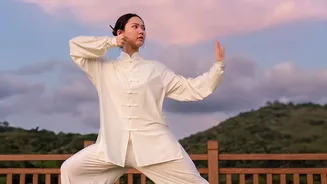
In Tai Chi, the weight shift is a conscious, mindful process of 'separating yin and yang'—or making one leg 'full' and the other 'empty'. The goal isn't to move across a surface, but to establish an unshakable connection to the ground. Practitioners are
taught to transfer their weight completely onto one leg, ensuring the other is 'empty' and light before it moves. This isn't achieved by leaning or using momentum, but by sinking the body's center of gravity and directing it through deliberate, internal control. This practice, known as 'rooting', builds profound stability, balance, and body awareness. The energy of the movement is directed downward into the earth, creating a foundation so stable that it was originally intended to withstand an opponent's force in a martial arts context. Every shift is a meditative act, designed to cultivate internal power, or 'jing', and a calm, focused mind.
Skating: The Engine of Flight
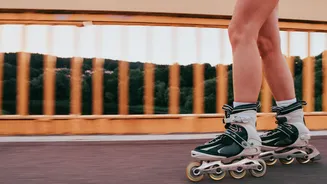
For a skater, the weight shift is the engine of locomotion and the launching pad for spectacular feats. On a near-frictionless surface, balance is dynamic, not static. Weight is transferred rapidly from one blade edge to another to generate speed, carve turns, and prepare for explosive jumps and spins. Unlike the grounded, sinking feeling of Tai Chi, a skater's center of gravity is constantly being managed to facilitate movement. Elite skaters utilize deep knee and hip flexion during weight transfer to load their muscles, creating powerful propulsion as they extend through the leg. This shift isn't just about moving from foot to foot; it's a precise transfer of force and momentum. For example, preparing for a jump involves shifting weight to a specific edge, converting forward momentum into vertical lift and angular momentum (the force that drives a spin). The purpose is external expression: speed, height, and rotational velocity.
Intention Defines the Movement
The fundamental difference between these two weight shifts lies in their intent. Tai Chi's shift is an internal practice for stability and energy cultivation. The ideal is to move without momentum, to be so perfectly balanced on one leg that the other can be placed softly, with absolute control. The focus is on being, not going. Skating, however, is all about going. The weight shift is a dynamic, often aggressive, tool for performance. It harnesses the laws of motion to propel the body across the ice. While a Tai Chi master seeks to lower their center of gravity for stability, a skater manages it as a catalyst for flight. One practice teaches you how to become an immovable object, deeply connected to the ground; the other teaches you how to become an unstoppable force, gliding effortlessly over it.
Where Two Worlds Converge
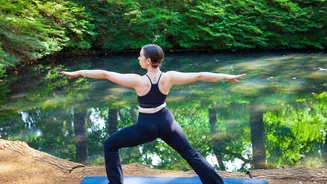
Despite these opposing goals, the worlds of Tai Chi and skating are not entirely separate. Many skaters and other athletes incorporate Tai Chi and its principles into their off-ice training. The slow, controlled movements of Tai Chi are excellent for developing core strength, flexibility, and proprioception—the body's awareness of its position in space. This heightened body awareness is invaluable for a skater who must make micro-adjustments at high speed. The mental calm and focus cultivated in Tai Chi can also help athletes manage the intense pressure of competition. By practicing the art of slow, mindful balance, a skater can enhance their ability to execute moments of fast, dynamic balance. It's a testament to the idea that to master high-speed movement, one must first understand the art of stillness.