
An Icon of the Solar System
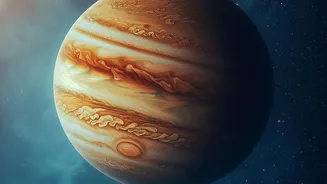
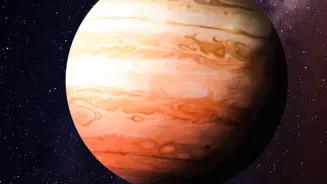
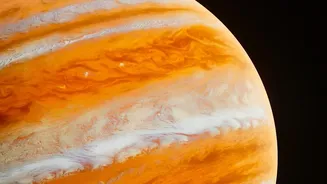
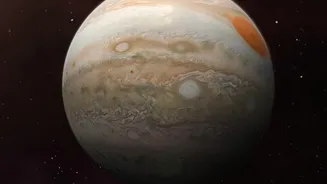
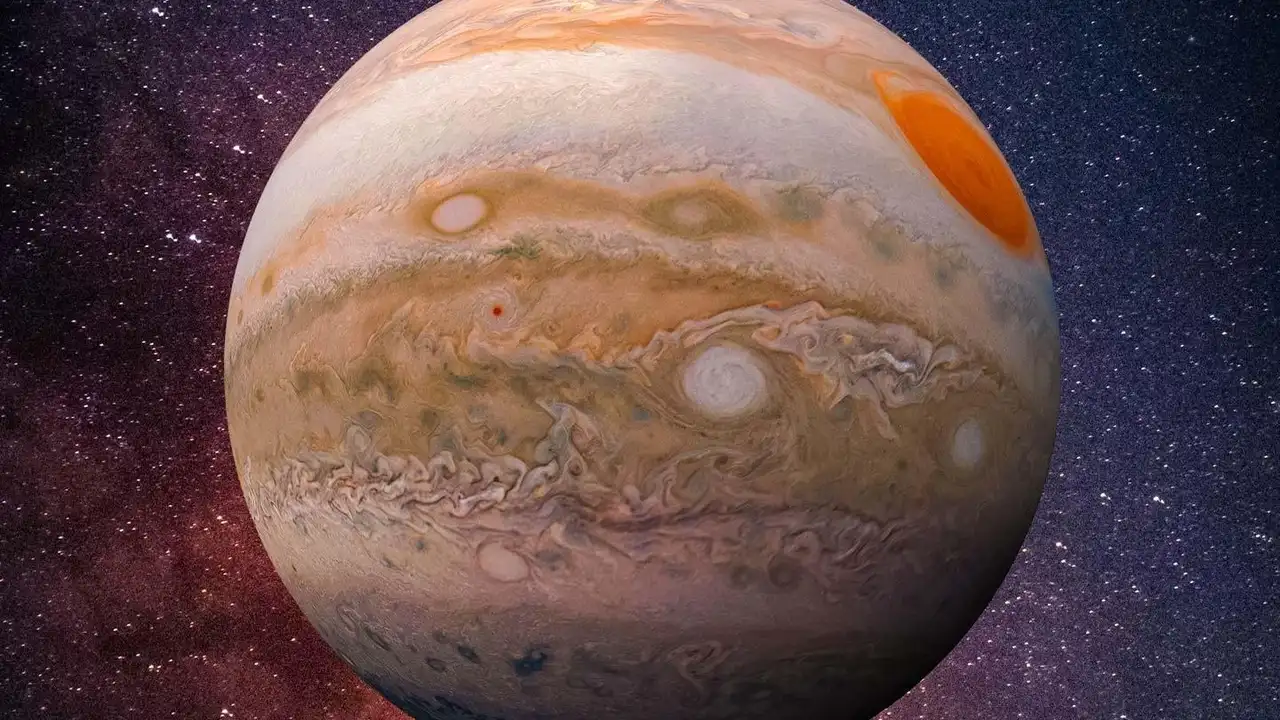
For at least 190 years, astronomers have tracked the Great Red Spot, a swirling anticyclone in Jupiter's southern hemisphere so large it could swallow our entire planet. It is a high-pressure system spinning counterclockwise with devastating force. While
Earth's most powerful hurricanes peak around 200 miles per hour and last for days, the winds at the edge of the Great Red Spot have been measured at over 400 miles per hour. This isn't just a storm; it's a permanent feature of the gas giant, a vortex powered by Jupiter’s deep, mysterious interior. For generations, it has appeared in textbooks as a symbol of cosmic scale and power. But new data from our most powerful telescopes shows that this icon is far from static.
The Wobbling Storm
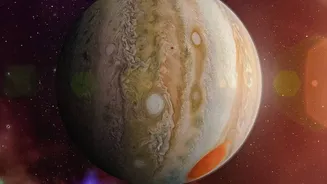
The latest surprise comes from the Hubble Space Telescope, which has been conducting a long-term watch on the solar system's outer planets. In a dedicated observation campaign, Hubble captured a series of high-resolution images that revealed the storm is behaving in unexpected ways. Scientists analyzing the data were surprised to find the Great Red Spot is not just drifting smoothly but is actually wobbling and fluctuating. Time-lapse movies assembled from the images show the storm jiggling like gelatin, its overall shape squeezing in and out as it moves. This dynamic motion, a kind of oscillation in both its speed and its size, had never been identified before and challenges previous models of the storm as a relatively stable system.
Faster Winds on a Shrinking Spot
This newfound wobble is happening against a backdrop of two other significant, and somewhat contradictory, changes. For decades, observers have noted that the Great Red Spot is shrinking. Once wide enough to fit three Earths, historic observations show it has become progressively smaller and more circular. Yet, while the storm's overall size is diminishing, analysis of a decade of Hubble data showed that the winds at its outer edge are getting faster. Between 2009 and 2020, the average speed of this high-speed ring increased by up to 8 percent. In contrast, winds closer to the storm's center appear to be moving more slowly. This suggests the storm is not simply fading away, but that its internal dynamics are changing in complex ways.
A Storm Deeper Than We Imagined
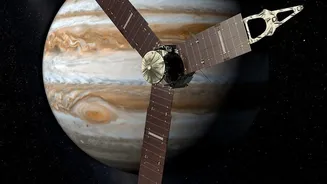
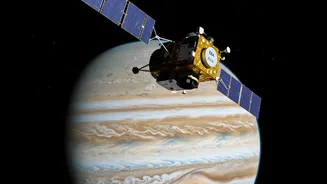
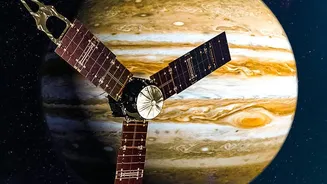
Adding another dimension to our understanding is NASA’s Juno spacecraft. While Hubble provides a spectacular top-down view, Juno's instruments have allowed scientists to peer deep below the clouds. The mission's data revealed that the Great Red Spot is not just a surface feature but a storm of incredible depth. Findings indicate the vortex extends over 300 miles (about 500 kilometers) down into Jupiter's atmosphere. This is far deeper than expected and demonstrates that the storm's roots reach well below the cloud tops where sunlight penetrates, into a region where water condenses. This immense vertical structure is key to its longevity and helps explain how it can contain so much power.