




The Unseen Problem in Your Home
The air inside our homes might seem clean, but it's often laden with invisible pollutants. These can range from biological contaminants like dust mites, pollen, and pet dander to chemical ones called Volatile Organic Compounds (VOCs). VOCs are gases released
from everyday items such as paints, cleaning products, furniture, and even cooking fumes. In addition, moisture from showers and cooking can lead to mould and mildew growth. All these elements contribute to an indoor environment that can be more polluted than the air outside, potentially triggering allergies and other respiratory issues.
The Power of Removal: An Exhaust Fan's Role
An exhaust fan is your first line of defence against concentrated pockets of indoor pollution. Its job is simple but crucial: it captures and removes stale, contaminated air from a specific area and vents it outside. This process is known as ventilation or source control. Think of the exhaust fan in your kitchen whisking away cooking smoke and odours, or the one in your bathroom pulling steam and moisture out of the air. By removing pollutants directly at their source, an exhaust fan prevents them from spreading throughout the rest of your home. This action is vital for controlling humidity, preventing mould, and getting rid of potent fumes before they linger.
The Art of Filtration: An Air Purifier's Job
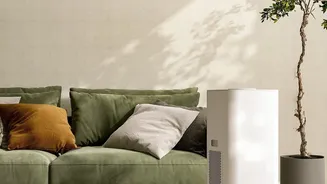
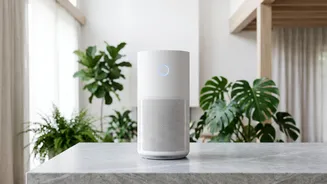
An air purifier, on the other hand, works by cleaning the air within a room rather than removing it. It pulls in ambient air, passes it through a series of filters, and releases cleaner air back into the space. The most effective models use High-Efficiency Particulate Air (HEPA) filters, which are designed to trap 99.97% of particles as small as 0.3 microns. This includes common irritants like dust, pollen, pet dander, and even some bacteria and viruses. Some purifiers also include activated carbon filters to help remove odours and gaseous pollutants like VOCs. Essentially, an air purifier sanitises the air that remains circulating in your living space.
Creating a Dynamic Duo
The real magic happens when you use these two devices in tandem. An exhaust fan and an air purifier don't compete; they complement each other to create a comprehensive air quality strategy. One performs removal, while the other handles filtration. This partnership ensures that concentrated pollutants are vented out, while any remaining airborne particles are captured and neutralised. Using both creates a more effective system than either device could achieve on its own, leading to a much healthier indoor environment.
Putting It All Into Practice
To maximise the benefits, strategic use is key. When you're engaged in an activity that generates a lot of pollutants—like frying food, taking a steamy shower, or using strong cleaning products—turn on your exhaust fan. This will immediately tackle the primary source of the pollution. At the same time, run an air purifier in the same room or an adjacent living area. The purifier will capture any fine particles or fumes that escape the immediate pull of the exhaust fan. For general air maintenance, let your air purifier run continuously on a low or auto setting to handle the everyday dust and allergens that accumulate. Placing a fan across the room from a purifier can also help improve air circulation, ensuring more of the room's air passes through the filter.