


A Discovery Buried in the Data
For years, scientists have known that the Moon's poles hold water ice, primarily locked away in permanently shadowed regions (PSRs) where temperatures plummet to unimaginable lows. These 'cold traps' are so frigid that sunlight has not touched their floors
for potentially billions of years. But the latest readings from ISRO’s lunar mission payloads suggest a more complex and encouraging picture. The new data indicates that water ice isn't just confined to these deep, dark craters; it may also be preserved just centimetres beneath the surface in areas that receive some sunlight. This finding shifts the focus from simply locating water to understanding the mechanism that protects it from sublimating—turning directly from a solid into a gas—in the Moon's harsh, airless environment.
The Secret is in the Soil
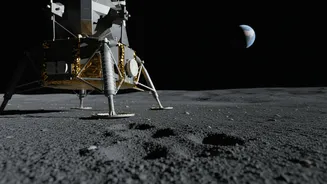
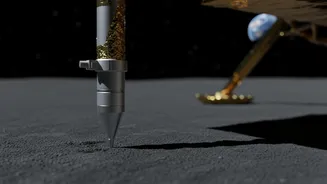
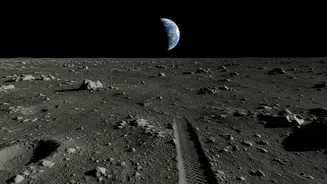
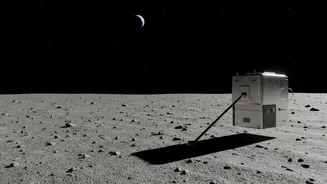
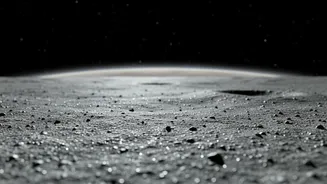
The key insight comes from a detailed analysis of the lunar regolith—the layer of loose dust, shattered rock, and glassy fragments that covers the Moon. Data from the Chandra’s Surface Thermophysical Experiment (ChaSTE) payload, likely aboard a recent lander, has provided a crucial profile of the lunar topsoil's thermal properties. The instrument, which penetrates the ground, revealed a dramatic temperature difference between the surface and just a few centimetres below. It found that the regolith is an incredibly effective insulator, far more so than previously understood from orbital measurements alone. This porous, powdery layer acts like a thermal blanket, protecting subsurface ice from the extreme temperature swings on the lunar surface and preventing it from boiling off into space.
ISRO's High-Tech Detective Work
This breakthrough wasn't the work of a single instrument but a suite of advanced payloads working in concert. While ChaSTE measured the thermal gradient and conductivity, other instruments like the Laser-Induced Breakdown Spectroscope (LIBS) and the Alpha Particle X-ray Spectrometer (APXS) provided on-the-ground chemical analysis. By firing a laser at the regolith and analysing the resulting plasma, LIBS can determine the elemental composition, including the presence of hydrogen, a key component of water. APXS complements this by bombarding the surface with particles to identify elements like oxygen, silicon, and iron. Together, this data paints a detailed picture: not only is water present, but the physical structure and composition of the soil it's mixed with create the perfect conditions for its long-term preservation.
More Than Just Permanently Shadowed
The insulating properties of the regolith mean that water ice could be stable at shallower depths and in a wider range of locations than once thought. Research now suggests that local terrain features, such as poleward-facing slopes even outside of PSRs, might offer environments stable enough to accumulate water ice near the surface. This is because the fluffy, hyper-porous top layer of regolith acts as a barrier, trapping any water molecules that would otherwise escape. Models now indicate that billions of tons of ice could be buried within the top ten metres of the lunar poles, a resource far more substantial and potentially more accessible than just the ice on the crater floors.
Paving the Way for a Lunar Future
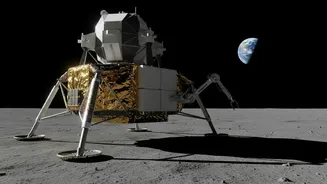
The implications of these findings are immense. Accessible water is the most valuable resource in space. It can be purified for drinking, split into hydrogen and oxygen for breathable air, and combined to create powerful rocket fuel. If vast quantities of water ice are accessible just below the surface, it dramatically reduces the cost and complexity of establishing a sustainable human presence on the Moon, such as a research base or a staging point for missions to Mars. The detailed ground-truth data provided by ISRO's lander is not just an academic triumph; it's a critical piece of the puzzle for future lunar colonists. It helps scientists and engineers know not just where to look for water, but how to extract it, transforming a barren celestial body into a vital resource depot for humanity's future in space.