





Why a Trellis is Non-Negotiable
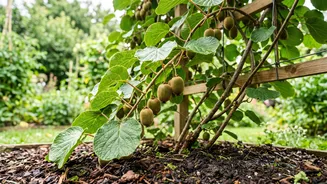
Kiwifruit plants are not trees; they are vigorous, climbing vines that cannot support their own weight. Without a robust support structure, the fast-growing canes will become a tangled, unmanageable mess on the ground. This not only makes harvesting difficult
but also increases the risk of pests and fungal diseases. A mature kiwi vine is incredibly heavy, especially when laden with fruit, capable of producing up to 100 pounds or more. A strong trellis provides the necessary framework to manage this growth, improve air circulation, maximize sun exposure, and ultimately support decades of fruitful production.
Understanding Kiwi Vine Growth
Kiwi vines grow with surprising speed and strength, with canes capable of extending 6 to 12 feet in a single year. They climb by twining their main stems around a support structure. Over several years, this main trunk becomes thick and woody, while the canopy of fruiting canes can spread up to 30 feet. The combined weight of the foliage and a heavy fruit crop puts immense strain on any support. This is why flimsy or temporary solutions often fail, leading to vine collapse. Planning for a structure that can support several hundred pounds is not an exaggeration; it's a necessity for a mature, healthy plant.
Choosing Your Trellis Design
For home gardeners, the two most recommended trellis designs are the T-bar and the pergola. The T-bar is the most common and consists of vertical posts with horizontal crossbars at the top, forming a 'T' shape. High-tensile wires are strung along these crossbars to support the canes. This design offers excellent air circulation and makes pruning and harvesting relatively straightforward. A pergola or arbor is another excellent choice, allowing the vines to create a shaded canopy overhead. This can be a beautiful and functional addition to a garden, though it can be more expensive and labour-intensive to build. Both designs must be built with durability in mind to last the 50-plus-year lifespan of a kiwi vine.
Essential Materials and Construction
Durability starts with the right materials. Use sturdy, pressure-treated wood or metal posts at least 4-6 inches in diameter. The posts should be around 8-9 feet long, allowing them to be sunk 2-3 feet into the ground for stability, with about 6 feet remaining above ground. For a T-bar system, the horizontal crossbar should be around 4-6 feet wide. Use heavy-gauge galvanised wire (9 to 12-gauge is often recommended) to support the canes. Anchoring the end posts securely is crucial to prevent the wires from sagging under the eventual weight of the vines and fruit.
Timing is Everything: Install Early
The most crucial advice from experienced growers is to build and install your trellis system before you plant your kiwi vines, or at the very least, in the same season. Trying to install a permanent structure around an established plant risks significant damage to its shallow root system. By having the support in place from day one, you can immediately begin training the young vine without disturbing its growth. Plant your vine at the base of a central post or stake and guide its growth straight up towards the main support wires.
Training Your Young Vine
Once your trellis is up and the vine is planted, the training begins. In the first year, focus on developing a single, straight main trunk. Select the strongest shoot and tie it loosely to a stake or the main trellis post to guide it vertically. Pinch off any side shoots that emerge from this main trunk. When the main leader reaches the height of your trellis wires, you can then begin training it to grow horizontally along the wires, forming the permanent framework, or 'cordons', from which your fruiting canes will grow in the years to come.