






What 'The Core' Really Is
Before diving into how to train it, let’s clarify what the core actually is. It’s far more than the 'six-pack' muscles (rectus abdominis) that get all the attention. The core is a complex system of muscles that includes your entire torso, from your pelvis
to your shoulders. This muscular network acts as the foundation for nearly all movement, stabilizing your spine, transferring power between your upper and lower body, and improving balance. A strong core makes everyday activities easier, from carrying groceries to maintaining good posture at your desk, and is crucial for athletic performance and injury prevention.
The Trap of Random Workouts
The fitness world loves novelty. New exercises and daily workout challenges are engaging, but they often fall into the trap of what’s sometimes called “muscle confusion.” The idea that you need to constantly “trick” your muscles is a pervasive myth. In reality, muscles don't get confused; they adapt to stimulus. When you randomly rotate exercises, you never give your body enough consistent practice with any single movement to adapt and get stronger. It feels like you're working hard, but without a structured plan, you're not creating the specific, measurable stress needed for growth. You’re just getting tired in a different way each day.
The Power of Progressive Overload
The key to getting stronger—in your core or any other muscle group—is the principle of progressive overload. This simply means gradually increasing the difficulty or demand placed on your muscles over time. Think of it like learning any new skill. You don't try to play a concerto on your first day of piano lessons; you start with scales and build from there. Similarly, for your muscles to grow stronger, they need a consistent challenge that becomes incrementally harder. A structured training program allows you to apply this principle methodically, ensuring you're always moving forward instead of spinning your wheels.
How to Progress Your Core Training
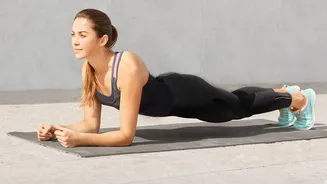
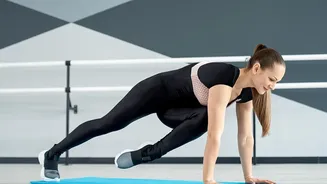
Applying progressive overload to your core doesn't have to be complicated. Instead of doing 10 different ab exercises in a week, choose 2-3 fundamental movements and focus on improving them over several weeks. Progression can take many forms: increasing the duration of a hold (like a plank), adding more repetitions, performing more sets, reducing rest time, or moving to a more challenging variation of the exercise. For example, start with a basic plank on your forearms and knees. Once you can hold it with perfect form, progress to a plank on your toes. From there, you could try lifting one leg at a time or adding a weight to your back. The same logic applies to other exercises like the bird-dog or dead bug, where you can slow down the movement or add resistance bands to increase the challenge.
Focus on Anti-Rotation for a Stronger Foundation
While rotational exercises like Russian twists have their place, many experts emphasize the importance of anti-rotation exercises for building foundational core stability. These are movements where your core has to work hard to resist twisting or bending. Exercises like the plank, side plank, bird-dog, and Pallof press train your core for its primary function: to keep your spine stable and safe during movement. By focusing on preventing unwanted rotation, you build deep stabilizing muscles that protect your lower back and create a solid base of strength. This type of stability is essential for both athletic power and everyday functional strength.