



The Old Bottleneck in Creative Work
For decades, the creative process has had a speed bump right at the beginning: visualization. A client has a need, and you have an idea. But turning that idea into something they can see and react to takes time. It involves searching for stock photos
that are *almost* right, creating rough sketches that require imagination, or building time-consuming digital mockups. This process is slow, can be expensive, and often fails to capture the full magic of your initial concept, leaving clients feeling underwhelmed or confused.
Enter Generative Imagery: Your New Co-Pilot
Generative imagery tools are a new class of AI that create original images from simple text descriptions, called prompts. Think of it as having an incredibly fast and versatile artist at your command. You describe a scene, a style, or a mood, and the AI generates a unique visual representation in seconds. For designers, marketers, and freelancers, this isn't just a novelty; it's a powerful tool for instantly prototyping ideas. Instead of saying, "Imagine a futuristic Mumbai skyline at sunset in a synthwave style," you can now show it.
Choosing the Right Tool for the Job
The market is flooded with options, but a few stand out for professional use. * **Midjourney:** Often considered the leader for artistic and highly stylized images. It's perfect for creating mood boards, conceptual art, and visuals with a specific aesthetic. It operates primarily through the Discord app. * **DALL-E 3 (via ChatGPT Plus):** Excellent for its natural language understanding. It's great at creating more literal, illustrative scenes and is easily accessible within the popular ChatGPT interface. * **Adobe Firefly:** A strong choice for commercial work. It's integrated into Adobe's Creative Cloud and is trained on Adobe Stock's library, which means its outputs are designed to be commercially safe and free from copyright issues involving other artists' work.
The Art of the Prompt: From Words to Wow
The quality of your output depends entirely on the quality of your input. This is called 'prompt engineering'. While it sounds technical, it’s really about being a good director. A great prompt has several key ingredients: 1. **Subject:** What is the main focus? Be specific. Instead of "a woman," try "a young Indian woman with glasses working on a laptop." 2. **Style:** What should it look like? Use artistic movements, specific artists, or descriptive words. Examples: "in the style of a vintage Indian comic book," "minimalist line art," or "hyper-realistic photograph." 3. **Composition:** How is it framed? "Wide-angle shot," "close-up portrait," or "from a low angle." 4. **Lighting & Mood:** Set the tone. "Golden hour lighting," "dramatic shadows," or "vibrant and energetic." **Example Prompt:** "A wide-angle product shot of a new organic coffee bag, sitting on a rustic wooden table in a sunlit cafe in Goa. Minimalist packaging design, vibrant colours, warm morning light. Hyper-realistic photograph."
Presenting AI Prototypes to Clients
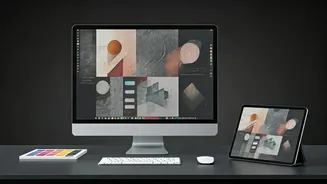
This is the most critical step. How you frame these AI-generated images will determine their success. Never present them as final designs. Instead, position them as 'concept directions' or 'visual thought-starters.' * **Use Mood Boards:** Combine several AI images into a single board to communicate a feeling, colour palette, and overall aesthetic. This shows the client a direction, not a finished product. * **Be Transparent:** Explain that you used AI to quickly visualise concepts. This positions you as an efficient, tech-savvy partner. Say, "I used a tool to generate these directions so we could have a more concrete visual conversation early on." * **Focus on the Idea:** Direct the client's feedback towards the core concept, not the tiny imperfections of the AI image (like weirdly drawn hands, a common AI flaw). The goal is to get a 'yes' or 'no' on the overall direction, saving you hours of work down the wrong path."