







The Race Against Time
Karnataka is the leader in Indian floriculture, accounting for a staggering 75% of the nation's total flower production. For hundreds of years, communities around Bengaluru have cultivated flowers, a tradition that has blossomed into a major economic
engine. However, this industry faces a constant battle against the clock. Flowers are highly perishable; from the moment they are cut, they begin to degrade. Post-harvest losses in India are estimated to be as high as 30-40%, a devastating figure for the small and marginal farmers who form the backbone of this sector. Without proper storage, they are forced to sell their produce immediately, often flooding the market and crashing prices, or watch their hard work wilt before it can be sold.
The Problem with a Plug
The obvious solution to spoilage is cold storage. Chilling flowers dramatically slows down the decaying process, preserving their freshness and value. But for farmers in rural areas surrounding Bengaluru, this has been an elusive dream. Traditional cold storage units are expensive to build and, more importantly, rely on a stable connection to the electrical grid. In many agricultural belts, power supply is erratic and unreliable, making grid-dependent refrigeration a risky investment. Furthermore, the high operational costs and rental fees, sometimes as much as Rs 2 per kilogram for a few days of storage, are often unaffordable for small growers. This leaves them trapped in a cycle of immediate, often unprofitable, sales.
A Solution Powered by the Sun
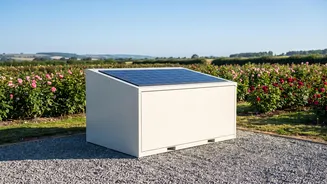
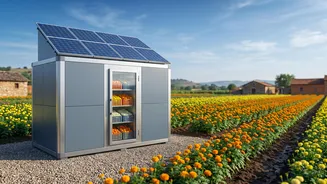
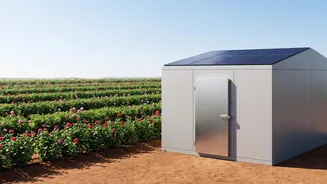
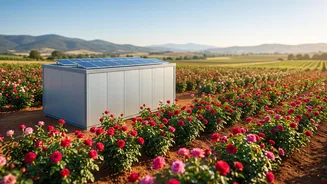
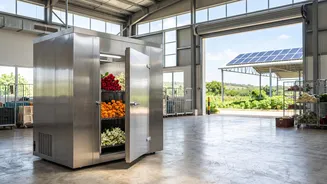
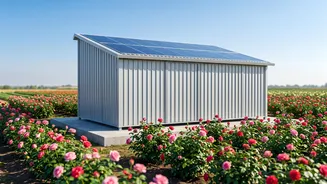
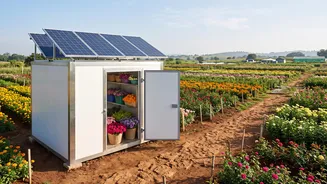
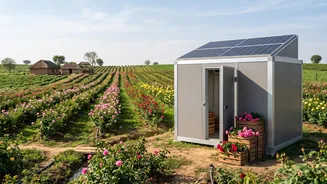
Enter the off-grid solar micro-cold storage unit. This innovation is a game-changer for India's farmers. These are small, modular cold rooms, often with a capacity of around 5 metric tonnes, that can be installed directly at the farm level. Instead of relying on the grid or costly diesel generators, they are powered by solar panels. Advanced models use thermal storage technology—storing energy in the form of ice or other materials—rather than expensive batteries, allowing them to provide uninterrupted cooling for over 24 hours, even on cloudy days. This decentralized approach brings the cold chain directly to the source, empowering individual farmers and cooperatives.
From Spoilage to Secure Income
The impact of this technology is transformative. By using solar cold storage, farmers can dramatically reduce post-harvest losses, in some cases from over 30% to less than 5%. This immediately translates to more saleable product. More importantly, it breaks the tyranny of the immediate sale. With the ability to store their flowers safely, farmers can wait for market demand to rise and prices to become more favorable, potentially increasing their income by 25-40%. It gives them bargaining power against middlemen and access to more distant markets that were previously out of reach due to the risk of spoilage during transport. The payback period for these units can be as short as a few years, after which the energy is virtually free, drastically cutting operational expenses.