


Echoes of an Empire
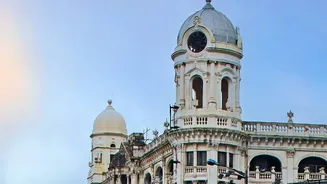
The nickname 'London of India' is a direct legacy of the British Raj. For nearly 140 years, from 1772 to 1911, Calcutta (as it was then known) served as the capital of British India. It was the second most important city in the entire British Empire after
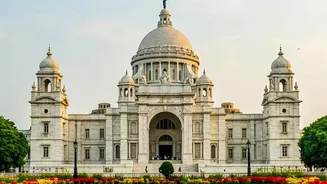
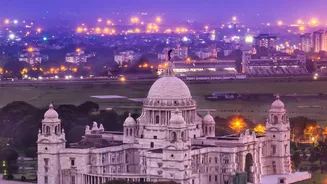
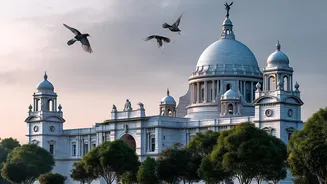
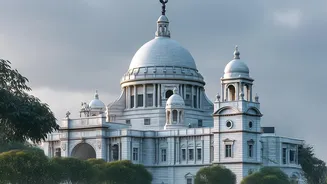
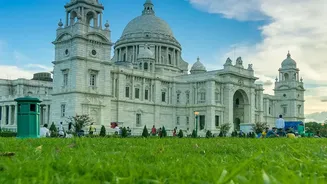
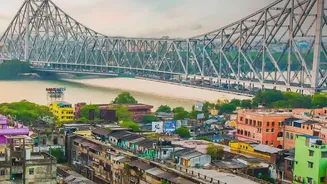
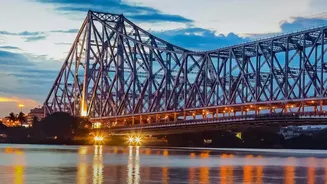
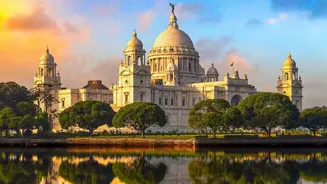
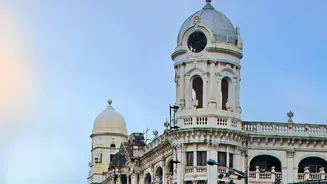
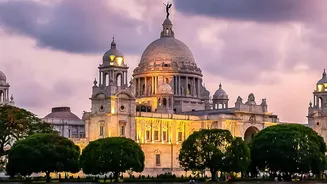
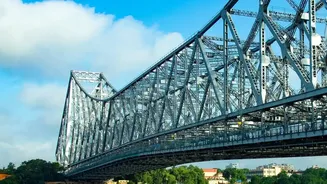
London itself. The British constructed a city to project imperial power, resulting in a stunning collection of Neoclassical and Gothic Revival architecture. The magnificent Victoria Memorial, reminiscent of St. Paul's Cathedral, the stately Raj Bhavan, and the iconic Howrah Bridge all created a cityscape with a distinctly European feel, cementing its reputation. This connection was more than stone-deep; like London on the Thames, Kolkata's development was intrinsically tied to its lifeblood, the Hooghly River.
A Feast for the Senses
To reduce Kolkata to its colonial past is to miss its most vibrant dimension: its food. The city is a culinary paradise, from street-side vendors to legendary restaurants. You haven't experienced Kolkata until you've tried phuchka, the local take on pani puri, or a kathi roll from its supposed birthplace, Nizam's. Streets hum with the scent of jhal muri, a puffed rice snack, and the sizzle of telebhaja, various fried fritters. For a heartier meal, the city's unique biryani, lighter than its counterparts and served with a signature potato, is a must-try. And no visit is complete without surrendering to its sweets, from the iconic sandesh and mishti doi to the legendary rasgulla.
The City of Living Literature
Long known as the cultural capital of India, Kolkata's soul is deeply literary. This is the city of Rabindranath Tagore, the first non-European Nobel laureate in Literature. You can feel this intellectual pulse on College Street, home to the 'Boi Para' or Book Colony, the world's largest second-hand book market. Here, students, artists, and intellectuals converge. The historic Indian Coffee House on College Street has been a hub for debate and discussion for generations, a place where countless creative movements were born over steaming cups of coffee. The city's literary legacy isn't just in the past; it's alive in its numerous cafes, libraries, and cultural festivals.
The Craftsmanship of Kumartuli
For a truly unique glimpse into the city's artistic heart, one must visit Kumartuli. This traditional potters' quarter in North Kolkata is where art and devotion merge. For over 300 years, generations of artisans, known as 'kumors', have been crafting breathtaking clay idols of Hindu deities, most famously for the Durga Puja festival. Walking through the narrow, winding lanes, you'll see the entire process unfold: from bamboo frames and straw structures to the final, divine features painted on the idols. The air is thick with the smell of wet clay and the quiet intensity of creation. These idols are not just for the city; they are exported worldwide, carrying a piece of Kolkata's soul across the globe.
The Pulse of Modern Art
While proud of its heritage, Kolkata is not a city trapped in time. Its contemporary art scene is dynamic and thriving, offering a powerful counter-narrative to its colonial image. Galleries like Experimenter, Akar Prakar, and Galerie 88 are at the forefront, showcasing cutting-edge South Asian art. The city has also welcomed new cultural spaces, such as the National Gallery of Modern Art housed in the historic Old Currency Building and the Cheenapara Heritage Gallery in India's only Chinatown. From large institutions like the upcoming Kolkata Museum of Modern Art (KMOMA) to intimate galleries in South Kolkata, the city provides a platform for a new generation of artists to flourish.