




The Ultimate Power Challenge
Sustaining a human presence on the Moon, a core goal of the Artemis program, isn't just about getting there; it's about staying and working there. The biggest obstacle is the extreme environment. The lunar south pole, a prime target for future missions
due to potential water ice, experiences temperature swings from a boiling 100°C in the sun to a staggering -200°C during the roughly 14-day lunar night. At these cryogenic temperatures, the liquid electrolytes inside conventional lithium-ion batteries—the kind in your phone and electric car—would freeze solid. This freezing can permanently damage the battery, rendering it useless. Furthermore, the vacuum of space can cause these liquids to evaporate. Until now, the only solution was to equip lunar hardware with bulky and power-hungry heating systems just to keep the batteries from dying, a major drain on precious mission resources.
A Solid Solution Called SPEARS
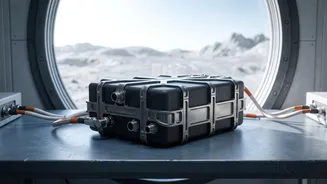
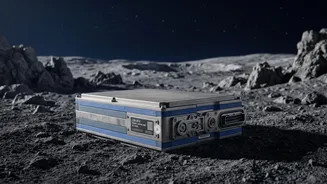
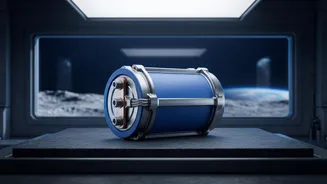
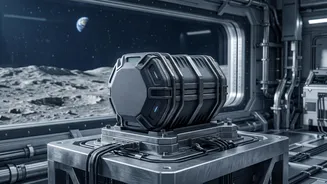
Enter the SPEARS project, which stands for Solid Power for Extreme Environment Adaptability and Resilience in Space. Led by NASA's Glenn Research Center, this initiative is developing a new class of solid-state batteries. The key innovation is replacing the volatile liquid electrolyte with a solid material, such as a specialised ceramic or polymer. This seemingly simple switch has profound implications. A solid electrolyte doesn't freeze the way a liquid does, meaning it can survive the brutal lunar night without damage. It also eliminates the risk of evaporation in a vacuum and significantly reduces the fire hazard associated with flammable liquid electrolytes in traditional batteries. This technology aims to create a power source that is robust, safe, and reliable enough for everything from an astronaut's emergency toolkit to a robotic rover exploring permanently shadowed craters.
Breakthroughs in the Cold
Recent tests at NASA's Langley Research Center have yielded promising results. In a thermal vacuum chamber simulating lunar conditions, small prototype SPEARS battery cells demonstrated stable operation across a wide temperature range, from 80°C all the way down to -60°C. The major breakthrough was that the cells continued to function, albeit with slightly reduced performance, even at minus 80°C. According to Yi Lin, the project's testing lead, this was the first time they proved the cells could work at such a low temperature. More impressively, the batteries survived exposure to an even more extreme range—from 100°C down to -170°C—without sustaining any physical damage. While they don't operate at that lowest temperature, the fact they can endure it is critical. The plan isn't to keep the batteries warm all the time, but to let them get cold and then use small, efficient heaters to bring them to operational temperature only when needed, a huge energy saving.
Powering the Artemis Generation
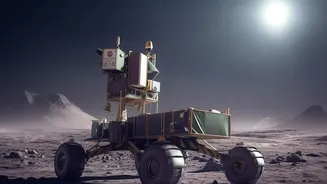
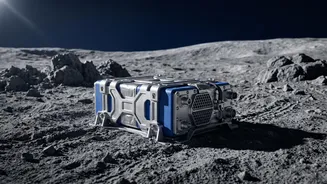
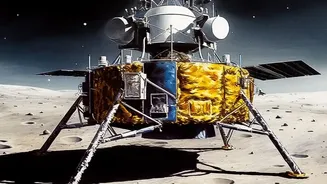
The success of the SPEARS prototypes is a critical step for the future of the Artemis missions and beyond. By developing batteries that can hibernate through the cold, NASA can design lighter, less complex, and more capable lunar equipment. Landers, rovers, and scientific instruments would no longer need to dedicate a significant portion of their mass and energy budget to bulky thermal management systems. This could extend mission durations, lower launch costs, and enable more ambitious science. Imagine a rover that can 'sleep' through the lunar night and reawaken at dawn, or a habitat with a reliable emergency power backup that isn't dependent on constant heating. The SPEARS technology is being developed to be adaptable, with the potential to be tailored for different uses, from high-power tools to long-duration scientific monitoring stations.