


The Allure of Sand: A Common Misconception
When putting together a potting mix, many gardeners intuitively reach for sand. The logic seems sound: sand is gritty and doesn't hold water, so adding it to a mix should improve drainage. This is one of the most persistent myths in container gardening.
While the intention is correct—good drainage is absolutely critical, especially in pots—the type of sand makes all the difference. The fine, uniform particles of play sand or beach sand, which are often what people have on hand, do not create the desired effect. Instead of creating pathways for water to escape, they often do the exact opposite, leading to a host of problems that can quickly spell doom for your potted plants.
The Problem with Fine Sand: A Recipe for Concrete
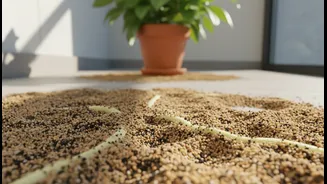
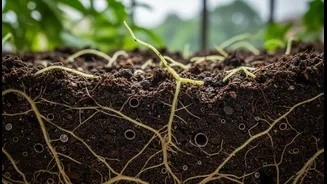
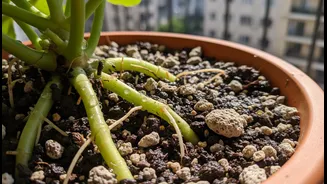
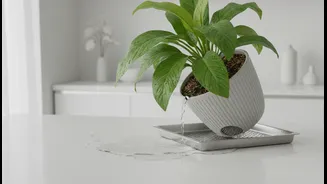
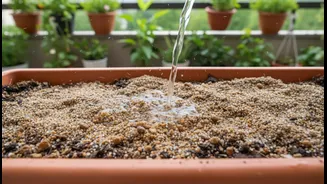
The main issue with fine sand is its particle size. The tiny, often rounded grains fit perfectly into the spaces between larger soil components like compost or coco coir. Rather than opening up the structure, fine sand clogs these essential air pockets, a process called compaction. When watered, this dense mixture behaves less like soil and more like cement. Water struggles to penetrate, and when it does, it has nowhere to go. This leads to a waterlogged root zone, depriving roots of the oxygen they need to survive and function. A plant in this situation can show signs of both overwatering (wilting, yellowing leaves) and underwatering (a dry, cracked surface), as the compacted mix prevents moisture from being available to the roots. This problem is significantly worse in the confined environment of a pot.
Why Coarse Sand Is the Champion
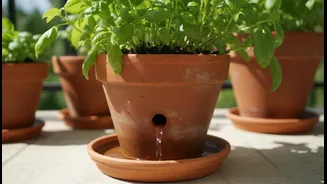
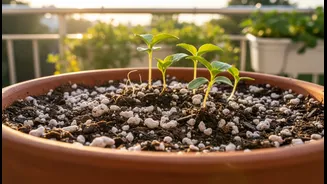
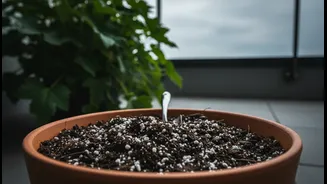
Experienced gardeners bypass fine sand and instead reach for coarse, sharp, or horticultural sand. This type of sand is made from crushed materials like granite or quartz and has larger, angular, and irregularly shaped particles. Instead of filling in the gaps, these jagged particles create them. They push other soil components apart, forming stable air pockets and drainage channels throughout the mix. This ensures that when you water, or when your balcony is hit by a downpour, excess moisture can flow freely through the pot and out the drainage hole. This improved aeration and drainage is fundamental to preventing root rot and creating a resilient environment where plant roots can grow strong and healthy.
The Unique Challenge of a Rainproof Balcony Garden
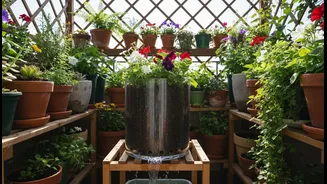
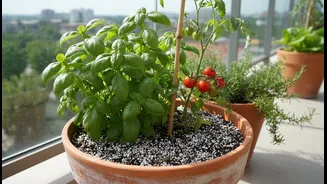
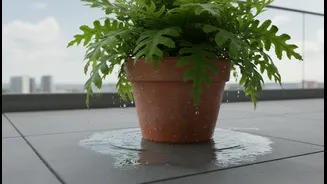
Balcony gardens face a unique set of challenges that make proper soil structure non-negotiable. Unlike a garden bed, a pot is a closed system that can be dramatically affected by the elements. It can be exposed to intense sun, drying winds, and, crucially, uncontrolled deluges of rain. A sudden heavy downpour can compact a poor soil mix in minutes, turning a thriving planter into a stagnant swamp. A "rainproof" mix is one that can handle this sudden influx of water without becoming waterlogged. This is where coarse sand, along with other amendments like perlite or small bark chips, proves its worth. The robust structure it creates allows rainwater to pass through quickly, protecting the delicate root systems from suffocating.
Building a Better Balcony Mix
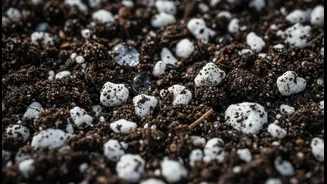
So, how do you incorporate this knowledge into your own urban garden? When creating a potting mix, think in terms of structure, aeration, and water retention. A good starting point is a base of coco coir or peat moss, mixed with a healthy amount of compost for nutrients. Then, for that all-important structure and drainage, add about one-third of your mix as coarse amendments. A combination of horticultural sand and perlite is an excellent choice. Perlite is a lightweight volcanic rock that provides excellent aeration without adding much weight—a key consideration for balcony gardens. The coarse sand adds both drainage and a bit of weight, which can help stabilize top-heavy plants in windy conditions. By focusing on creating these air channels with coarse materials, you build a foundation that is resilient, free-draining, and ready for whatever the weather throws at it.