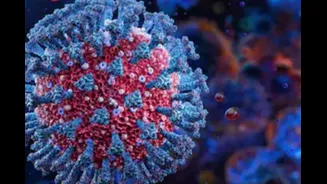








What is the PJ.2.1 Variant?
PJ.2.1 is a new lineage of SARS-CoV-2, the virus that causes COVID-19. It was first identified in a sample from Ontario, Canada, on May 2, 2026. Scientists describe it as a 'saltation variant', which means it has a large number of genetic changes compared
to its ancestors, rather than evolving gradually. This variant is a descendant of the JN.1 lineage. Its key characteristic is a heavily mutated spike protein, the part of the virus that attaches to human cells. These mutations have led to scientific interest in how it behaves compared to other circulating strains.
Where Has It Been Detected?
Since its initial discovery in Canada, PJ.2.1 has been identified in several other countries. Detections have been confirmed across North America, including multiple US states like New York, as well as in Europe, with cases in Spain and France. The variant has also been found in Asia and Australia, with Singapore and New Zealand among the nations reporting its presence. The World Health Organization (WHO) has confirmed it is closely monitoring the variant due to its growing geographical spread. In some regions, like Ontario, it has become the most frequently identified lineage in recently sequenced cases.
Is It More Severe or Transmissible?
This is the critical question, and the current answer from health officials is reassuring. At present, there is no clinical evidence to suggest that PJ.2.1 causes more severe illness, hospitalisations, or deaths than other variants. While early lab studies suggest its mutated spike protein may bind more effectively to human cells—specifically the ACE2 receptor—this doesn't automatically translate to more severe disease in people. A variant can spread more easily without making people sicker. The WHO and other health bodies emphasize that while surveillance is crucial, there is no cause for alarm about increased severity at this stage.
What Are the Symptoms?
There is no unique set of symptoms that can definitively identify a PJ.2.1 infection. Infected individuals are likely to experience the typical symptoms of COVID-19, which can overlap significantly with the common cold and flu. These include fever, sore throat, cough, runny nose, headaches, muscle aches, and fatigue. Some people might also experience digestive issues or a change in their sense of taste or smell. Because of this overlap, the WHO has stated that testing is the only reliable way to confirm a COVID-19 diagnosis and distinguish it from other respiratory illnesses.
How Well Do Vaccines Work Against It?
Early research offers some positive indications. One study found that antibodies from people who had received an updated vaccine were able to neutralise the PJ.2.1 variant. The reduction in effectiveness was less pronounced for PJ.2.1 compared to several other variants tested, suggesting that it does not have a substantial ability to evade vaccine-induced immunity. While these are laboratory findings, they provide an encouraging sign that current vaccines continue to offer a degree of protection, particularly against severe outcomes. Health experts continue to recommend vaccination as a key tool for reducing the risk of serious illness from all COVID-19 variants.