


The Warming Foundation
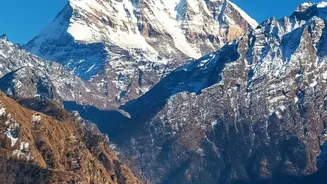
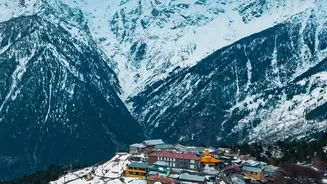
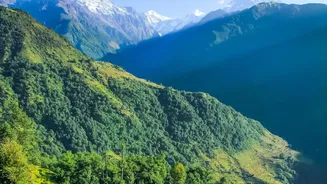
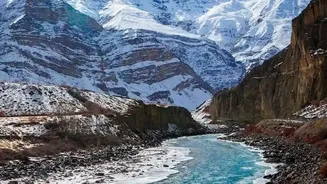
The story begins high in the Himalayas, often called the 'Third Pole' for holding the largest concentration of ice outside the polar regions. These glaciers are natural water towers, feeding ten of Asia's largest river systems and supporting over 1.6
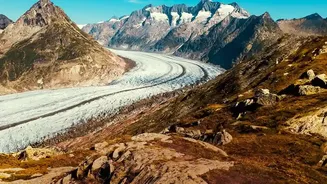
billion people downstream. But this vital resource is under threat. Global warming is causing temperatures in the Himalayas to rise faster than the global average. This accelerated warming is causing Nepal's glaciers to melt at an alarming rate, losing nearly a third of their ice in just over 30 years. This isn't a slow, gentle thaw; it's a fundamental disruption of an ancient equilibrium, setting the stage for catastrophe.
The Ticking Time Bomb: Glacial Lakes
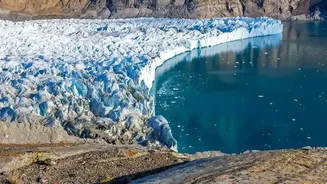
As glaciers retreat, the meltwater has to go somewhere. It pools at the glacier's snout, forming vast bodies of water known as glacial lakes. These are not the serene mountain lakes you might picture. They are often dammed by nothing more than loose walls of rock and soil, called moraines, left behind by the receding glacier. These moraine dams are inherently unstable. With glaciers melting faster than ever, these lakes are growing in both number and size at a dangerous pace, with hundreds of new lakes forming in recent decades. Each expanding lake acts like a ticking time bomb, putting immense pressure on its fragile natural dam.
The Trigger: What Breaks the Dam?
It takes just one event to trigger a disaster. The unstable moraine dam can be breached in several ways. A major earthquake can shake the ground, causing the dam to collapse. A massive landslide or an ice avalanche from a hanging glacier can crash into the lake, creating a huge displacement wave, like a tsunami. This wave can overtop the moraine wall, rapidly eroding it and carving a channel for the water to escape. In some cases, the sheer pressure of the ever-increasing water volume is enough to cause the weak moraine to fail on its own. This sudden, violent breach is known as a Glacial Lake Outburst Flood, or GLOF.
The Deluge: A Wall of Water and Debris
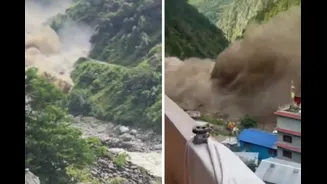
Once the dam is broken, the results are catastrophic. Millions of cubic metres of water can be released in just a few hours, creating a flood of unimaginable power. But this is no ordinary flood. As the water rushes downstream, it scours the valley floor, picking up immense quantities of mud, sediment, and boulders. This turns the flood into a thick, fast-moving debris flow, often described as being like liquid concrete. It can destroy bridges, hydropower plants, and entire villages in its path, with the destructive force growing as it travels. Because the event often happens without warning from rainfall, traditional flood warning systems are rendered useless.
A Regional Warning Sign
Nepal has experienced over two dozen major GLOF events in recent history, and experts have identified at least 21 glacial lakes that are classified as potentially dangerous. These events are not isolated incidents but a clear and direct consequence of a warming climate. They represent a critical threat not just to the mountain communities of Nepal but to the entire South Asian region that depends on the Himalayan water towers. The chain of events—from rising global temperatures to melting ice and catastrophic floods—is a stark reminder of how interconnected our planet's systems are. The disasters unfolding in the Himalayas are a warning sign for billions living downstream.