




From Function to Focal Point
For decades, the goal of lighting was simple: to illuminate a room. Now, it's about defining it. The narrative has shifted from purely functional to deeply expressive, with lighting fixtures being chosen with the same care as a major piece of furniture
or art. This trend sees lights as sculptural elements that command attention, anchoring a room's aesthetic even when switched off. In cities like Mumbai, Delhi, and Bengaluru, designers are using dramatic, oversized pendants and chandeliers to create a central focal point, especially in double-height living rooms and dining areas. The right fixture does more than just brighten a space; it introduces personality, evokes a mood, and tells a story about the people who live there.
The Rise of the Artisan
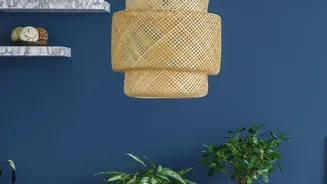
A key driver of this trend is a renewed appreciation for craftsmanship. Mass-produced fixtures are making way for unique, handcrafted pieces that celebrate natural materials and traditional skills. Design studios across India are collaborating with local artisans to create lighting from materials like hand-blown glass, brass, reclaimed wood, bamboo, and even woven textiles. Brands like Jaipur-based Anantaya and Delhi's Vakr Studio are blending age-old techniques with modern design sensibilities. This results in pieces that are not just lamps but heirlooms—a lamp with a shade made from hand-painted Pattachitra fabric or a chandelier featuring intricate metalwork. These creations bring a tactile, soulful quality to modern homes, offering a connection to heritage in an increasingly digital world.
Modern Forms, Traditional Soul
The new wave of statement lighting isn't about recreating the past but reinterpreting it. Designers are taking inspiration from India's rich design vocabulary and giving it a contemporary twist. Imagine abstract chandeliers with geometric forms that subtly echo traditional 'jaali' patterns, or sleek wall sconces featuring motifs inspired by nature. Designers like Shailesh Rajput are known for biophilic designs, such as massive, swirling metallic leaves that act as a luminaire in a modern living space. This blend of old and new creates a design language that feels both globally relevant and distinctly Indian. Materials like terracotta, brass, and copper are being used in minimalist and abstract forms, moving away from heavy, ornate designs of the past towards what some call 'organized chaos'.
Sculptural Silhouettes Take Over
The shapes themselves are becoming bolder. Heavy crystal chandeliers are being replaced by lighter, more artistic installations. We are seeing a rise in pendant clusters over dining tables and kitchen islands, creating a visual rhythm. Wall sconces are no longer just for hallways; they are treated as luminous art, crafted from materials like fluted glass and brushed copper. Even floor lamps are becoming more sculptural, with unique forms that can anchor a forgotten corner and turn it into a feature. These pieces are chosen for their form and material as much as for the light they produce, making a powerful design statement day and night.
How to Choose Your Statement Light
Thinking of embracing this trend? The key is balance. First, consider scale. A fixture that is too large can overwhelm a space, while one that's too small will get lost. A good starting point is to add the length and width of your room in feet, and use that number in inches as a rough diameter for your chandelier. Think about the mood you want to create; warm-toned light (around 3000K) is inviting and works well in living areas, while cooler tones are better for functional spaces. Finally, let your light fixture connect to other elements in the room, either through its metallic finish, colour, or shape, to create a cohesive and intentional look.