






From Guesswork to Guidance
Shopping for cosmetics online has traditionally been a challenge. Unlike buying a book or a gadget, beauty products are deeply personal. The right shade of lipstick, the perfect foundation match, or the most effective serum depends entirely on an individual's
unique features and needs. This disconnect has long been a major hurdle for e-commerce, leading to customer frustration and high return rates. According to industry research, a significant percentage of online beauty shoppers abandon their carts before checkout, often due to uncertainty. AI is changing this by transforming the digital storefront from a static catalog into an interactive consultant, aiming to replicate the personalized advice you might receive in a physical store.
Your New Virtual Mirror
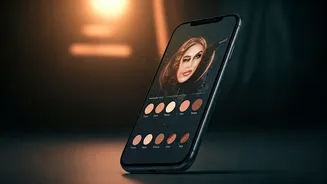
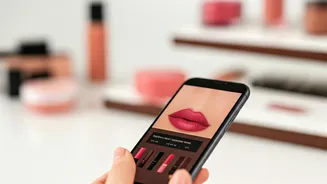
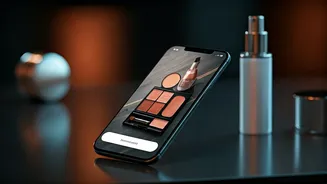
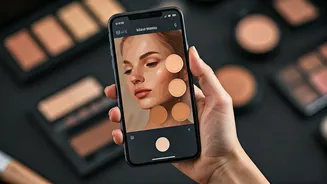
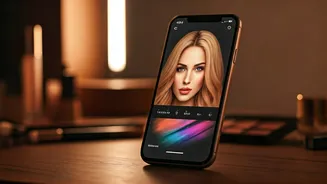
One of the most visible ways AI is personalizing beauty is through virtual try-on technology. Using your phone’s camera, these tools employ augmented reality (AR) and AI to let you see how a lipstick, eyeshadow, or even a new hair colour would look on you in real-time. Major brands like L'Oréal, Sephora, and MAC have widely adopted this technology. The AI analyzes your facial landmarks to accurately place the digital makeup, adjusting to your movements and lighting to create a realistic preview. This eliminates the classic problem of buying a product based on a swatch, only to find it doesn't suit your skin tone. It empowers you to experiment with dozens of shades in seconds, from the comfort of your home.
A Skincare Consultant in Your Pocket
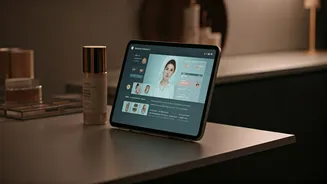
Beyond makeup, AI is also revolutionizing how we shop for skincare. Several brands, including Cetaphil and La Roche-Posay, now offer AI-powered skin analysis tools. Typically, you take a selfie, and the tool's algorithm analyzes it for a range of concerns like fine lines, dark spots, hydration levels, and texture. Based on this analysis, which is often developed with dermatologists, it provides a detailed report of your skin's condition and recommends a personalized routine with specific products to target your issues. This data-driven approach moves beyond generic quizzes to offer recommendations based on a real-time snapshot of your skin, making the search for effective skincare far less overwhelming.
Smarter, Tailored Recommendations
AI is also working behind the scenes to upgrade recommendation engines. For years, e-commerce has suggested products based on simple logic like 'customers who bought this also bought that'. The new generation of AI goes much deeper. These systems can analyze your past purchases, browsing behaviour, skin concerns identified by analysis tools, and even environmental factors like the weather or pollution levels in your area to suggest products. This hyper-personalization ensures that the products being recommended are not just popular, but genuinely relevant to your specific needs and preferences, increasing the likelihood you'll be satisfied with your purchase.
The Data Behind the Digital Makeover
This level of personalization requires a significant amount of personal data, including images of your face and details about your skin concerns. This has understandably raised questions about privacy. As these technologies become more widespread, discussions around how this sensitive data is collected, used, and protected are becoming increasingly important. Recent legal cases have highlighted the need for companies to be transparent and obtain clear consent from users. For consumers, it represents a trade-off: sharing personal data in exchange for a highly tailored and convenient shopping experience. Experts warn that as AI-generated visuals become more common, it's crucial for brands to ensure their recommendations and marketing do not create unrealistic expectations.