




Your Vehicle: The First Line of Defence
Before you even turn the key, ensuring your vehicle is ready for the monsoon is critical. Your car's condition is your primary defence against the elements. Start with the tyres, your only connection to the slippery tarmac. Ensure they have a tread depth
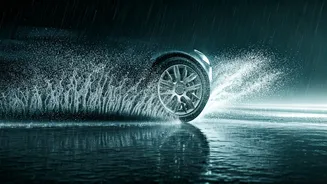
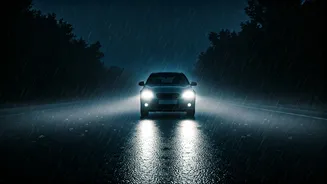
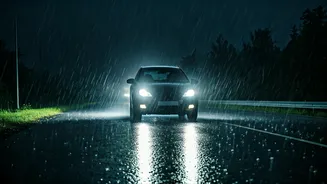
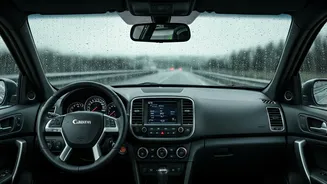
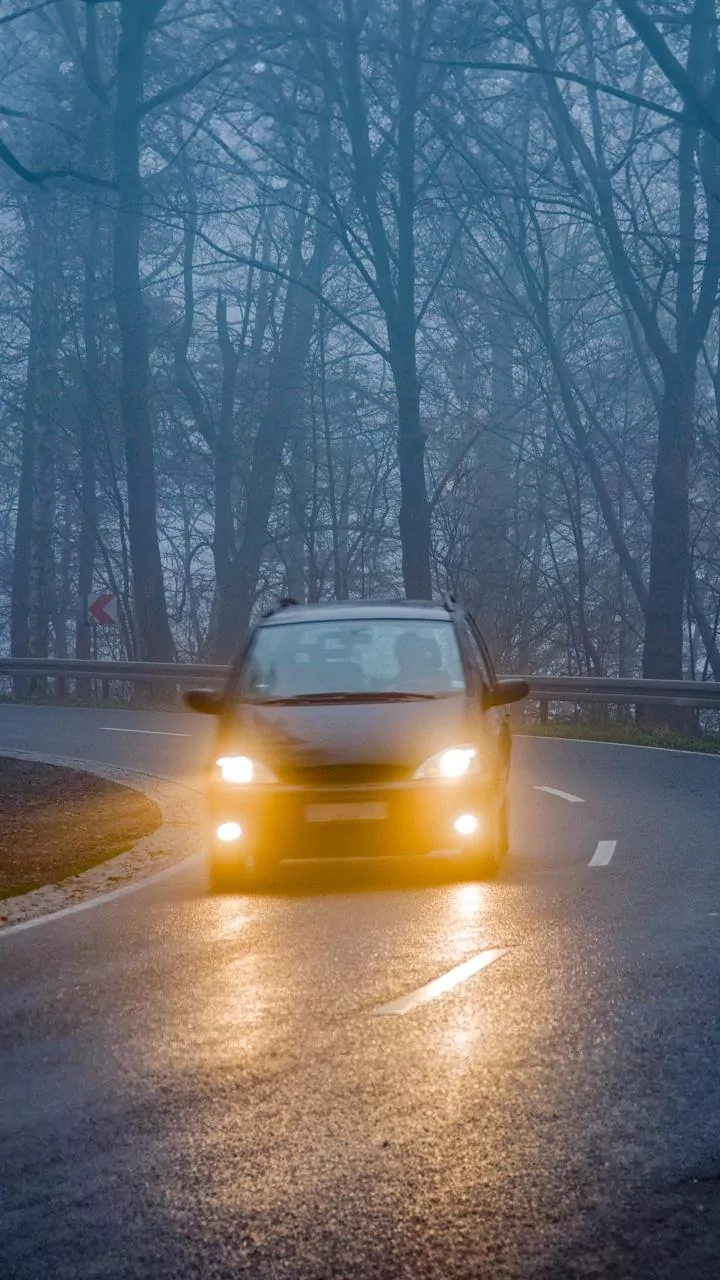
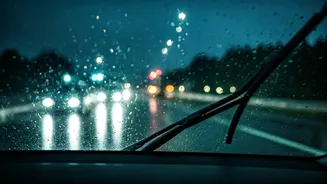
of at least 2mm to effectively channel water away and prevent skidding. [6, 23] Worn-out tyres are a leading cause of hydroplaning, where a layer of water builds between the rubber and the road, leading to a complete loss of control. [8, 9] Equally important are your wiper blades. After a hot summer, the rubber often becomes hard and cracked, leaving streaks that impair vision. [11] Replace them if they are not clearing the windshield effectively. [14] Finally, check all your lights—headlights, taillights, brake lights, and indicators. [15] Reduced visibility at night during a downpour means you need to see and be seen clearly. [25] Using low-beam headlights is advisable, as high beams can reflect off raindrops and worsen visibility for you and oncoming drivers. [10, 26]
Mastering the Monsoon-Soaked Tarmac
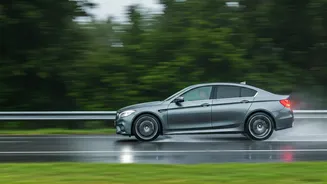
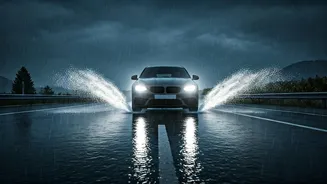
Wet roads drastically change driving dynamics. Braking distances increase, so maintaining a larger gap from the vehicle in front is non-negotiable. [24] The first 10 minutes of a light rain can be the most dangerous, as the water mixes with oil and debris on the road, creating an exceptionally slick surface. [7] The biggest danger on wet roads is hydroplaning, which can happen at speeds as low as 55-60 km/h. [7] To avoid it, reduce your speed significantly. [5, 8] If you feel the steering become light and the car start to slide, do not slam the brakes. [5] Instead, ease your foot off the accelerator and steer gently in the direction you want to go until the tyres regain traction. [5] Avoid sudden manoeuvres like sharp turns or abrupt braking, which can easily lead to a loss of control. [10]
The Hidden Dangers Beneath the Water
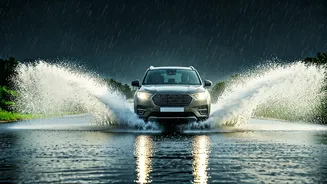
In India, a placid-looking puddle on a poorly lit street can hide a deep, tyre-destroying pothole. [10] During monsoon nights, it is almost impossible to judge the depth of standing water. The safest policy is to avoid driving through waterlogged areas if you can find an alternate route. [3, 18] If you must proceed, do so slowly and steadily. Driving too fast can create a wave that sends water splashing into your engine's air intake, leading to a catastrophic failure known as hydrostatic lock. [2, 3] If your car stalls in water, do not attempt to restart it. [2, 18] Doing so will likely draw water into the engine and cause severe, expensive damage. [2] Once you have cleared a waterlogged patch, gently tap your brakes a few times to dry the components and ensure they are working effectively. [3, 23]
Stranded? Stay Calm and Prioritise Safety
Even with the best preparation, things can go wrong. If your car breaks down or gets stuck in rising water, your personal safety becomes the top priority. Do not panic. [18, 19] Turn on your hazard lights to alert other drivers. [19] If water begins to enter the cabin, unbuckle your seatbelt, lower the windows, and exit the vehicle. [2, 19] Electric windows should work unless the car is fully submerged. [20] If you cannot open the windows, you will have to wait for the water pressure to equalise inside and outside before you can push the door open. [20] This means letting the car fill with water to about neck level, a terrifying but necessary step to enable your escape. [19, 20] Once out, get to higher ground immediately and call for roadside assistance. [2] Do not try to save personal belongings; they can be replaced, you cannot.