



Why This Trio is So Effective
Squats, push-ups, and planks are staples in fitness for a reason. Together, they form a comprehensive, full-body workout that requires nothing but your own body weight. Squats are fantastic for building lower body strength in your legs and glutes, while
also engaging your core. Push-ups target your chest, shoulders, and triceps, improving upper body strength. Planks are the ultimate core stabiliser, strengthening the muscles in your abdomen and lower back, which is crucial for good posture. Combining these three movements ensures you're working multiple muscle groups efficiently, burning calories, and building functional strength that helps in everyday activities. It's the perfect formula for a small-space workout.
The 5-Minute Dynamic Warm-Up
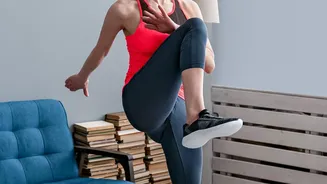
Never skip your warm-up. A good warm-up increases blood flow to your muscles and prepares your joints for exercise, reducing the risk of injury. Since you're in a small space, a dynamic warm-up is ideal. Spend about 5 minutes doing these movements to get your body ready. Start with 30 seconds of jogging on the spot, followed by 30 seconds of jumping jacks (or step-jacks if you need a lower-impact option). Then, perform 10-12 reps of arm circles (both forward and backward), torso twists, and leg swings on each side. Finish with a few bodyweight squats to prime your legs for the main workout.
Mastering the Moves: Proper Form is Key
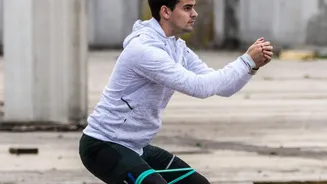
To get the most out of this routine and avoid injury, focus on your form.For Squats: Stand with your feet shoulder-width apart, chest up, and back straight. Lower your hips back and down as if you're sitting in a chair, keeping your knees aligned with your toes. Aim to get your thighs parallel to the floor, or as low as you comfortably can, before pushing through your heels to return to the start.For Push-Ups: Start in a high plank position with your hands directly under your shoulders. Your body should form a straight line from your head to your heels. Lower your chest towards the floor by bending your elbows. Push back up to the starting position. If a standard push-up is too difficult, you can modify it by placing your hands on a sturdy desk or chair (incline push-up) or by doing them on your knees.For Planks: You can perform a plank on your forearms or hands. If on your forearms, ensure they are parallel on the floor with your hands in front. Your body must maintain a straight line from head to heels. Engage your core and glutes to prevent your hips from sagging or rising too high. Look at the floor to keep your neck in a neutral position.
The 20-Minute Circuit Routine
This workout is structured as a circuit, which keeps your heart rate up and makes the session fly by. The goal is to move from one exercise to the next with minimal rest. Here’s how to structure your 20 minutes after the warm-up:Set a timer and follow this pattern:- Bodyweight Squats: 45 seconds- Rest: 15 seconds- Push-Ups: 45 seconds- Rest: 15 seconds- Plank Hold: 45 seconds- Rest: 15 secondsThis entire sequence is one round and takes 3 minutes. Your goal is to complete 4-5 rounds, which will take 12-15 minutes. Start with a number of rounds that feels challenging but manageable. As you get stronger, you can increase the duration of the work interval, decrease the rest, or add another round. Remember, consistency is more important than intensity when you're starting out.
Essential Cool-Down and Stretches
Just as important as the warm-up is the cool-down. Taking a few minutes to stretch after your workout helps improve flexibility and aids in muscle recovery. Spend the last 3-5 minutes of your session on some simple static stretches. Hold each stretch for about 20-30 seconds without bouncing. Good options include a standing quad stretch for your thighs, a seated forward fold for your hamstrings and back, and a chest opener in a doorway to stretch the muscles you worked with push-ups. A gentle spinal twist while seated can also help release tension.