







The Anatomy of Hitting 'The Wall'
It’s a familiar story for many distance runners. You feel great for the first 20 or 25 kilometres. The crowd is cheering, your adrenaline is high, and you’re cruising. Then, seemingly out of nowhere, your energy evaporates. Your legs feel like concrete,
your pace plummets, and the rest of the race becomes a battle for survival. This phenomenon is famously known as 'hitting the wall'. Physiologically, it's often linked to the depletion of your body's glycogen stores, its primary fuel source for high-intensity effort. Research shows that this typically occurs around the 30-kilometre mark, turning a promising race into a painful shuffle to the finish line. While nutrition and hydration play crucial roles, recent large-scale studies confirm that pacing is the tactical choice that can make or break your marathon.
What the New Data Reveals
The latest research isn't based on small groups of athletes in a lab. Instead, scientists have analysed anonymised data from hundreds of thousands, and even millions, of finishers at major marathons like the Berlin Marathon. By examining the split times of a vast number of recreational runners, a clear and consistent pattern emerges. The single biggest predictor of a late-race slowdown is starting too fast. One recent study published in Scientific Reports analysed 873,334 finishers and defined 'hitting the wall' as a slowdown of 20 percent or more in the second half. The findings were stark, showing that the pacing strategy adopted in the first half of the race has an overwhelming impact on performance in the second half.
The Most Common Mistake: The Positive Split
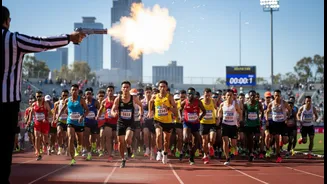
Running the first half of the marathon faster than the second is known as a 'positive split'. While it might feel good to 'bank' time early on, the data shows this is almost always a losing strategy for non-elite runners. The excitement of race day, the energy of the crowd, and a rush of adrenaline often tempt runners to go out much faster than their planned goal pace. This early surge burns through your limited glycogen stores at an unsustainable rate. The result is a predictable energy crash later in the race. Research shows that runners who start just 5 to 10 percent faster than their optimal pace can deplete their glycogen stores up to 30 percent earlier, triggering the metabolic collapse that defines hitting the wall.
The Smarter Strategies: Even and Negative Splits
The data points towards two much more effective strategies. The first is the 'even split', which involves running the first and second halves of the race at roughly the same pace. This is widely considered the gold standard for most amateur runners as it promotes energy conservation and consistency. The second, more advanced strategy is the 'negative split', where you run the second half faster than the first. This requires discipline, as you must deliberately start slower than your goal pace, conserving precious energy for the final 10 to 15 kilometres. While elite runners often employ negative splits to win races, the even split remains the most reliable path to achieving a personal best for the majority of marathoners. Interestingly, large-scale data analyses have consistently found that female runners are significantly better at maintaining an even pace and are far less likely to hit the wall than their male counterparts, who tend to start more aggressively.
Putting the Research into Practice
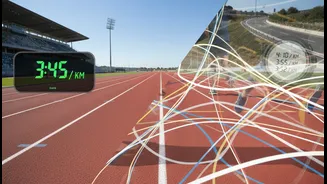
So, how do you use this information for your next marathon? It starts with your training. Use your long runs to practice your goal marathon pace. Learn what it feels like, both physically and mentally. On race day, the plan is simple: be conservative. A popular strategy is the 10-10-10 method: run the first 10 miles slightly slower than your goal pace, settle into your goal pace for the middle 10 miles, and then, if you have energy left, push through the final 10K. Resist the urge to get caught up in the initial excitement. A smart, patient start is not about losing time; it’s about investing in a strong finish. Let your GPS watch be your guide, but also learn to run by feel. By respecting the distance and managing your energy wisely from the very first kilometre, you give yourself the best possible chance to run through the finish line, not just crawl over it.