


A Disrupted Lifeline in the Cold Desert
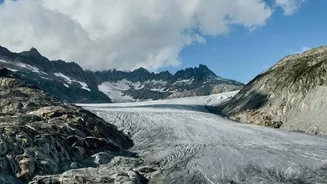
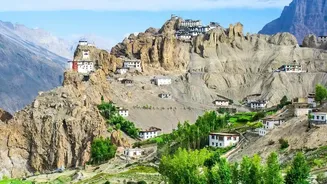
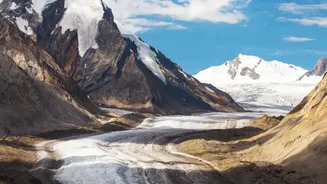
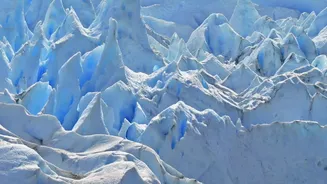
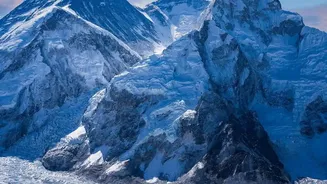
For centuries, the communities of Ladakh have timed their lives to the rhythm of the glaciers. This cold desert receives very little rainfall, making agriculture almost entirely dependent on the meltwater from mountain ice. Traditionally, this water would
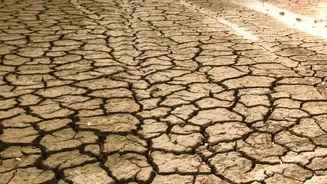
arrive in streams just in time for the spring sowing season. However, climate change has thrown this delicate balance into chaos. Glaciers are receding at an alarming rate, and weather patterns have become unpredictable. The crucial spring melt now often arrives too late, leaving farmers without water when they need it most for crops like barley, peas, and potatoes, jeopardizing food security and livelihoods.
An Idea Born from Simple Physics
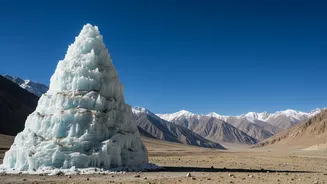
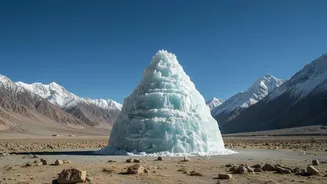
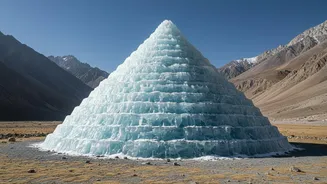
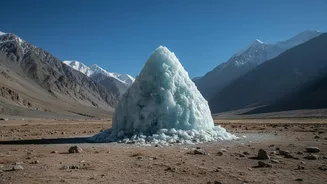
The solution came not from a high-tech lab, but from a simple observation by Ladakhi engineer and innovator Sonam Wangchuk. He noticed that ice persisted well into the late spring in shaded areas, even at lower altitudes. This sparked an idea: what if you could store the plentiful, unused water from winter streams in a form that would resist melting until the crucial spring planting season? The answer was to build artificial glaciers, but with a twist. Instead of creating flat sheets of ice, which have a large surface area and melt quickly, Wangchuk envisioned a vertical, cone-shaped structure. This shape, resembling a traditional Buddhist stupa, minimizes the surface area exposed to the sun, allowing the ice to last much longer.
How to Build a Glacier
The engineering behind an ice stupa is brilliantly simple and requires no external power. During the harsh winter, when temperatures plummet far below freezing, water is diverted from an upstream source through underground pipes. Gravity provides all the necessary pressure. This water is then sprayed out of a vertical pipe at the desired location. As the fine mist hits the frigid air, it freezes almost instantly, falling and accumulating around the base of the pipe. Layer by layer, a massive cone of ice grows throughout the winter, reaching heights of 30 meters or more and capable of storing millions of litres of water that would otherwise flow away unused.
From Winter Ice to Spring Harvest
The real magic of the ice stupa happens when the seasons turn. As temperatures rise in the spring, the cone begins to melt—slowly and steadily. This gradual release of water is perfectly timed for the start of the agricultural season, providing a reliable source for irrigation exactly when farmers need it. The first prototype, built in 2014, successfully stored 150,000 litres of water, lasting until May. Since then, the projects have grown dramatically in scale. Villages have used the meltwater to plant thousands of saplings, turning barren land green and securing their harvests. Some projects now involve automated systems that use weather data to optimize water spraying, making the process even more efficient.
More Than Just Water
The impact of ice stupas extends far beyond irrigation. The projects are deeply rooted in community participation, with villagers coming together to build and maintain their own artificial glaciers. This collaborative effort has fostered a sense of empowerment and local ownership in tackling the effects of climate change. To encourage wider adoption, friendly competitions are held between villages to see who can build the tallest stupa. The initiative has revived agriculture in areas that were close to being abandoned and has become a powerful symbol of hope, resilience, and frugal innovation, even drawing international attention and inspiring similar projects in the Swiss Alps and Chile.