

Tyres: Your Only Contact With The Road
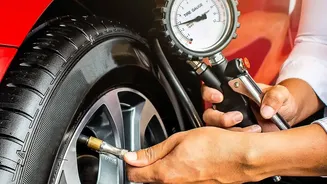
Your tyres are the single most critical safety component in the rain. On wet, winding hill roads, their ability to grip the surface is paramount. Before you leave, check the tread depth; for monsoon safety, you need at least 3mm to effectively channel
water away and prevent hydroplaning. Also, inspect the tyre pressure, including the spare. Incorrect pressure affects braking, handling, and stability. Look for any cuts, bulges, or uneven wear, which could indicate alignment problems that are magnified on slippery surfaces.
Brakes: Your Ultimate Safety Net
Wet conditions significantly increase your car's stopping distance. Your brakes need to be in perfect working order. If you hear any squealing, grinding, or feel a spongy pedal, get them inspected immediately. A mechanic should check the thickness of your brake pads and the condition of the brake discs. It's also vital to check the brake fluid. If it's dark or cloudy, it has likely absorbed moisture, which can reduce braking effectiveness, especially on long downhill stretches common in the hills.
Wipers and Washers: For A Clear View Ahead
Heavy downpours and road spray from other vehicles can reduce visibility to almost zero in seconds. Your wipers are your first line of defence. Check the rubber blades for any cracks or hardness from summer heat; if they leave streaks or judder across the glass, replace them. Also, ensure your windshield washer reservoir is full, preferably with a proper washer fluid that can cut through oily grime, not just plain water. Test the rear wiper if your car has one, as it's crucial for rear visibility.
All Lights and Electricals: See and Be Seen
In the grey, overcast conditions of a monsoon, your car's lights are essential for both seeing the road and being seen by others. Walk around your car and test all lights: headlights (low and high beam), tail-lamps, brake lights, and indicators. Pay special attention to fog lamps, which are invaluable in misty mountain conditions. Moisture can wreak havoc on a car's electrical systems, so look for any flickering lights or signs of water entry in the lamp casings.
Battery: The Heartbeat of Your Car
The increased use of wipers, lights, and the defogger during monsoon puts extra strain on your car's battery. Cold and damp weather can also weaken a battery's performance. Before your trip, check the battery terminals for any corrosion (a white, powdery deposit) and ensure the connections are tight. If your battery is more than three years old or has been showing signs of weakness, it's wise to have it professionally tested. Getting stranded with a dead battery in a remote, rainy location is an ordeal you can easily avoid.
Engine Fluids and Belts: Keep It Running Smoothly
Driving in the hills puts more stress on your engine. Ensure all essential fluids are at their recommended levels, including engine oil, coolant, and transmission fluid. Old or low coolant can lead to overheating, even in rainy weather, especially during traffic jams on steep inclines. Also, have a quick look at the engine belts for any signs of cracking or fraying. A snapped belt can cause an immediate breakdown.
Defogger and AC: Combatting Cabin Fog
The high humidity during the monsoon means your car's windows will fog up quickly, severely impairing visibility. Your air conditioning system is the most effective tool to combat this. Before you leave, turn on your AC and direct the airflow to the windshield to make sure it's working effectively to clear condensation. Test the rear defogger as well. A clear view out of all windows is essential for safely navigating mountain roads.
Emergency Kit: Your Roadside Lifeline
Hope for the best but prepare for the worst. An emergency kit is a must-have for any road trip, but it's especially critical for a monsoon journey into the hills. Your kit should include a powerful torch, a tow rope, a first-aid kit, a reflective warning triangle, and a puncture repair kit. Also pack items like an umbrella, a waterproof jacket, and extra drinking water. These simple items can make a huge difference if you find yourself stranded.