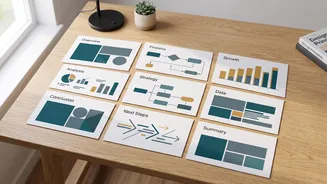








The Rise of the Instant Deck
In the past, creating a presentation meant hours spent structuring arguments, summarising text, and battling with slide layouts. Today, a suite of powerful AI tools, many of which work as extensions directly within Google Slides or PowerPoint, have automated
the entire process. Tools like SlidesAI, Gamma, and Canva's Magic Design function with startling simplicity: a student inputs a topic, a block of text, or even an existing document, and the AI generates a complete, visually formatted presentation in moments. According to a 2026 survey, nearly half of student users start with just a topic, effectively defeating the dreaded "blank page" syndrome. This technology is no longer a novelty; it has become a go-to solution for students navigating packed schedules.
Driven by a Need for Efficiency
The primary driver behind this switch is the relentless pressure of modern academic life. In a competitive environment like India, where students juggle heavy coursework, extracurriculars, and exam preparation, time is the most precious commodity. An AI presentation maker that can slash the time spent on a single assignment from six hours to under ten minutes is a game-changer. The appeal isn't just about saving time, but about redirecting energy. Instead of getting bogged down in the tedious mechanics of slide design and formatting—tasks that AI now handles effortlessly—students can allocate more time to understanding core concepts, conducting research, or simply managing their well-being. This efficiency allows them to focus on what truly matters: the content and their delivery.
More Than a Shortcut: A Tool for Learning?
While speed is the main draw, proponents argue these AI tools offer genuine pedagogical benefits. For students who struggle with organizing their thoughts, an AI-generated outline can provide a crucial starting point. These platforms can also enhance the learning experience by making it more interactive, with features that generate quizzes and polls to keep an audience engaged. Furthermore, AI can help personalise learning by adapting content to different styles; visual learners, for example, can benefit from AI-generated graphics and diagrams. For many, these extensions act as a creative partner, helping to structure a narrative, suggest talking points, and even translate content, thereby improving communication skills.
The Risk of a Cognitive Crutch
However, the rise of AI in education is not without its critics. A significant concern is that over-reliance on these tools could diminish critical thinking, research, and synthesis skills. Crafting a presentation is traditionally an exercise in understanding a topic deeply enough to simplify and explain it. If an AI does all the heavy lifting of summarising and structuring, students may bypass this crucial learning process. There are also valid concerns about academic integrity and misinformation. AI models can "hallucinate" or invent facts and data, and students who uncritically accept AI-generated content risk presenting false information. This has led educators to worry about a potential decline in creativity and an increase in plagiarism.
The Evolving Classroom Response
Educational institutions are grappling with how to respond. Some have reacted with skepticism, creating policies to limit or ban the use of AI tools over concerns about cheating. Others are taking a more integrationist approach, viewing AI as an unavoidable new reality that students must be taught to use ethically and effectively. Many educators see the potential for AI to free up their time from administrative tasks, allowing for more direct student interaction. The consensus is growing that the role of the teacher is evolving from a content provider to a mentor who guides students in using these powerful tools critically and responsibly. Research shows that when professors encourage thoughtful AI use, students are more likely to use it for genuine learning rather than just seeking quick solutions.