


The Science of a Good Stretch
Flexibility isn't just about touching your toes; it's about the healthy range of motion in your joints and the elasticity of your muscles and connective tissues. When you practice yoga, you're doing more than just pulling on a muscle. You are engaging
in a process that works on multiple levels. Physically, holding a pose sends a signal to your muscle spindles—tiny receptors that sense changes in muscle length—to relax and allow a deeper stretch. Over time, this helps lengthen muscle fibers. Yoga also works on your fascia, the web of connective tissue that wraps around every muscle and organ. Gentle, sustained pressure from yoga poses can help hydrate and release tension in this tissue. Finally, controlled breathing calms the nervous system, reducing the body's natural tendency to tense up and resist a stretch, allowing for greater release and increased mobility.
Cat-Cow Pose (Marjaryasana-Bitilasana)
This gentle, flowing sequence is the perfect way to warm up the spine and release tension in the back, neck, and shoulders. Start on your hands and knees in a 'tabletop' position, with wrists under shoulders and knees under hips. As you inhale, drop your belly, lift your chest and tailbone, and look forward into Cow Pose. As you exhale, round your spine toward the ceiling, tuck your chin to your chest, and press the floor away into Cat Pose. This movement sequence improves spinal flexibility, encourages blood flow, and gently massages the organs of the abdomen. Repeating this 5-10 times connects your breath to your movement, a foundational skill in yoga.
Downward-Facing Dog (Adho Mukha Svanasana)
Arguably the most iconic yoga pose, Downward-Facing Dog is a full-body stretch that targets hamstrings, calves, and the spine while building strength in the arms and shoulders. From your tabletop position, tuck your toes, lift your hips up and back, forming an inverted 'V' shape with your body. Beginners should keep a generous bend in the knees to focus on creating a long, straight line from the hands to the hips. Don't worry about getting your heels to the floor; instead, focus on pressing firmly through your hands and relaxing your neck. This pose is fantastic for lengthening the entire back of the body and decompressing the spine.
Triangle Pose (Trikonasana)
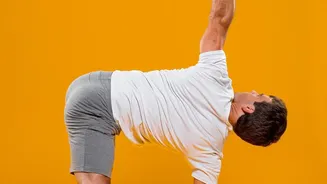
Triangle Pose is a fantastic standing posture for opening the hamstrings, hips, groin, and chest. To begin, stand with your feet wide apart. Turn your right foot out 90 degrees and your left foot in slightly. Extend your arms parallel to the floor, then hinge at your right hip, reaching forward before bringing your right hand down to your shin, ankle, or a block. Extend your left arm toward the ceiling. The goal isn't to touch the floor but to create long lines of energy through both sides of the body. This pose provides a deep side-body stretch and is excellent for improving balance.
Seated Forward Bend (Paschimottanasana)
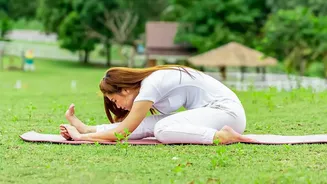
This pose provides a deep stretch for the entire back side of the body, from your heels to your head. Sit on the floor with your legs extended in front of you. You can sit on a folded blanket to help tilt your pelvis forward. Inhale to lengthen your spine, and as you exhale, begin to hinge at your hips and walk your hands forward. Avoid rounding your back to get your nose to your knees; instead, focus on maintaining a long spine. Bend your knees as much as you need to. This pose is deeply calming for the nervous system and intensely stretches the hamstrings and lower back.
Bridge Pose (Setu Bandhasana)
A gentle backbend, Bridge Pose helps improve spinal mobility and stretches the chest, neck, and hip flexors. Lie on your back with your knees bent and feet flat on the floor, hip-width apart and close enough to touch with your fingertips. Press down through your feet and lift your hips off the floor. Keep your thighs parallel. This posture strengthens the back of the body, including the glutes and hamstrings, and provides a wonderful counter-stretch to the effects of prolonged sitting.
Child's Pose (Balasana)
Child's Pose is a restorative posture that offers a gentle stretch for the hips, thighs, and lower back while calming the mind. From a kneeling position, bring your big toes to touch, spread your knees wide, and fold your torso forward between your thighs, resting your forehead on the floor. Your arms can be extended in front of you or rest alongside your body. It is an excellent pose to take whenever you need a moment of rest and release. It helps to alleviate stress and fatigue, making it a perfect end to your flexibility routine.