






From Cane to Crystal: The Processing Divide
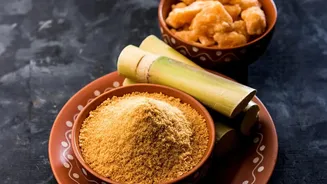
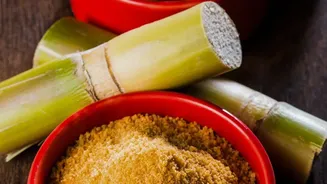
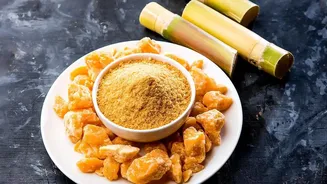
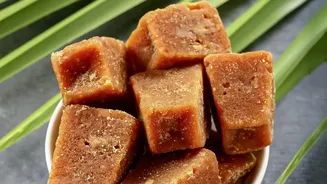
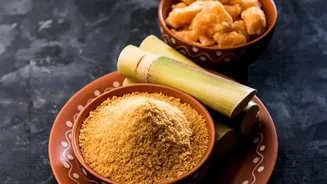
The fundamental difference between jaggery and white sugar lies in how they are made. Both originate from sugarcane juice, but their paths diverge significantly from there. Jaggery is produced through a minimal process: the sugarcane juice is boiled in large,
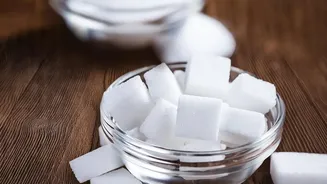
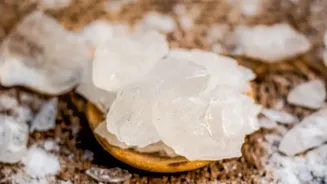
open pans until most of the water evaporates, leaving behind a thick, concentrated syrup that solidifies as it cools. This method ensures that the molasses, a natural byproduct of sugar production, remains in the final product. It's this molasses that gives jaggery its characteristic brown colour, rich flavour, and mineral content. White sugar, on the other hand, undergoes extensive industrial refining. After the initial boiling, the syrup is processed to separate the molasses from the sugar crystals. The crystals are then further clarified and bleached, often using chemicals, to produce the familiar pure white, neutral-tasting sucrose we know as table sugar. This refining process strips away virtually all the minerals and other compounds present in the original sugarcane.
The Nutritional Fine Print
Because it retains molasses, jaggery does contain more nutrients than white sugar, which provides only 'empty calories'. Jaggery contains trace amounts of essential minerals like iron, magnesium, potassium, and calcium. For example, a 100-gram serving of jaggery can offer a significant portion of the daily requirement for iron. However, the key is the serving size. It's unrealistic and unhealthy to consume 100 grams of any sweetener in a day. At the small quantities typically used in tea or desserts, the mineral contribution from jaggery is minimal. While replacing sugar with jaggery does add a small nutritional boost to your diet, it should not be considered a primary source of these minerals. The calorie count is also nearly identical, with jaggery having around 383 calories per 100 grams and white sugar about 387. Therefore, switching to jaggery will not aid in weight loss.
The Glycemic Index Surprise
A common belief is that jaggery is better for blood sugar control. However, scientific data tells a different story. The Glycemic Index (GI) measures how quickly a food raises blood glucose levels. Surprisingly, sugarcane jaggery has a high GI, often measured at around 84, which is even higher than that of white sugar (around 65). This means jaggery can cause a faster and sharper spike in blood sugar. The reason for this is jaggery's composition of both sucrose and free glucose, the latter of which is absorbed very quickly. For individuals with diabetes or insulin resistance, this makes jaggery just as problematic as white sugar, and neither should be consumed in large quantities. The idea that jaggery is a 'safe' sugar for diabetics is a dangerous myth.
Jaggery's Winter Wellness Role
The popularity of jaggery in winter is deeply rooted in tradition and Ayurvedic medicine. It is considered a 'warming' food that helps generate body heat, making it a comforting choice during cold months. Traditionally, it's used as a remedy for cold, cough, and respiratory issues, believed to help clear the respiratory tract. Jaggery is also consumed after meals to aid digestion by stimulating digestive enzymes. While these benefits are widely cited in traditional contexts, many lack rigorous scientific backing. The cultural and culinary value, however, is undeniable. From til-gur laddoos during Makar Sankranti to sweetening a hot cup of chai, jaggery is an integral part of India's winter food culture.
The Verdict: A Matter of Moderation
So, is jaggery healthier than sugar? The answer is nuanced. Yes, it is less processed and contains a few more nutrients, particularly iron. For someone choosing a sweetener for its flavour and minimal processing, jaggery is a better option. However, the health advantage is marginal, not monumental. At its core, jaggery is still a concentrated sugar with a high calorie count and a significant impact on blood sugar levels. The headline claim holds true: its darker colour, a result of retaining molasses, does not automatically make it a 'health food'. The most important takeaway is that both sweeteners should be consumed in moderation as part of a balanced diet. Switching from sugar to jaggery is a small step, but reducing overall sugar intake is the more impactful health decision.