








The Great Indian Language Divide
For decades, a major obstacle for rural entrepreneurs has been communication. India is a land of immense linguistic diversity, with 22 scheduled languages and thousands of dialects. A business owner in rural Punjab might find it challenging to serve a customer
from Tamil Nadu, not due to a lack of quality products, but because of a simple language gap. This has traditionally limited their market reach and forced a reliance on local middlemen. Customer service, a critical component of business growth, becomes incredibly difficult to scale when your potential customer base speaks dozens of different tongues. This challenge is compounded by issues like poor infrastructure, lack of technical skills, and limited access to capital that rural entrepreneurs already face.
Enter Conversational AI: The Digital Bridge
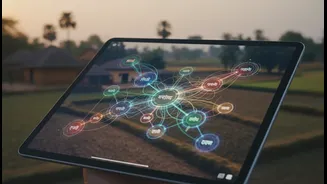
Artificial intelligence, specifically conversational AI, is emerging as a powerful solution. Modern AI platforms, powered by Natural Language Processing (NLP) and Large Language Models (LLMs), are now capable of understanding and responding in multiple Indian languages and dialects. These are not the rigid, frustrating automated systems of the past. Today's AI voice and chatbots can understand context, regional accents, and even mixed-language speech like 'Hinglish'. Platforms from companies like Vernacular.ai, Haptik, and Bolna AI are specifically designed for the Indian market, offering support for over 10 regional languages, including Hindi, Tamil, Telugu, Kannada, and Bengali. This technology effectively democratizes customer service, allowing a small business to offer 24/7 support in languages they don't personally speak.
How Automation Empowers Rural Businesses
The impact of this technology on a rural entrepreneur is transformative. Imagine a handicrafts seller from a village in Rajasthan. Previously, their sales were limited to tourists and local markets. Now, by integrating a multilingual chatbot on their website or WhatsApp, they can handle inquiries from across India. An AI bot can answer frequently asked questions about product details, track orders, and even process payments in multiple languages, freeing the entrepreneur to focus on their craft. This automation decouples business growth from hiring a large, multilingual support team—a significant cost barrier for any small enterprise. It allows them to manage higher volumes of customer interactions efficiently, improve response times, and build trust with a wider audience.
Tangible Benefits on the Ground
The benefits are not just theoretical. Small and medium businesses are already seeing measurable results. By automating routine inquiries, entrepreneurs can reduce operational costs and prevent the loss of customers who might be frustrated by long wait times. This is particularly crucial in e-commerce, where a quick, clear response can be the difference between a completed sale and an abandoned cart. For service-oriented businesses like local clinics or small-scale agri-tech advisors, AI bots can handle appointment bookings and provide basic information, allowing the human experts to handle more complex issues. By communicating with customers in their native tongue, businesses see higher engagement, better conversion rates, and increased customer loyalty. It levels the playing field, allowing a small rural enterprise to offer a customer experience that rivals larger, urban-based companies.
The Road Ahead and Future Potential
While the potential is immense, challenges remain. Reliable internet connectivity is still a concern in many rural areas. Furthermore, true success depends on the AI's ability to genuinely understand the nuances and cultural context of different dialects, not just perform a direct translation. However, the technology is rapidly evolving. Companies are continuously training their AI models on vast datasets of Indian languages to improve accuracy and fluency. The focus is shifting from simply supporting major languages to handling local dialects and accents with precision. As this technology becomes more accessible and affordable, its role in bridging the urban-rural divide and fostering innovation will only grow, creating more opportunities for entrepreneurs to thrive.